
News Month: August


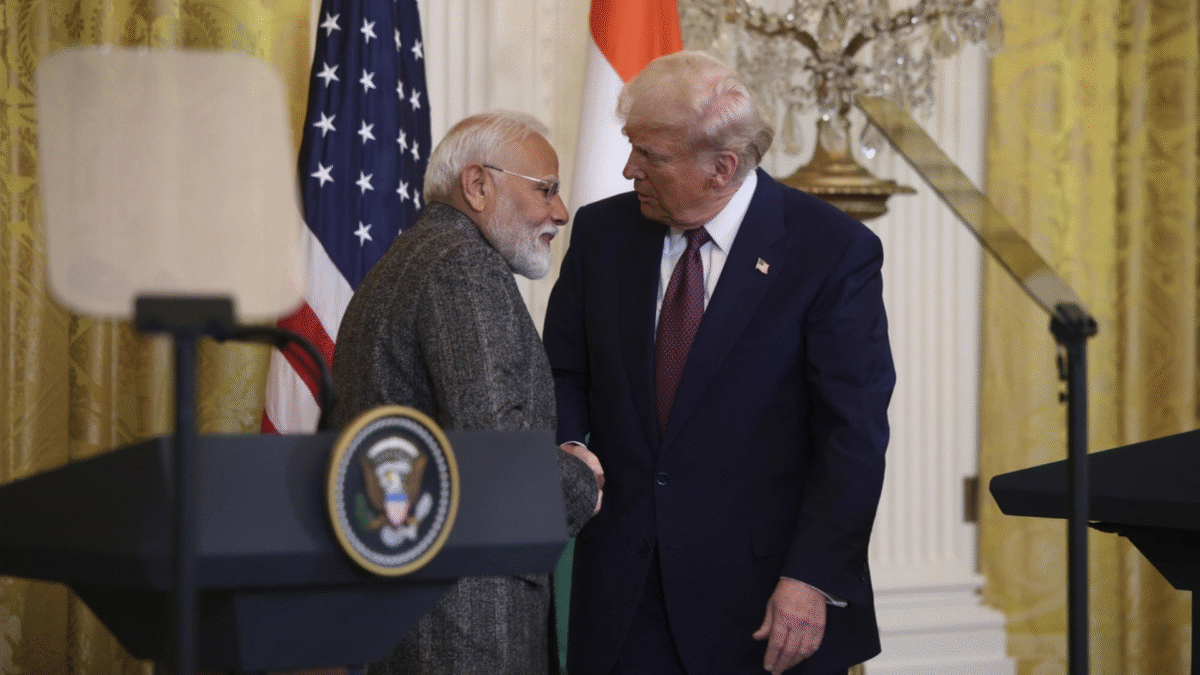
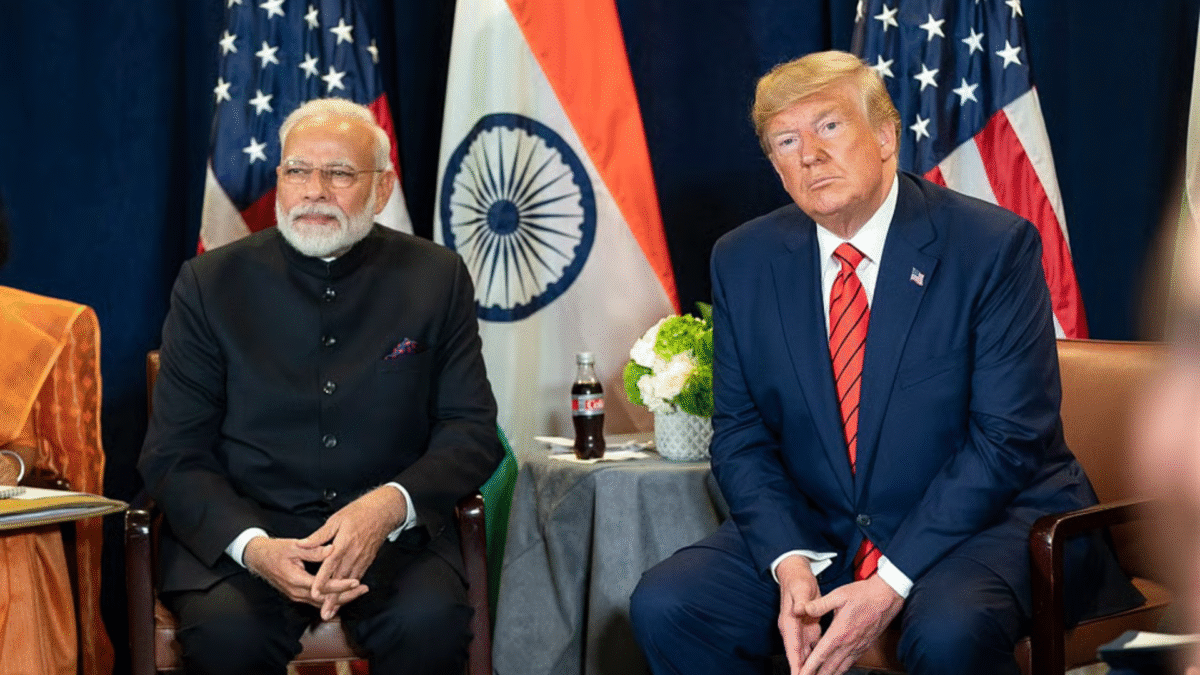
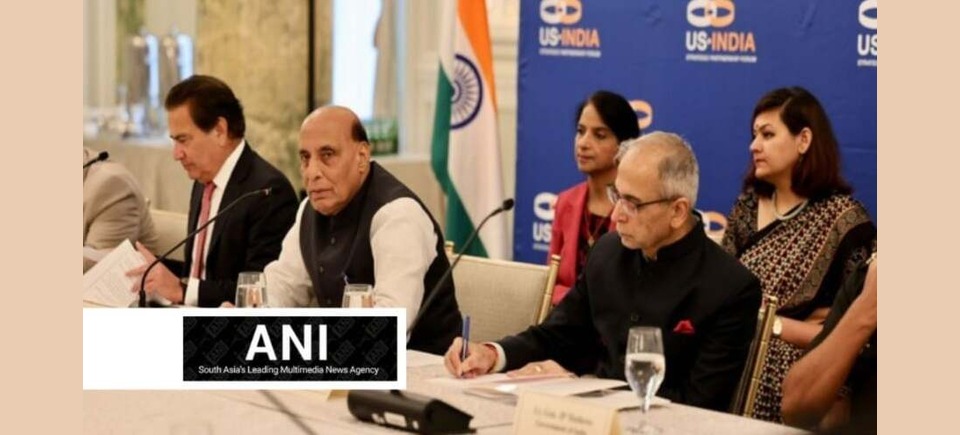
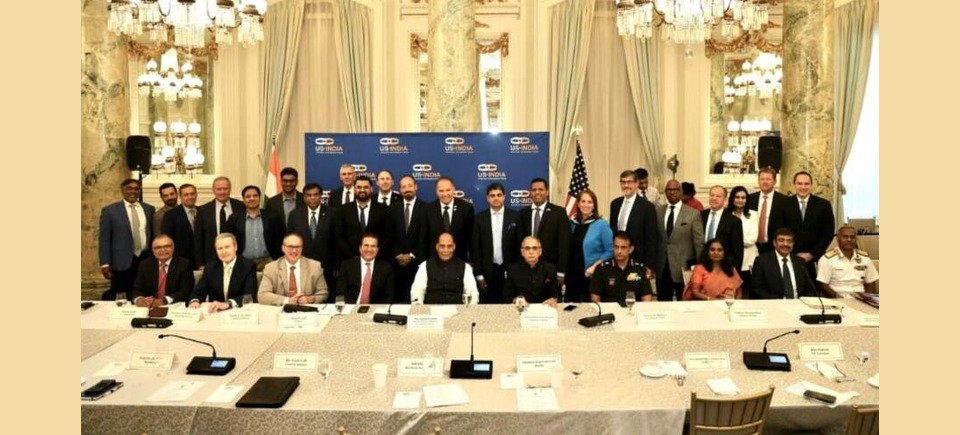
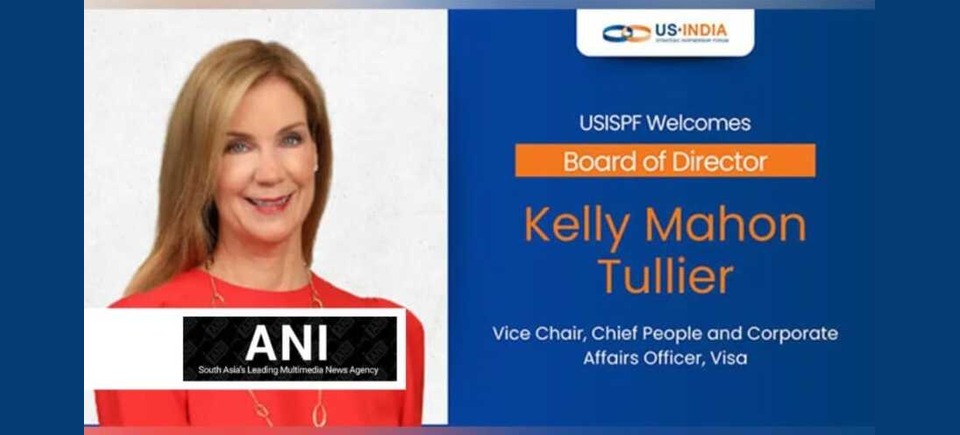
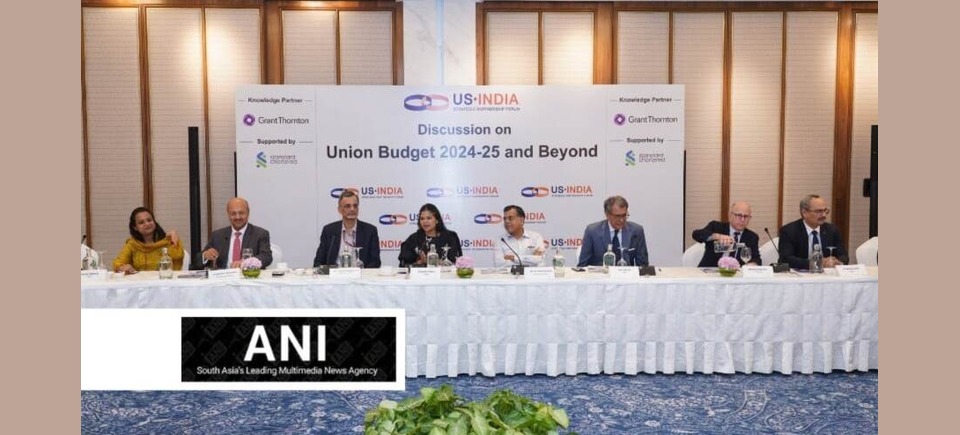

Since India’s economic reforms of 1991, the country has emerged as an economic behemoth, a South Asian tiger and this has helped forge a close economic partnership with US.
The U.S.-India relationship has been dubbed as the most important strategic partnership of the 21st century. India’s economic reforms of 1991 and its emergence as South Asian tiger has helped forge closer economic partnership between our two countries.
By Mukesh Aghi
75 years is a milestone, a monumental one indeed.
This August, we celebrate India’s 75 years of independence, but simultaneously celebrate 75 years of relations between the United States and India.
The US-India relationship has been dubbed as the most important strategic partnership of the 21st century. I have witnessed how the relationship has moved beyond symbolic platitudes between the world’s oldest and largest democracy to robust engagements across trade, defence, climate and technology.
Our political relations may be long, but our economic synergy has been comparatively a shorter story. Since India’s economic reforms of 1991, the country has emerged as an economic behemoth, a South Asian tiger and this has helped forge a close economic partnership between our two countries. From my years in the private sector, particularly the technology sector, I have witnessed how American enterprises have leveraged India’s skilled workforce and burgeoning economic growth and tapped into the Indian market.
In a short period, the bilateral trade between India and the U.S. has crossed the $100 billion mark in 2021. According to official figures, the overall US-India bilateral trade in goods and services reached a record $157 billion, a drastic increase from the 2020 trade figures.
The economic importance of this relationship is well evinced. Washington’s trade with its top 15 partners has increased over the past year; the single biggest jump was with New Delhi in 2021, making India the eighth largest trading partner for the US. The Honorable Commerce and Industry Minister, Piyush Goyal at our Annual Leadership Summit has spoken about a milestone target of a trillion dollars in bilateral trade by the year 2030. For India, to achieve its target of a $ 5 trillion economy, the lion’s share of Foreign Direct Investments (FDI) will need to come from the world’s largest economy.
Our shared objectives, values, and vision lie in securing a free, open, and prosperous Indo-Pacific, adhering to a rules-based international order, and maintaining international security while upholding freedom of navigation. Furthermore, our joint-military engagement along with our Quad partners demonstrates the comprehensive strategic partnership, as we seek to align the Quad to work towards helping regions in the Indo-Pacific address the pernicious threat of climate change, vaccine delivery, and work to secure critical and emerging technologies.
In the Middle East, our mini-lateral cooperation in I2U2, along with Israel and the United Arab Emirates has prioritized our regional interests in the region in cyberspace, food, and energy security, as the conflict in Europe has highlighted the near-term shortcomings.
As we look towards a post-pandemic recovery, we are cognizant of how the pandemic has cost lives and wreaked economic havoc in our two countries. And yet in the new era of social distancing, our two countries have come closer in our vaccine cooperation as we seek to leverage India’s pharmaceutical manufacturing prowess and American logistics to ensure the delivery of safe and cost-affordable vaccines to countries in need.
Our goal is forward-looking and for posterity’s sake, the Quad fellowship seeks to nurture the next generation of scientists as we prioritize education through shared values. The relationship has had its ebbs and flows through the first fifty years to the now robust edifice of strong diplomatic ties that it now rests on.
This relationship is much bigger than government-to-government relations. Its strength lies in the partnership between two kindred spirits. What makes this partnership truly special is an unwavering commitment to democratic values and a mutual affinity that the people share for each other. The story is one of the shared democratic values, codified in both constitutions but above all the power of the populace and hence we believe that the real catalyst to this strategic partnership is the story of the Diaspora, who have helped fructify this colossal partnership of 75 years.
While we look back and celebrate the past 75 years, I am excited about what the future holds for our two economies as we work together to build stronger bonds, strengthen commercial ties, and tackle challenges such as the COVID-19 pandemic and climate change.
So, this August, on behalf of everyone at the US-India Strategic Partnership Forum (USISPF), I wish all my fellow Indian citizens and the diaspora across the world, a very Happy Independence Day.
The author is the CEO & President of US- India Strategic Partnership Forum
More information
https://www.financialexpress.com/defence/celebrating-75-years-of-us-india-relations/2633854/
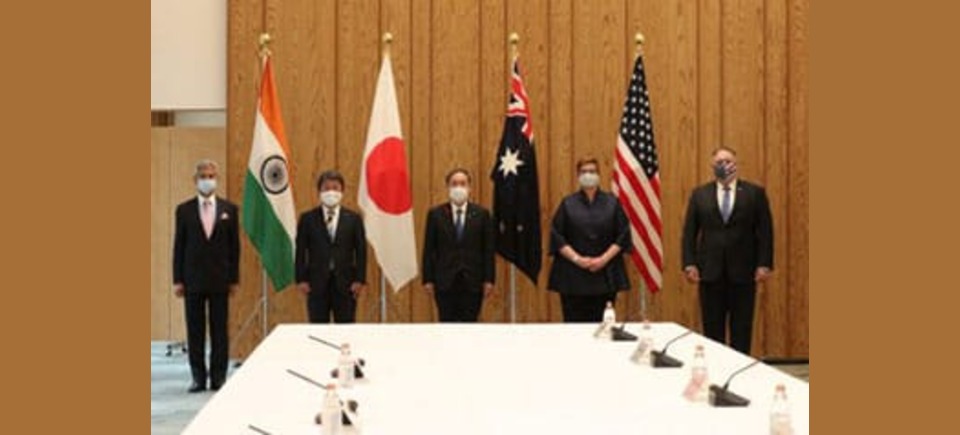
Trade, investment, and supply chain security need to be high on the agenda of the four-nation grouping.
Since its inception in 2007, the Quadrilateral Security Dialogue, better known as the “Quad,” has had a sense of nebulousness about it. But while the COVID-19 pandemic has wreaked insurmountable havoc on the global economy and has taken close to 5 million lives globally, it has perhaps inadvertently galvanized the momentum around the Quad, accentuating its global presence.
In November 2020, for the first time in nearly a decade, the navies of the four Quad nations participated in a joint naval exercise. And earlier this year, the Quad received fresh impetus on two fronts. There was a high-profile delegation of foreign ministers in February, which was furthered bolstered by the virtual meeting in March of the respective heads of government: Prime Ministers Suga Yoshihide, Scott Morrison, and Narendra Modi, along with U.S. President Joe Biden. Recently in Washington, top envoys of India, Japan and Australia and Indo-Pacific coordinator Kurt Campbell had a Quad ambassadorial meeting. Within his first hundred days in office, Biden has prioritized the Quad, signaling his administration’s foreign policy priorities.
The Indo-Pacific region has gained significant importance considering the geopolitical implications of an increasingly belligerent China and its attempts to establish itself in a pivotal role in the region and globally. Beijing’s bellicosity will no doubt continue to reinforce the importance of the Quad. However, in addition to countering China, there are three critical areas on which the leaders of the Quad countries have chosen to focus, including the creation of a Vaccine Experts Quad Group, a Quad Critical and Emerging Technology Group, and a Quad Climate Working Group.
While the first two fit well into the overall objective of the Quad, the significant issue of climate change should be addressed through other existing international platforms, as this grouping can make little progress without the participation of key Asian economies such as China, South Korea, Vietnam, Indonesia, and the Philippines. Perhaps the elephant in the room, which should take priority in the higher echelons of the Quad’s strategy, is the promotion of trade and commerce, which could subsequently mitigate the geopolitical trade kerfuffle between Washington and Beijing.
Currently, the combined GDP among the Quad countries sits at a whopping $34 trillion, with Washington making up the lion’s share, followed by Tokyo, New Delhi, and Canberra, all of which have recently been in Beijing’s crosshairs. An established trade architecture amongst the Quad grouping will help counter the economic challenges that China poses in the Indo-Pacific. Not only are these countries well-equipped in resources; they also have the balancing capacity to fulfill each other’s needs and make up for their respective economic weaknesses, For example, India, an energy dependent economy that needs to constantly upgrade its infrastructure, could rely heavily on subsidized imports from Australia, a commodity rich economy.
Given the ongoing geopolitical and security challenges in the Indo-Pacific, dependence on China for raw materials and other resources, and the critical nature of maritime trade routes through the South China Sea, there is an urgent need to add a trade component to the Quad’s agenda. While bilateral trade may be more viable, a multilateral trade partnership would help build diversified supply chains and promote economic stability in the post-pandemic era.
Currently, among the four Quad countries, the total share of trade within the grouping stands at 41 percent for the U.S., 34 percent for Japan, 14 percent for India, and 11 percent for Australia. There has been some resistance to establishing free trade agreements between the Quad nations, but such agreements could pave the way for enhanced trade cooperation and commercial activity.
During the March summit, the Quad leaders also committed to expanding the global vaccine supply for the Indo-Pacific in order to end the devastating impact that COVID-19 has had on the health sector, economy, and supply chains across sectors, impacting the movement and manufacturing of critical medical equipment and drugs. Struggling to meet domestic demands, countries amended their existing policies on procurement and exports to focus on their own populations. This seismic shift stems from an overdependence on China, specifically during the pandemic, which has led to massive disruptions in global supply chains. With a trade partnership, the Quad nations could pave the way for the creation of new supply chains across the dynamic Indo-Pacific region.
The four powers have also made a commitment to set up a Vaccine Experts Quad Group comprised of prominent scientists and government officials from all four countries. The mandate for the group is to impart each government’s COVID-19 planning to ensure last-mile delivery in difficult-to-access communities, and support organizations such as the World Health Organization and its COVAX initiative, which is currently playing a critical role in vaccine management and distribution.
In March, the Quad made a commitment of delivering up to 1 billion doses of COVID-19 vaccines to the ASEAN nations by 2022. So far, there has been little progress on the financing and manufacturing uptake in the vaccine production within the grouping. Most countries in the region are struggling to vaccinate their populations as COVID-19 variants continue to mutate and once again set countries on the backfoot. The immediate execution of the vaccine group’s commitments should thus become a priority for the Quad.
Despite the commitment made by the Quad leaders, there are certain obstacles preventing them from meeting these goals. For instance, India, the world’s largest pharmaceutical manufacturer, still awaits a steady supply of active pharmaceutical ingredients and other raw materials from the U.S., the key in diversifying drug manufacturing and in fighting the ongoing COVID-19 pandemic. For the past 18 months, the U.S. Food and Drug Administration has stalled inspections in India, leading to delays in drug manufacturing and innovation, which has been cataclysmic as India battled its horrendous second wave. Such roadblocks not only impact trade between the U.S. and India, but also impact global supply chains and the existing partnership in the healthcare space.
The Quad leadership acknowledged that for a free, fair, and open Indo-Pacific to flourish, technology would need to be a crucial element. A Critical and Emerging Technology Working Group was established to generate dialogues on important technology supply chains, support diversification of equipment suppliers, support cooperation in communications, monitor trends and opportunities in varied fields of technology, and coordinate standards for technology development both at the national and global levels.
However, it is also important that contentious issues like data privacy and data localization are not the focus of this group. The intent is to build a partnership, not to create barriers and walls, which would defeat the purpose of the Quad, leading to friction and mistrust among the four nations. The current data policy and regulatory landscape in India is leading to doubts and mistrust. Building data-related walls will only lead to disintegration in the grouping at a time when sharing data and technology is critical to the partnership. Without trust, the Quad will stagnate and lose sight of its key goals at the time when the world order is in a state of flux.
The Quad’s intent is clear, as demonstrated by the three pillars of cooperation that the leaders of the four countries have spelled out. It is vital now to accelerate the pace of implementation in the areas of cooperation and beyond, adding trade, investment, and global supply chains to the mix. These aspects need to play a significant role in the discussions and planning of the Quad’s agenda.
Geopolitically, the landscape in the Indo-Pacific is rapidly evolving. The four Quad countries should now set the pace to implement the agreed upon deliverables from March and present initial outcomes at the next leadership summit scheduled this fall in Washington, D.C. The key element of trust needs to be nurtured among the Quad nations, otherwise it will defeat the very purpose for which it has been created. Without trust, the Quad will turn into yet another grouping with no concrete objective, but just mere symbolism.
More information
https://thediplomat.com/2021/08/why-the-quad-needs-to-improve-its-economic-game/
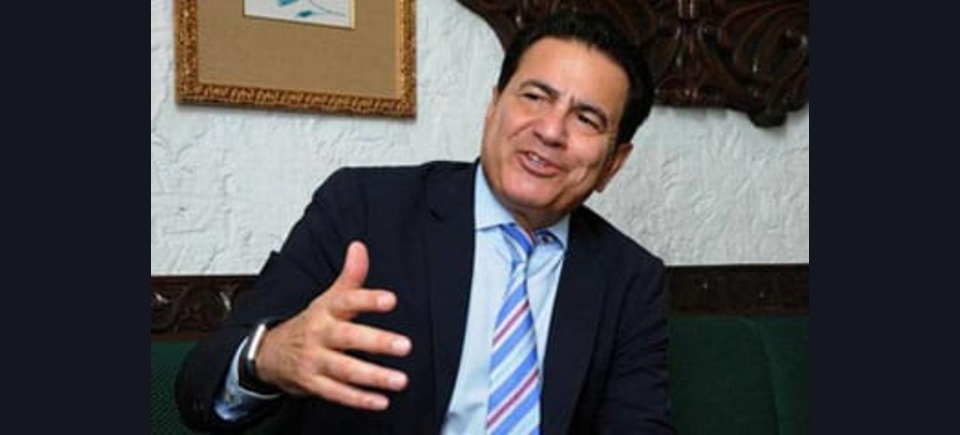
Modi government must become more transparent in policy-making and open for business, says Mukesh Aghi
The Biden administration’s moves to pull out troops from Afghanistan and Iraq mean there will be more American focus on dealing with China, and India could benefit from U.S. investment that is leaving China if the Modi government becomes more transparent in policy-making and “open for business”, said Indo-U.S. trade body chief Mukesh Aghi. However, he said there isn’t as much interest in concluding an Indo-US Free Trade Agreement as there was during the Trump administration and India must also put aside its hopes of having its “GSP status” restored, which was cancelled in 2019. Both sides must work on more deliverable goals.
“If [India] makes GSP a central issue, and the U.S. side makes human rights, labour rights a central issue, then it’s a non-starter. Look at other bigger challenges we have,” Mr. Aghi, President and CEO of the Washington-based US India Strategic Partnership Forum (USISPF) told The Hindu in an interview.
Fast rising exports
Last week, Commerce Minister Piyush Goyal had said in a speech the U.S. had indicated it was “not looking” for a new trade agreement, but wanted to work on improving market access issues that have become a sore point. However, despite the cancellation of India’s GSP status, exports to the U.S. are the fastest rising than to any other country, indicating the GSP status, which New Delhi has been pushing for, may not have affected demand.
Mr. Aghi was in Delhi for meetings with several Ministers including Mr. Goyal, External Affairs Minister S. Jaishankar who is a “Board Member Emeritus” of the USISPF, as well as Ministers of Information Technology (MEiTY), Civil Aviation, Sports, Health and Education ahead of a planned visit by Prime Minister Narendra Modi to the United States in a few weeks.
The USISPF has invited Mr. Modi to address a special annual meeting of its members in Washington, where President Biden is expected to hold the first in-person ‘Quad’ summit with the leaders of India, Australia and Japan.
Quad to discuss economic cooperation
The summit, which is yet to be confirmed by all the leaders, is likely to be held on September 26-27, a day after PM Modi delivers an address to the U.N. General Assembly. The four countries are likely to discuss economic cooperation on issues like critical and emerging technology, countering climate change and a COVID-19 vaccine partnership that they had set up working groups about during the last meeting in March. The meeting will also be significant as it would come shortly after the U.S. completes its pull-out from Afghanistan.
“I think pulling out from Afghanistan and Iraq will give resources to the strategists in the U.S. side and they will start looking at putting resources on dealing with China. So I think you will see Quad getting more stronger from that perspective, with more focus. And hopefully, it will go beyond the geopolitical to looking at the economic agenda,” Mr. Aghi said.
Mr. Aghi also said with India-China tensions growing and the Modi government blocking Chinese FDI (foreign direct investment) proposals, India will need to depend on other countries like the U.S. to realise the PM’s hopes of a “5-trillion dollar economy”, as well as a possible economic trade agreement on the lines of the “Trans-Pacific Partnership.”
“India needs $100 billion a year investment, if it wants to be a $5-trillion economy. So it has to communicate better to the world that, hey, we are open for business, while at the same time, we’re trying to become self-reliant. We’re trying to bring in more secure supply chains and reduce our dependence on China,” Mr. Aghi said.
Communication problem
Mr. Aghi said India still has a “communication problem” among U.S. businesses, as it is not seen as investor-friendly on issues like consultative policy making; legal protections like the indemnity issue holding up the import of U.S.-made vaccines and arbitration and dispute resolution, referring to the Cairn Energy dispute which won a $1.2-billion settlement against the Indian government, which is yet to be resolved.
“The USISPF publicly applauded the government’s withdrawal of retrospective taxes… [but] dispute resolution is a critical part of any large investment coming into the country. And it’s important that India sends a message that if you agree to arbitration, or if you agree to International Court of Justices, that it will be honoured whatever the decision is,” Mr. Aghi said.
More information
https://www.thehindu.com/news/national/india-could-benefit-from-us-investment-that-is-leaving-china-says-trade-body-chief/article36165446.ece
Washington, D.C., United States & New Delhi, Delhi, India: On Tuesday, August 24, 2021, the US Trade and Development Agency (USTDA) and US-India Strategic Partnership Forum (USISPF) launched the US-India Climate Technologies Action Group (CTAG), which aims to bring together major private and public sector stakeholders from both the countries on concrete initiatives that can contribute to advanced global action on climate.
The launch event brought together senior government officials and business leaders from India and the United States who engaged in a high-level dialogue on the “Accelerating the Adoption of Climate Technology in India.”
Mr. Brian Heath, Acting Deputy Chief of Mission, US Embassy-New Delhi, Mr. Thomas R. Hardy, Director for Program Management, US Trade and Development Agency and Dr. Mukesh Aghi, President and CEO, US-India Strategic Partnership Forum, made initial remarks amidst industry leaders such as Mr. Atul Arya, Senior Vice President and Chief Energy Strategist, IHS Markit, Mr. Mike Train, Senior Vice President and Chief Sustainability Officer, Emerson and Mr. Visal Leng, President-Asia Pacific, Johnson Controls, to name a few.
Delivering the initial remarks, Mr. Thomas R. Hardy, Director for Program Management, US Trade and Development Agency said, “I am optimistic that USTDA’s support will help connect India to innovative technologies and cutting-edge solutions from the United States that will have a meaningful impact on India’s clean energy future.”
“With the Intergovernmental Panel on Climate Change’s latest report issuing a global code red, the establishment of the US-India Climate Technologies Action Group (CTAG) is extremely significant and timely. USISPF, in collaboration with USTDA, is committed to advancing the two world’s largest democracies’ shared climate ambition. We look forward to establishing opportunities for businesses on both the sides to advance climate action, accelerate the deployment of clean technologies and climate-smart infrastructure in India, and improve the lives of millions,” said Dr. Mukesh Aghi, President and CEO, US-India Strategic Partnership Forum.
The event also marked the launch of the workshop series, titled “Energy Resiliency Workshop Series – India,” led by USTDA, IHS Markit, and USIN Foundation. The workshop series will provide an opportunity for the US and India energy sector to establish facts, forecasts, and scenarios of the energy resilience in the wake of the COVID-19 impacts on the global oil and gas business and aid in the capacity building of the Indian oil and gas sector in terms of carbon capture and hydrogen technologies.
About Climate Technologies Action Group – CTAG
The Climate Technologies Action Group aims to integrate private and public sector inputs on concrete initiatives that can contribute to advanced global action on climate, facilitate US industry input on the latest climate-resilient technologies, share US business models with the Indian market to accelerate the development of the clean energy sector, mobilize capital for climate-smart infrastructure projects in India and strengthen the US-India bilateral relationship.
Click here for Media Contact Details
India needs to grow its economy from the current $2.7 trillion to $5 trillion. It will need a lot of FDI coming in — at least $100 billion dollars a year to fuel that growth, Mukesh Aghi, president of US India Strategic and Partnership Forum said
India needs at least $100 billion of foreign direct investment every year to reach its target of a $5 trillion economy from the current $2.7, the head of a top India-centric American business advocacy group has said. The group made the observation, asserting that a major chunk of this FDI is going to come from the United States.
India needs to grow its economy from the current $2.7 trillion to $5 trillion. It will need a lot of FDI coming in — at least $100 billion dollars a year to fuel that growth, Mukesh Aghi, president of US India Strategic and Partnership Forum told PTI in a recent interview.
I believe that is going to come mainly from the US, he added. India, he observed, needs to look at what it needs to do to get that FDI coming in and have the technology coming in, to fuel this growth .
From a US perspective, it needs to leverage India on vaccination diplomacy, have Indian factories produce these vaccines so they can ship it to the rest of the world, and they can make this vaccine much, much cheaper than anybody else can get, he said.
Last week, USISPF, which now has more than 300 Fortune 500 companies as its members, celebrated its fourth anniversary. Four years ago, Aghi, along with several top American corporate leaders established USISPF after they had sharp differences on key issues with the then leadership of US Chambers of Commerce.
Aghi then was the head of the US-India Business Council or USIBC, which he left along with the entire board member of USIBC to set up USISPF. In just four years, USISPF has emerged as the top India-centric advocacy group for American companies, having hosted top leaders from both the United States and India, including Prime Minister Narendra Modi.
We have a fantastic board which is quite engaged, involved and who are the most prominent boards, especially between India and the US, he said.
Responding to a question, Aghi said four years ago, one of the goals of his and the board members was to build an institution which becomes a pillar, between two countries or independent institutions, which is not tied to any political party, and looking at the interests of both countries.
For the last four years, that has been the focus, he asserted. It has not just been business to business. It could be a cultural aspect. It could be on technology. It could be geopolitical itself, he said. Going forward, he said the India-US relationship is going to evolve positively.
When I say positively (it is) because you already have 4.5 half million Indian Americans. They play an influential role, and we have roughly 800,000 gaining green cards. So, I see people’s culture gaining more momentum itself. That means, you will see a positive impact between two countries, he said.
But there are challenges as well, be noted. But I think, there’ll be enough maturity on both sides to handle issues. For example, when (Secretary of State) Tony Blinken was in India, he talked about human rights. But he also said we are not perfect, we are still trying to understand how to manage this. So, he spoke about it but at the same time said, we’re not here to give you a lecture because our house is not in order also, he said.
The relationship will continue moving in a positive direction, he asserted. Responding to a question, Aghi said in the first six months of this administration, nothing on the issue of trade was pushed forward. But on the geopolitical alignment in a very cohesive matter, the USA worked with India, to make sure that QUAD continues, he said.
I think on the security side, one gap which I see which took place was India’s non-involvement in the Afghanistan withdrawal. I see India getting left out on the appliance issue. But overall, geopolitically the approach has been very strong and very positive, Aghi said.
More information
https://www.businesstoday.in/latest/economy/story/india-needs-at-least-100-bn-fdi-every-year-to-become-5-tn-economy-usispf-303737-2021-08-10

US-India Strategic and Partnership Forum (USISPF) on Thursday applauded the Indian move to withdraw the retrospective law relating to tax on indirect transfers. “Yesterday’s Bill introduced by the Finance Ministry will only encourage more international investments into India and is a welcome relief for companies who have long invested in the country. The USISPF is proud to have worked on this issue for many years”, Mukesh Aghi, President and CEO of the USISPF said.
USISPF applauds India’s move to withdraw the retrospective tax amendment relating to tax on indirect transfers, he said in a statement. The 2012 decision of the UPA government to impose retrospective tax has been a black mark on India’s reputation as a predictable investment destination, he said.
Also Read:
Retrospective taxation – A ghost put to rest!
Prime Minister Narendra Modi inherited this bad legislation. And today we are delighted to see that he has finally decided to nullify it, Aghi said in his statement.
Finance Minister Nirmala Sitharaman introduced The Taxation Laws (Amendment) Bill, 2021 in the Lok Sabha that seeks to withdraw tax demands made using a 2012 retrospective legislation to tax the indirect transfer of Indian assets. The bill provides for the withdrawal of tax demand made on “indirect transfer of Indian assets if the transaction was undertaken before May 28, 2012 (i.e. the day the retrospective tax legislation came into being).”
More information
https://www.cnbctv18.com/finance/usispf-hails-indian-govts-move-to-withdraw-retrospective-tax-law-10274181.htm

“When you think about the US and India, you think about two strongest democracies in the world, the shared values,” Pence said during a virtual event on the US-India organised by the …
Source: The Economic Times
Source Link: https://economictimes.indiatimes.com/news/international/world-news/pence-describes-president-trump-and-pm-modi-as-larger-than-life-figures/articleshow/77857288.cms?from=mdr
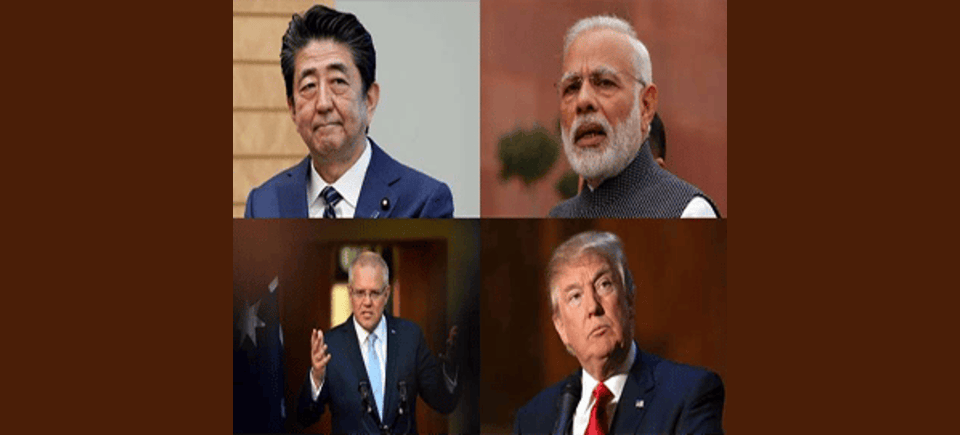


Washington, Aug 22 (PTI) India needs to look at ESG (environmental, social and governmental) factors to attract major investors and get the sustained foreign direct investment of …
Source: The Week
Source Link: https://www.theweek.in/wire-updates/business/2020/08/22/fgn4-us-aghi-india.html
The award, announced on Friday, would be presented during the third Annual Leadership Summit, titled “US-India Week: Navigating New Challenges”, which will convene virtuall
y from August 31…
Source: The Economic Times
Source Link: https://economictimes.indiatimes.com/news/company/corporate-trends/anand-mahindra-shantanu-narayen-to-receive-2020-leadership-awards-from-usispf/articleshow/77688338.cms

Dr. Mukesh Aghi, President & CEO of USISPF (US-India Strategic Partnership Forum) shares his insights on the increasing convergence between the US and India in trade, strategy, healthcare, education and manufacturing.
Source: India INC
Source Link: https://indiaincgroup.com/the-us-india-partnership-will-reach-a-higher-plateau-in-the-post-pandemic-world/
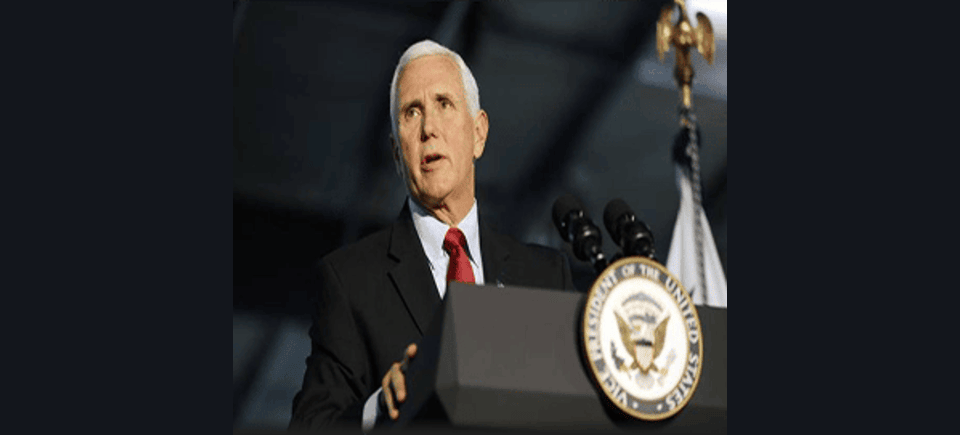
The summit, called ‘US-India Week: Navigating New Challenges’ will be held (virtually) from August 31 to September 3.
Source: The Hindu
Source Link: https://www.thehindu.com/news/national/us-vice-president-mike-pence-to-address-us-india-summit/article32387048.ece