News Month: December
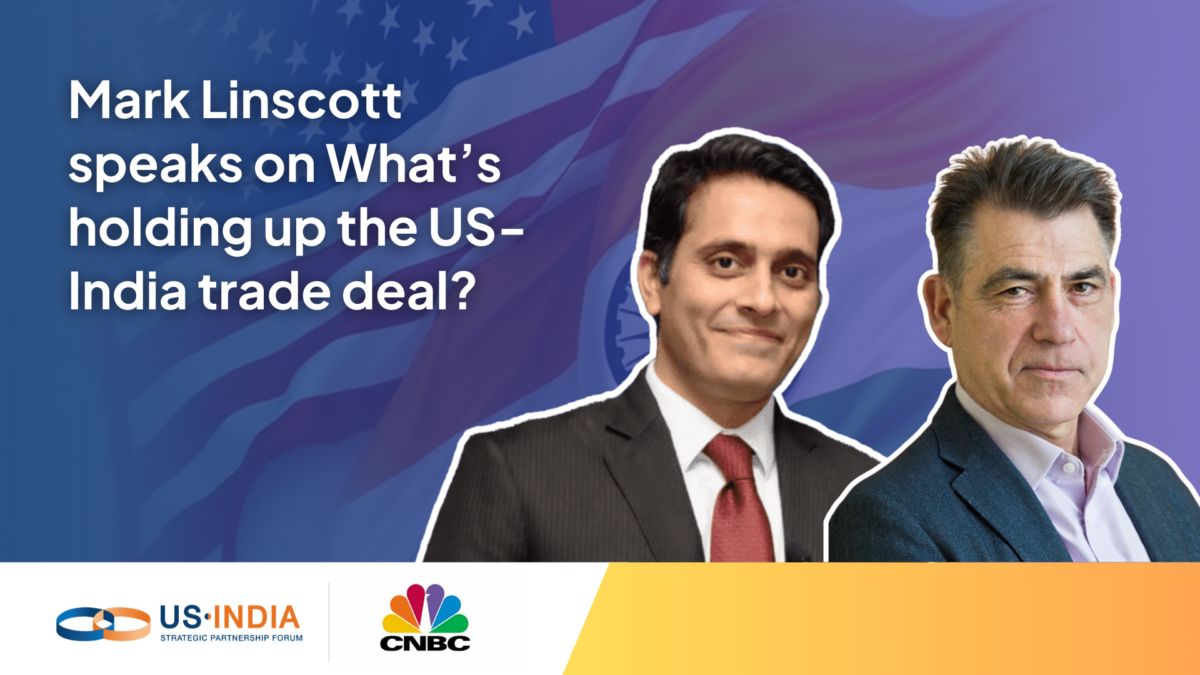
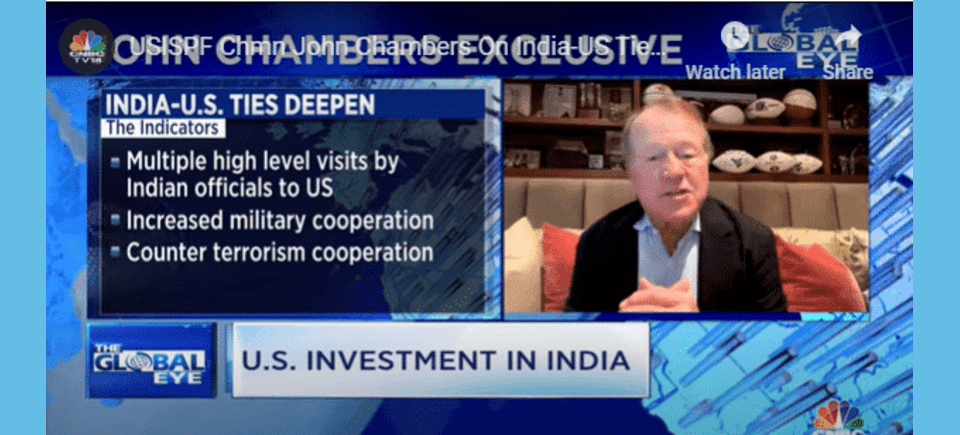
John Chambers, chairman of the US-India Strategic Partnership Forum (USISPF), on Friday (December 22) expressed unwavering optimism about the transformative potential of artificial intelligence (AI) in the year 2024.
In an exclusive interview with CNBC-TV18’s Parikshit Luthra, Chambers believes that AI will be the most groundbreaking technology in history, akin to the combined impact of the internet and cloud computing.
He emphasised that a close collaboration between India and the United States can lead this global shift, benefiting businesses and citizens alike and setting a model for the rest of the world.
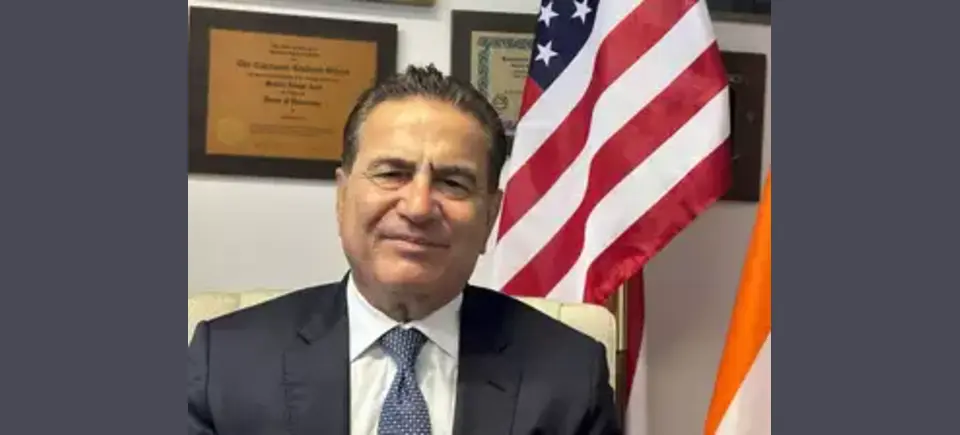
The relationship between India and the US has moved in a positive direction ranging from trade to defence and the two nations have shown a sense of deep understating of each other’s differences, the head of a top India-centric business and strategic group has said. Mukesh Aghi, CEO of the US-India Strategic and Partnership Forum (USISPF) said that there is more alignment between the two countries when it is looked at from the geopolitical QUAD perspective.
“I think in every aspect we (India-US relationship) have moved in a positive direction. You look at trade, which has gone up. You look at the military exercises, we’re doing more and more of those. We also have signed a lot of agreements with the US, especially in defence and space. We have agreed to repair the ships in our ports,” Aghi said on Wednesday.
“When you look at it from the geopolitical QUAD perspective, there’s more alignment between the two countries,” Aghi told PTI in an interview.
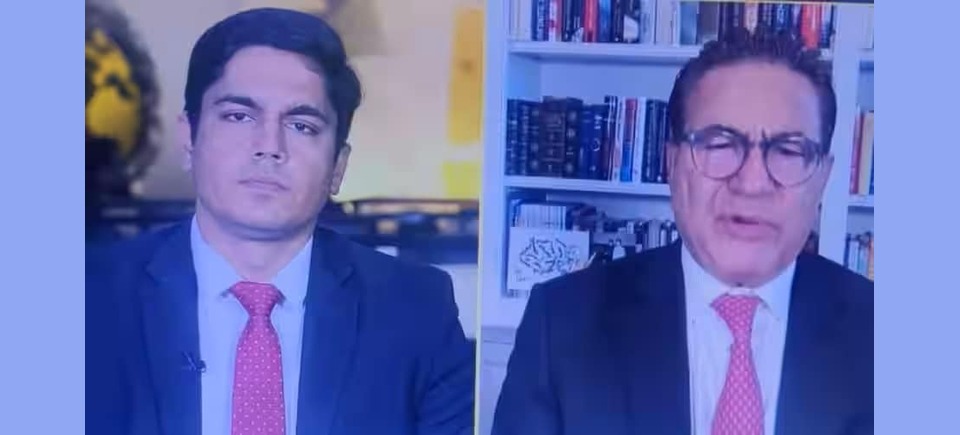
Mukesh Aghi, President & CEO of the US-India Strategic Partnership Forum (USISPF), has underscored the flourishing ties between the United States and India, shedding light on “bullish” sentiments of US investors on India. Speaking to our diplomatic correspondent Sidhant Sibal, Aghi stated, ” relationship has gone in a very positive direction, in a win-win fashion for both countries. you have to understand that the relationship is deep, much broader, and much more strategic between India and the United States”.
Highlighting the changing dynamics of global supply chains, Aghi noted, “US companies are looking at de-risking supply chain from China and India becomes a primary source from their perspective.” Highlighting the significant participation of US companies in Vibrant Gujarat in January, Aghi projected a continued growth in investments, highlighting, “You have US companies creating almost three and a half million jobs in India which are High Tech, High End paying jobs.”
He also spoke on President Biden not being able to attend India’s Republic Day, the Nikhil Gupta case etc.
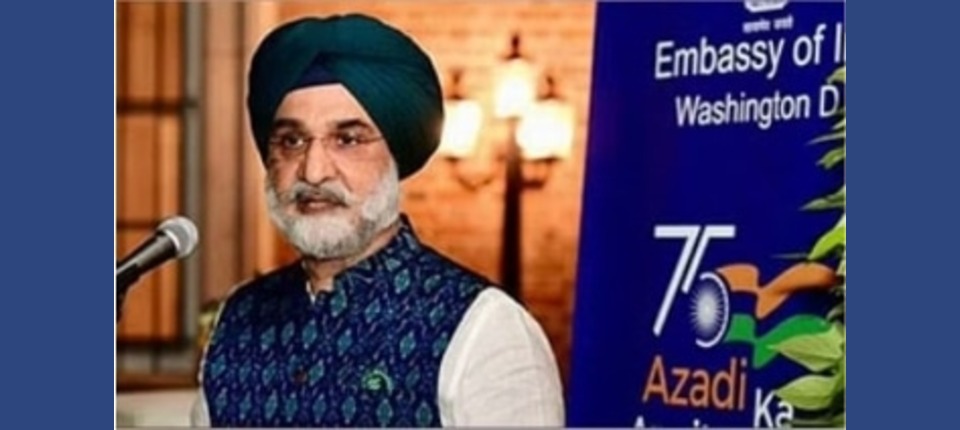
Washington [US], December 1 (ANI): After the Indian government extended Ambassador Taranjit Singh Sandhu’s tenure, a US-based business advocacy group, US-India Strategic Partnership Forum (USISPF) welcomed the decision and said that this would help in shepherding the relationship to new heights.
Mukesh Aghi, President and CEO of USISPF, said, “I congratulate Ambassador Sandhu on his extension till 2024. Apart from being a veteran of US-India relations, I am proud to say Ambassador Sandhu has also been a dear friend of USISPF and an exceptional asset to the US-India partnership, shepherding this relationship to new heights.”
“He has seen the evolution of the strategic partnership through his multiple years of experience in the US, from his earlier years in the foreign service in the late 90s to his stint as DCM and now as Ambassador in Washington. Ambassador Sandhu brings unparalleled expertise and experience in his interactions with both the legislature and executive branches of the US government. His extension will help consolidate US-India relations and take it to new heights,” he added.
Earlier, in November, a notification reads that Ambassador Taranjit Singh Sandhu is reemployed for a period of one year with effect from 01.02.2023 to 31.01.2024 or until further orders.
Earlier, in 2020, Taranjit Singh Sandhu took charge as the new Indian Ambassador to the United States from his predecessor Harsh Vardhan Shringla, who is now G20 chief coordinator.
Sandhu was, earlier, the High Commissioner of India to Sri Lanka. He previously served as the Deputy Chief of Mission at the Embassy of India in Washington DC from 2013 to 2017. The Ambassador had also previously served in the Indian mission in DC between 1997 to 2000 and is generally believed to be a familiar face in the Washington DC circle.
Official sources also told ANI that Sandhu’s appointment will be announced ‘soon’ in light of the possibility that US President Donald Trump is likely to visit India on a standalone visit towards the end of February.
The official also said that the procedures of the new appointee are also underway in Washington DC.
More information
https://theprint.in/world/us-business-body-welcomes-extension-of-indian-envoy-taranjit-singh-sandhu/1243418/?amp
By Mukesh Aghi
India has long espoused a multilateral world order where the key stakeholders need to reflect the evolution of the global economy over the past 70 years. The G20 agenda for 2023 focuses on numerous ideas and issues including climate financing, energy security, international development cooperation as well as inclusive, equitable, and sustainable growth.
Today, December 1, 2022, India formally takes over from Indonesia as G20 President.
Prime Minister Modi’s message ahead of the next G20 Summit has been that India’s Presidency will be based on the importance of equitable growth and a shared future for all.
The messaging was clear that “India’s G20 presidency is coming at a time of crisis and chaos in the world”, from the pandemic and conflicts and therefore, lotus, the national flower of the country, is its symbol projecting peace and “Vasudhaiva Kutumbhakam” or “One Earth One Family One Future”.
Certainly, the G20 bloc represents the 20 most powerful economies that contribute to around 80 percent of global GDP and over 75 percent of global trade. It started in 1999 with the aim of discussing policies in order to achieve international financial stability. But it wasn’t until the financial crisis of 2008 that the forum gained ground as a vehicle to address the global financial crisis. Since then, the G20 had its greatest significance in strengthening the global financial system, promoting economic cooperation, and preventing new global financial crises. Each year the host nation brings a unique perspective and touches on key policy issues.
India should use this august platform, to state its priorities for the region and the emerging market world. New Delhi has already outlined priorities pertaining to climate action, critical and emerging technologies, resilient supply chains, and vaccines, which still remain a priority until COVID-19 has been eradicated.
As the US Treasury Secretary Janet Yellen pointed out in her recent visit to India, India’s G20 Presidency in the upcoming year provides an extensive opportunity to further advance the bilateral partnership and to fulfill broader goals, as Washington throws its weight behind India, in its G20 Presidency. “Friendshoring” was the key term that the Secretary stated in the latest effort toward rebuilding supply chain resilience.
India has long espoused a multilateral world order where the key stakeholders need to reflect the evolution of the global economy over the past 70 years. The G20 agenda for 2023 focuses on numerous ideas and issues including climate financing, energy security, international development cooperation as well as inclusive, equitable, and sustainable growth. New Delhi can strive towards building an inclusive ecosystem with holistic mechanisms to address key global issues for the private sector.
One of the key issues being digital transformation, as Prime Minister Modi echoed as the “most remarkable change” of this era, has been digitization- a key priority, where a digital economy is the key to inclusive growth and one that can uplift millions out of the morass of poverty.
Prime Minister Modi stated “India will work jointly with G20 partners towards this objective”, referring to digitization. The principle of ‘data for development’ will be an integral part of the overall theme of our Presidency ‘One Earth, One Family, One Future”. Furthermore, digital solutions will also be helpful in the fight against climate change, as India, like the rest of the world, turned to remote-working and paperless green offices during the pandemic.
Furthermore, this led to an uptick in digital sectors such as EdTech and MedTech. India will use the G20 platform to address joint research and development in climate finance and clean energy technologies, as India recently reiterated at COP 27 in Egypt.
As COP27 ended in Egypt, India reiterated that developing countries need independence in their choice of energy mix, to achieve sustainable development goals (SDG). India has maintained that developed countries need to take the lead in climate action.
Countries couldn’t agree to “phase down” all fossil fuels (not just coal), as India and most of the EU nations reiterated this to be included in the final decision to keep the 1.5-degree Celsius goal alive to limit global warming.
Under the wider theme of sustainability, the US and India can fulfil their bilateral goals and shared agenda under the auspices of the global G20 platform. With the present global order in a state of flux and the changing dynamics of the contemporary international system, India’s presidency assumes greater relevance, at a time when global economies are sluggish, and India is punching above its weight with nearly 7 percent economic growth.
Collective-action initiatives like the Mission LiFE movement (Lifestyle for the Environment) launched by Prime Minister Narendra Modi lead the way towards substantial opportunities for increasing global engagement, especially for countries in the Global South.
India’s G20 Presidency propels its role as an emerging leader in the global scenario, where New Delhi will focus on steering global engagement, growth, and development, environmental concerns, digital economy, and infrastructure in the emerging market. The leadership also gives a stronger voice to the challenges faced by the developing world as it leads the way with its increasingly growing economy.
—Mukesh Aghi is the CEO & President of US- India Strategic Partnership Forum)
More information
https://www.cnbctv18.com/views/views-g20-presidency-finest-opportunity-for-india-to-showcase-its-strengths-15294791.htm
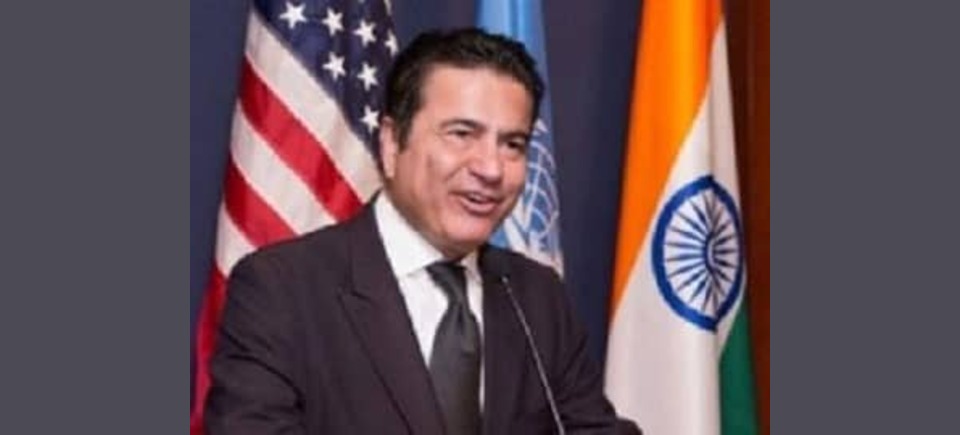
Mukesh Aghi, US-India Strategic Partnership Forum President and CEO on Friday said that the State Department’s decision to waive several in-person interview requirements at embassies and consulates for non-immigrant visas, particularly H-1B visas is a welcome move.
Speaking to ANI, the trade body chief said that the State Department recognizes the immense impact of temporary work visas on America’s economy, as H-1B visas serve as the vital link connecting India’s tech talent for America’s tech economy.
“The State Department’s decision to waive several in-person interview requirements at embassies and consulates for non-immigrant visas, particularly H-1B visas is a welcome move,” he told ANI.
“The pandemic has precluded mobility and several Indian nationals in the United States haven’t been able to travel back for stamping. At the same time, several folks in India were unable to get appointments at the local missions due to COVID protocols and delayed wait times. The State Department recognizes the immense impact of temporary work visas (particularly H-1B) to the US economy, as H-1Bs visas serve as the vital link connecting India’s tech talent for America’s tech economy. Hence, this is a win-win situation for both countries,” the USISPF President added.
Amid growing concerns of COVID-19 surge, the US on Thursday (local time) is temporarily dropping an in-person interview requirement for some work-visa categories: H-1B, L-1 and O-1.
Applicants for H-1B, L-1 and O-1 visas applying from abroad won’t be required to do an in-person interview at a US consulate, typically the final step before a visa is issued. Those categories represent the most common visa types companies use to attract high-skilled talent from abroad.
The consular officers are now temporarily authorized, through December 31, 2022, to waive in-person interviews for certain individual petition-based non-immigrant work visas and their qualifying derivatives in the following categories: Persons in Specialty Occupations (H-1B visas), Trainee or Special Education Visitors (H-3 visas), Intracompany Transferees (L visas), Individuals with Extraordinary Ability or Achievement (O visas), Athletes, Artists, and Entertainers (P visas), and Participants in International Cultural Exchange Programs (Q visas), read a US State Department release.
However, embassies and consulates may still require an in-person interview on a case-by-case basis and dependent upon local conditions.
“We encourage applicants to check embassy and consulate websites for more detailed information about this development, as well as current operating status and services,” added the release.
More information
https://indicanews.com/us-decision-to-waive-in-person-interview-for-h-1b-visas-a-welcome-move-trade-body-chief/
Categories
The Problem With CAATSA
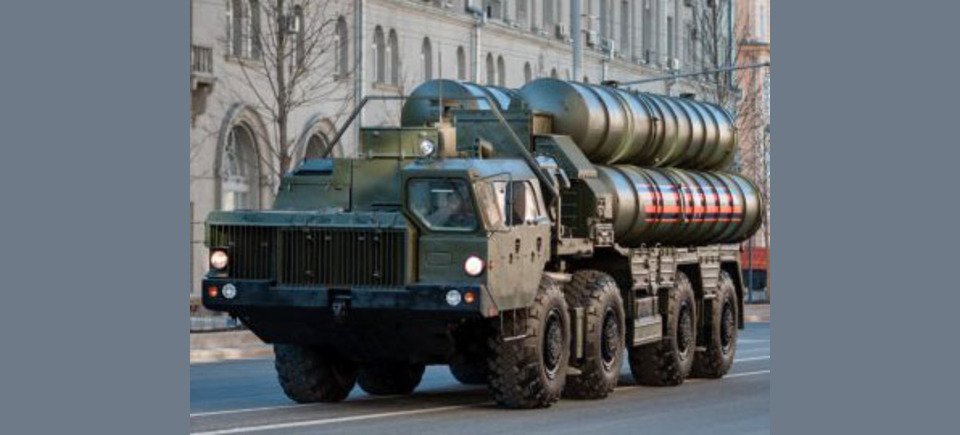
With a Russian-made S-400 long range Surface to Air (SAM) missile system set to arrive in India by the end of this year, there remains speculation as to whether India will be sanctioned by the United States under the Countering America’s Adversaries Through Sanctions Act (CAATSA). Under this act, the U.S. government has the authority to sanction countries that engage in “significant transactions” with North Korea, Iran, or Russia through the purchase of military equipment. The Indian government has yet to publicly comment, as New Delhi only recognizes United Nations sanctions, and not country specific sanctions, such as CAATSA. However, New Delhi is eligible for a waiver, a provision that was included in CAATSA.
Until now, the only item that has qualified as a “significant transaction” is the purchase of the S-400 SAM system, which has so far been purchased by China, Turkey, and India, out of which China and Turkey have been sanctioned under CAATSA. To understand the dynamics behind CAATSA, and to assess New Delhi’s chances at a waiver, we will further examine bilateral relations between the U.S. and each of these countries and the effect of CAATSA sanctions on China and Turkey.
China
China is an aspiring superpower. In its expansionist aspirations, it is flouting international maritime law in an attempt to acquire contested islands in the South China Sea, threatening Taiwan with provocative military drills, and has disputed land boundaries with India and Bhutan. It has violated human rights on multiple fronts, from clamping down on pro-democracy activists in Hong Kong to the repression of the Tibetans as well as the ethnic Uyghur population in the Xinjiang region of western China. Beijing has violated intellectual property rights violations and stolen technology over the decades in order to bolster its capacity to manufacture cheap products that it sells globally. Both Beijing’s outlook and its pugnacious behavior are in contravention to Washington’s professed values.
China acquired the S-400 in order to fortify its superpower aspirations and was hit with sanctions under CAATSA in 2018. The sanctions, which were supposed to deter China from military purchases from Russia, have been futile. This is evident from the country’s recent purchase of Mi 171Sh combat helicopters from Russia, and the continued technological collaboration in defense between the two countries.
Turkey
Turkey is a NATO member and, with the help of the U.S., has built a robust aerospace industry over the past half-century. Turkey owns over 270 F-16 fighters and has an assembly line that can manufacture and upgrade the aircraft. Thanks to its robust aerospace industry, Turkey is in the process of building its own fifth generation fighter, the TFX, which is scheduled to make its first flight in 2025. Turkish President Recep Tayyip Erdogan had a unique reason for purchasing the S-400 system: to defend himself from his own air force.
Turkey received the first consignment of S-400s in 2018, and immediately the U.S. cancelled a sale of F-35 fighters to Turkey. After a considerable delay, Trump imposed CAATSA sanctions on Turkey in December 2020, indicating that there is a degree of discretion in the government’s imposition of CAATSA sanctions. Despite CAATSA, Turkey is contemplating buying additional S-400 systems from Russia. Turkish Defense Minister Hulusi Akar earlier this year threatened that his country needs 200 fighters and if can’t get them from U.S., it will get them from Russia. As a result, Washington is now in talks with Ankara to sell additional F-16 fighters to Turkey.ADVERTISEMENT
India
India felt the need for a long-range SAM to counter the S-400 system acquired by China, and eventually settled on the purchase of a S-400 SAM system of its own. India has been in negotiations with Russia over the purchase since 2015, well before CAATSA came into law in 2017. On top of that, India had acquired weapons from the erstwhile Soviet Union for over half a century. Even today, over half the inventory of the Indian Army, Air Force, and Navy is Russian and therefore Indian forces rely on Moscow for spares and upgrades. New Delhi has repeatedly leased a nuclear submarine from Moscow since 1988, and Russia has helped India develop a nuclear submarine program. The main offensive weapon for all new Indian naval ships is the Brahmos supersonic missile, a joint venture with Russia. Discussions for building Russian helicopters, small arms, and ships in India are underway. However, since the end of the Cold War and increased rapprochement with the United States, India has been looking westwards, and has expressed an interest in purchasing deck-based fighters, submarines, fighters, tanks, etc., from countries other than Russia.
As compared to India’s long-time defense relationship with Russia, the India-U.S. relationship in defense is relatively nascent. While there has been extensive strategic engagement, including exercises, foundational agreements, designation of India as a Major Defense Partner, etc., the relationship in military hardware is yet to go beyond trade. India’s desire for the formation of joint ventures with and transfer of technology (ToT) from U.S. companies has so far borne little fruit. However, there are avenues of promise, such as the Defense Trade and Technology Initiative, under which co-development and co-production of future technologies are being worked out, and ToT subsequent to the signing of the Industrial Security Agreement, the nuances of which are being finalized.
Neither Washington nor New Delhi had envisioned a robust bilateral relationship in defense, and the current partnership has been nurtured through bipartisan support from both sides. The U.S. recognizes the importance of India, as a key strategic partner and a potential military force that can help provide stability and peace in the Indo-Pacific. Both nations share and espouse the idea of democracy and rule-based order as necessary to bolster security and prosperity in the Indo-Pacific, and both nations are undaunted by coercion. At this juncture, sanctioning India under CAATSA would prove catastrophic for this relationship.
Back in 2017, both Defense Secretary Jim Mattis and Secretary of State Rex Tillerson had predicted that the application of CAATSA sanctions would not achieve the intended purpose of deterring Russian arms sales. This has been proven true in the case of both China and Turkey. The same will happen if U.S. imposes CAATSA on India. It is therefore important for the U.S. to rethink the effectiveness of CAATSA, before it causes further damage to India-U.S. relations and benefits Russia, not just in terms of arms sales, but also in the realm of bilateral relations.
More information
https://thediplomat.com/2021/12/the-problem-with-caatsa/
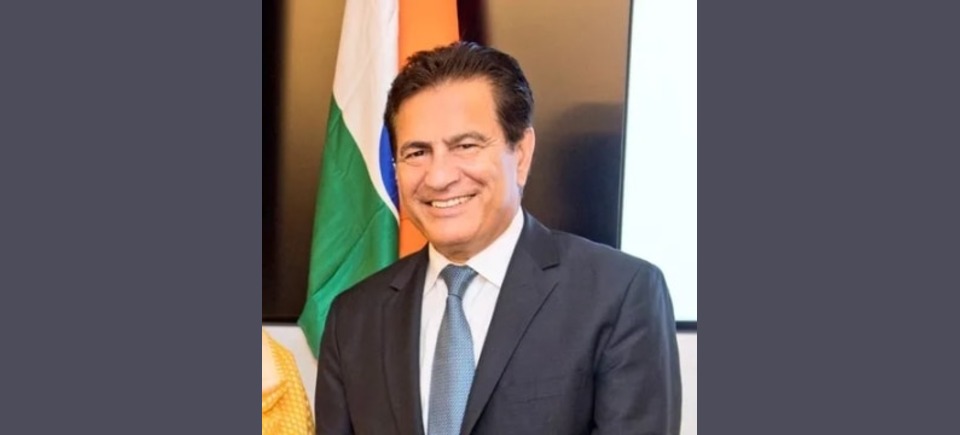
The annual India-Russia summit in New Delhi on December 6 culminated in new defence deals and more than two dozen pacts in diverse areas. On the sidelines, Russian Foreign Minister Sergei Lavrov hailed the S-400 air defence missile systems deal with India, and openly accused the United States of undermining the India-Russia cooperation and “to make India obey the American orders.” The Delhi-Moscow bonhomie was closely watched in Washington, with a distinct sense of unease about the impact the S-400 deal may have on the India-US relations. In this wide-ranging interview with Manish Chand, Founder-CEO and Editor-in-Chief, India Writes Network and India and The World, Dr Mukesh Aghi, President & Chief Executive Officer of the US-India Strategic Partnership Forum, says that the US won’t impose sanctions on India under CAATSA for the S-400 deal as such a step can set India-US partnership by decades and will only benefit the US’ key adversaries, US and Russia. Mr Aghi also spoke about the likely agenda for the 2+2 dialogue between the foreign and defence partners of India and US and the future trajectory of the India-US economic partnership.
(Excerpts from the interview)
Q) From the India-US economic perspective, there is some good news. The meeting between Commerce and Industry Minister Piyush Goyal and US Trade Representative Katherine Tai resulted in the revival of the India-US Trade Policy Forum. To what extent do you think this revival will help reboot the larger economic relationship?
A) Now we have a platform, a platform where you can put up the issues and have a candid discussion. There’s a process now. If you have lawyers and bureaucrats who focus on commas and semi colons in an agreement, then you will not get a trade deal. We’ve been talking between the US and India for the last 20 plus years, and the same issues continue to persist. And we keep on adding more issues like GSP withdrawal. We have to think out of the box to move the India-US economic partnership to a higher plateau.
Q) What about prospects of more American FDI coming into India? Do you think now American businesses are responding better to India’s investment climate?
A) There are three factors at play here. First, China has become a risk factor. Companies are saying – where is my China plus one strategy? Second, India has made a lot of effort in improving the ease of doing business, making India a better investment destination itself. Schemes like Production-linked Incentive (PLI) are encouraging US companies to look at India afresh. Third, there is abundance of capital in the US. The capital cost is almost zero now in the US. The combination of all three things is driving more FDI into India. If you talk to investors in America, the interest in India is extremely high. The Indian economy is growing. They want to be part of this resurgent economy.
Q) What’s the status of India-US FTA negotiations? Do you think that is moving forward?
A) We have started the process. But the question is, do we want to try to boil the ocean? Or do we want to say – let’s take small bites, and leave them chewable and go to the next bite and next bite. To me, that could be a better approach than trying to boil the ocean.
Q) India and the US were planning to have 2+2 dialogue between their foreign and defence ministers. It seems it’s now postponed to January next year. What will be key issues on the agenda?
A) The 2+2 will focus more on geopolitical issues. It’s going to be strategic. The two sides will definitely talk about China, Afghanistan, terrorism, cybersecurity and defense cooperation between two countries.
Q) Do you have a wish list for the 2+2 dialogue?
A) Our wish list is we should look at the Quad more. Let’s look at how we basically drive an economic agenda under the Quad umbrella. If you look at the combined GDP of the four Quad countries, it’s over 32 trillion dollars. India needs at least one-and-a-half trillion-dollar worth of infrastructure investment. There is a lot of synergy between the two countries. Japan has the funding and the knowhow. Australia has high-tech environment. If the Quad focuses on its economic agenda, it will bring enormous benefits to the world.
Q) The Omicron variant has revived fears of a return of the coronavirus pandemic. India and the US have been collaborating in the post-pandemic recovery and in mitigating the pandemic. Going forward, how do you see the India-US counter-pandemic collaboration?
A) Whatever early information we have about the variant is that it is much more transmissive, but it is less pathogenic. So that means you can get it just like a common cold. You don’t have to be necessarily hospitalized. We don’t need to panic about it. Yes, governments have reacted – Israel closed its borders, Japan closed its borders, and every country is putting restrictions on travelers coming in. Yes, we have to control it. But this omicron is not as lethal as the Delta variant has been.
One has to understand that economies flourish because consumers have confidence. And if you take away that confidence, and create the uncertainties, then economies suffer. It’s, therefore, important for the government, India and the US to bring in the sense of confidence that we have enough wherewithal to manage this if it becomes another pandemic. I will say that we shouldn’t be too concerned, but there should be more collaboration. The bigger area of collaboration in this area would be on vaccines. India has the capacity and the capability to make vaccine in volume and at a cheap price. That’s where the US has to leverage India because unless you vaccinate the world, this virus is not going to go away.
Q) Prime Minister Modi has been talking about vaccine equity. And there is such a gap between the vaccinated and unvaccinated. Africa, for example, does not even have 10% of its people vaccinated. Do you think India and US can collaborate in pandemic mitigation and vaccines in third countries?
A) That’s where the Quad comes in. In the Quad, you have the Japanese who are willing to fund, we have Indians who can manufacture and the Americans who can provide the IP , and the Australians who can help in the supply chain. You can see Quad stepping up collaboration in the field of vaccines. But going beyond that, why not Africa? Why not other parts of the world? We will see better collaboration taking place; the world now realizes that unless you vaccinate everybody, this will keep on recurring.

Q) You are here in India at a time when we just had the India-Russia annual summit where India and Russia concluded quite a few defense deals, including one $700 million deal for jointly making assault rifles. Russian foreign minister Sergei Lavrov took a dig at the US and accused it of undermining the S-400 deal. Do you see S-400 deal attracting the US sanctions under CAATSA?
A) I think it’s in the interest of Russia that the Countering America’s Adversaries Through Sanctions Act (CAATSA) is imposed on India. It is in the interest of China that CAATSA is imposed on India. For (Russian Foreign Minister Sergei) Lavrov to proactively poke at the United States in a summit with India was undiplomatic. The relation between India and the US is not at the cost of relations between Russia and India as long as it is not at the cost of USA.

It’s important to understand that India maintains its strategic independence here. Now, if CAATSA is imposed, my position is that India is a sovereign nation. It has the right to decide what equipment it buys and from whom. And at the same time, if we look at S-400 pointed more toward China than anybody else, then it only serves interest of the US. From this perspective, I don’t think the Biden administration will impose CAATSA sanction on India for S-400 purchase. If at all sanctions are applied, it will set the US-India relationship by a few decades.
Q) So, it’s in the larger interest of the US and given the broad bipartisan consensus on sustaining the momentum in relations, it is extremely unlikely that they would contemplate such a move.
A) Absolutely.
Q) Ten months hence, how do you look at the quality of the India-US relationship under President Biden. In Donald Trump, we had a mercurial politician who was prone to all kinds of theatrics. Do you think now there is more stability in the partnership?
A: There is more maturity in the India-US relationship; there is more predictability and there is a sense of a consultative process between the two countries. Above all, there is an acceptance that the two sides may have different viewpoints in some areas, and there is respect for that. Now, we don’t have transactional issues like Harley Davidson coming in the way.
Broadly speaking, the Biden administration is taking a much more structured approach to dealing with India than the Trump administration, which was very transactional. So now, they are putting all the bricks together in areas ranging from healthcare to technology. I am very optimistic and see the India-US relationship going further, higher and deeper in every aspect.

(Manish Chand is Founder-CEO of India Writes Network, India and the World magazine and Centre for Global India Insights, a think tank focused on global affairs.)
More information
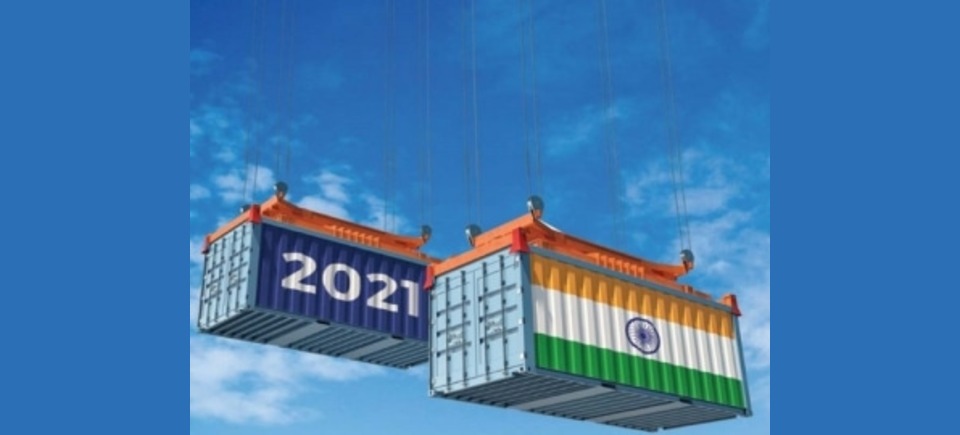
Today, the US-India Strategic Partnership Forum (USISPF) announced two new reports focused on identifying strategies for India to succeed at becoming a reliable manufacturing hub. The two reports are titled, “Enhancing India’s Global Value Chain Competitiveness” and “Shifting Global Value Chains to India”, outlining ways that Indian can enhance its competitiveness in Global Value Chains, along with addressing current challenges related to the country’s Ease of Doing Business (EODB).
The first report, “Enhancing India’s GVC Competitiveness,” highlights that, in the post-pandemic world, global firms’ interest to diversify can fulfill India’s need to make its manufacturing sector more competitive under the “Aatmanirbhar” (Self-Reliance) Initiative while creating numerous high-paying jobs. Through its participation in Global Value Chains (GVCs), India can become a reliable manufacturing hub, but must first enhance its competitiveness. This report offers an analysis of India’s competitiveness in comparison with Thailand and Vietnam in Ease of Doing Business (EODB), Cost of Doing Business, and Labor Markets. It also identifies specific areas of improvement and provides recommendations for Indian policymakers.
The first report makes specific recommendations for:
• Enhancing Ease of Doing Business
• Improving Labor Productivity
• Cutting Cost of Doing Business
The second report, “Shifting GVCs to India,” focuses on the reasons and areas where current gaps are, and how these gaps can be bridged through policy intervention, thereby improving India’s competitiveness. The report provides a comparative analysis and evaluation of the Ease of Doing Business (EODB) in India viz-a-viz Vietnam and Thailand specifically for moving goods across borders in the supply chain. The report focuses on the current regulatory compliance landscape in India around conformity of standards and associated challenges, description of international best practices, recommendations to address the gaps and the expected impact of recommendations on India’s competitiveness as a GVC partner.
Some recommendations in the second report pertain to:
• Conformity Assessment of Product Standards
• Ensuring Policy Stability
• Improving Custom Procedures
• Improving Logistics
The two reports assert that addressing these gaps through adoption of global best practices in standards and customs and ensuring a reliable policy environment while enhancing and streamlining logistics, can boost India’s global share of exports, attract investments, and develop its manufacturing sector.
Dr. Mukesh Aghi, President and CEO of USISPF, said “Since coming to power in 2014, Prime Minister Modi has made it a priority to enhance India’s ranking in the Ease of Doing Business Index. Furthermore, the pandemic era has disrupted supply chains, encouraging countries to focus on rebuilding resilient supply chains and economies. These two reports touch on how India has enhanced its fundamentals to improve the business environment and supply chain connectivity. We are confident of the progress made and look forward to working on future reforms with our colleagues in the government and private sector.” While the studies were on the way, the GoI announced certain policy decisions, such as elimination of regulatory provisions of retroactive taxes, roll-out of single-window system and recognition of conformity assessment from foreign labs. USISPF lauds these measures and expects that their full implementation will enhance ease of doing business in India.
The reports were released at a virtual event, which included special remarks by Manmeet Nanda, Joint Secretary, Department for Promotion of Industry and Internal Trade, Ministry of Commerce and Industry; Gaurav Masaldan, Joint Secretary (Customs), Department of Revenue, Ministry of Finance and Saurabh Gaur, Joint Secretary, Ministry of Electronics and Information Technology. An interactive industry discussion was moderated by Atul Dhawan, Chairperson of Deloitte India.
About the U.S.-India Strategic Partnership Forum (USISPF)
The US-India Strategic Partnership Forum (USISPF) is committed to creating the most powerful partnership between the United States and India. As the only independent not-for-profit institution dedicated to strengthening the U.S.-India partnership in Washington, D.C. and in New Delhi, USISPF is the trusted partner for businesses, non-profit organizations, the diaspora, and the governments of India and the United States.
More information
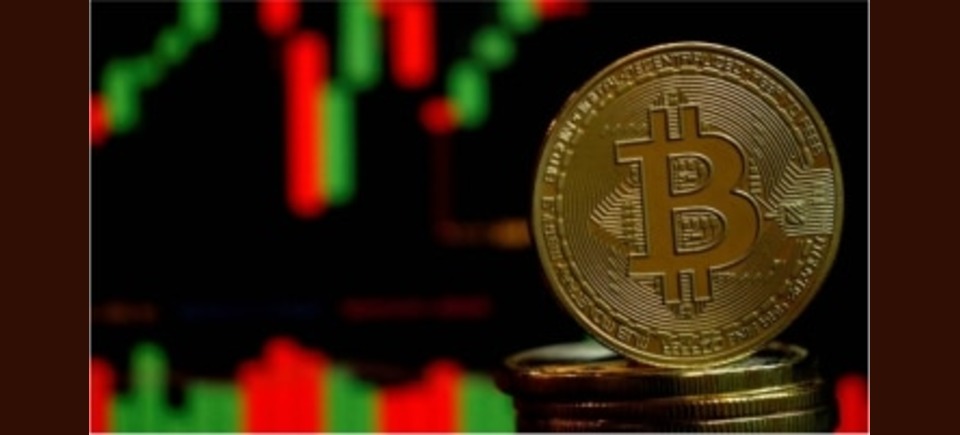
Web 3.0 or Web3 could add $1.1 trillion to India’s economic growth over the next 11 years, but only with the right policies and regulatory framework, said new research from the US India Strategic Partnership Forum (USISPF) and digital currency exchange CrossTower.
Web3 is supposed to be a more decentralised web that challenges the dominance of the tech giants by concentrating the power and data in the hands of the users, instead of the big tech corporations. This means that data is distributed across networks and no single entity owns the information.
Fuelled by Web3, Non Fungible tokens (NFTs) are also projected to emerge into a market of $1 trillion or more, the report noted.
NFTs enable users to own rare digital artifacts through the blockchain network that backs cryptocurrencies. All forms of art, tweets, music, GIFs, and more such digital assets can be owned through NFTs.
According to the report, the digital asset economy’s value to India’s GDP will grow at a 43.1 per cent compounded annual growth rate (CAGR) from $5.1 billion in 2021 to $261.8 billion over an 11-year period, resulting in a $1.1 trillion contribution to the country’s economy, adding that digital asset market capitalization was about $1.5 billion in 2013 and the market capitalisation is at nearly $3.0 trillion today.
Part of the reason why CrossTower believes there will be a significant uptick in crypto within India is that, globally, the adoption of crypto has accelerated past that of the Internet in its short lifespan.
“It took the internet approximately 7.5 years to go from around 100 million users to 1 billion users, whereas Visualize Bitcoin expects adoption from 100 million to 1 billion users operating accounts at cryptocurrency exchanges to take roughly 4 years,” the company wrote in its report.
“Data shows that the citizens of India tend to be natural visionaries and with Web 3.0, India has the opportunity to harness its core resources—its technologically savvy youth—to be a global leader in digital assets and Web 3.0. With the right policies and regulatory framework, India’s regulators can bring safety, combined with hope and prosperity to India,” added Kapil Rathi, co-founder and chief executive officer of CrossTower.
More information

Web 3.0, the idea that the next iteration of the Internet which will be built on concepts of decentralisation, openness, and greater user utility, can help India contribute an additional $1.1 trillion of economic growth to its GDP over the next 11 years, new research from the US India Strategic Partnership Forum (USISPF) and digital currency exchange CrossTower has said.
Digital assets like Bitcoin, Ether, Solana, Algorand, stablecoins and other blockchains are the fuel of the future financial ecosystem and Web 3.0, the report said.
In the first phase of its evolution, the Internet was driven by users consuming information. In the second phase, which is ongoing, users also became contributors with the advent of social media.
In Web 2.0, people’s data is owned by large organisations such as Facebook, Google, and Amazon. In Web 3.0, the data is envisaged to be owned by consumers and resides on blockchain networks, as opposed to centralised organizations.
“Web 3.0 is turning the world on another way, where instead of that data residing in these centralised databases, it is going to reside on the blockchain technology which is not controlled by one organisation. And with that, my data becomes my choice, (and) which advertiser I want to give it to, and if advertiser is paying Facebook, I should get a piece of that,” said Kapil Rathi, CEO and co-founder of CrossTower.
To provide some perspective, in 2013, the market capitalization of the digital asset market was approximately $1.5 billion, and today, the market capitalization is at nearly $3.0 trillion.
Comparing the success of the US in the Internet industry, evident in the fact that 17 US firms are among the top 25 major public tech companies by market capitalisation worldwide, the report said India can take a leap in Web 3.0 if it adopts the right kind of policies.
“The US became a hotbed for tech firms in the early days of the internet largely due to the numerous frameworks that policymakers implemented early on, creating a structure for massive innovative projects. India should consider substantively similar structures, such as private/public partnerships, grants and frameworks for education at every level, sandboxes for regulatory clarity, venture capital programs and incentives for foreign investment, and other strong and clear policies. This will thrust India into a world leadership role in digital assets and Web 3.0,” the report noted.
The Ministry of Electronics and Information Technology on Friday released a “National strategy on blockchain”, which identifies 44 potential areas of using the technology and lays out the broad contours of how it can be leveraged across different sectors.
However, India’s stand on cryptocurrencies, the most well known application of blockchain, remains less than favourable.
“I think it goes back to the fundamental understanding of how blockchain technology works, to get to harness the full potential of this technology (blockchain), which is a distributed ledger. The word distributed means that there are multiple computers. We have this database(s) which are participating in the validation of transactional database. This validation process makes this database fully secure and immutable. You can only add to the data. To promote or incentivize the participants on a blockchain, you need some sort of economic benefit. And that economic benefit is provided by the use of digital assets or cryptocurrencies,” said Rathi.
Talking about concerns of money laundering through cryptocurrencies, Rathi said research has shown that the total number of money normally laundering cases in a traditional banking system were about 3 per cent, whereas a study of all blockchain money laundering scenarios showed that those cases are somewhere between 0.25-0.5 per cent.
“The digital asset industry could see growth that is far more explosive, given how revolutionary it is. Just like the internet, digital assets stand to impact most, if not all, industries. In fact, we believe the potential impact of digital assets is much larger than that of the internet. To seize the prosperity that digital assets can bring, India must take appropriate actions now,” the report concluded.

Digital asset market capitalization was about $1.5 billion in 2013 and the market capitalization is at nearly $3.0 trillion today, according to a report by crypto exchange, CrossTower.
Digital asset economy’s value to India’s GDP will grow at 43.1% compounded annual growth rate (CAGR) from $5.1 billion in 2021 to $261.8 billion over an 11-year period, resulting in a $1.1 trillion contribution to the country’s economy, according to a report by crypto exchange, CrossTower, and US-India Strategic Partnership Forum (USISPF).
As per the report, digital asset market capitalization was about $1.5 billion in 2013 and the market capitalization is at nearly $3.0 trillion today.
The report, titled “India’s $1.1 trillion Digital Asset Opportunity”, also highlighted that the adoption rate of digital assets—as reflected by accounts opened on centralized cryptocurrency exchanges—is growing nearly twice as fast as that of the Internet. It took the Internet approximately 7.5 years to go from around 100 million users to one billion users. The same growth at cryptocurrency exchanges will take about four years, the report added showed.
Dr Mukesh Aghi, president and chief executive officer of USISPF, said, “India is poised for growth to become a $5 trillion economy by 2024-25 as envisioned by Prime Minister Narendra Modi. Digital assets are expected to have tremendous potential in the next 11 years across countries, due to their rapid adoption. They are expected to help India achieve the GDP of $5 trillion economy.”
The research reports also highlighted the sectors that blockchain technology has the potential to contribute to and transform. First, government-related blockchain projects are estimated to drive close to $0.1 billion of GDP to India in 2021, ramping up to USD 5.1 billion in 2032. Second, digital identity could contribute $8.2 billion to India’s GDP in 2032. Third, payments and remittances projects can contribute nearly $21.7 billion to India’s GDP in 2032, as blockchain drives efficiencies for payments.
As per the report, Web 3.0 can drive $1.1 trillion economic growth for India over these 11 years, but only with the right policies and regulatory framework. The global financial services market is estimated to be over $22 trillion in 2021 and will grow to over $28 trillion by 2025.
Kapil Rathi, co-founder and chief executive officer of CrossTower, said, “Data shows that the citizens of India tend to be natural visionaries and with Web 3.0, India has the opportunity to harness its core resources—its technologically savvy youth—to be a global leader in digital assets and Web 3.0. With the right policies and regulatory framework, India’s regulators can bring safety, combined with hope and prosperity to India.”
From digital art to ticket sales, music, collectibles, luxury items and gaming, non-fungible tokens (NFTs) are transforming the way people interact day-to-day. While still nascent, NFTs are projected to emerge into a market of $1 trillion or more, the report noted.
More information
https://www.livemint.com/market/cryptocurrency/india-holds-1-1-trillion-digital-asset-opportunity-by-2032-report-11638787031137.html