

News Month: July





By Dr Mukesh Aghi and Colonel Baljinder Singh (retd)
The conflict in Ukraine is well into its fourth month, the Russian ground and aerial and ground assault continues to bombard Ukrainian cities. The ripple effects have been pervasive beyond just Ukraine and European security.
At stake, is a supply chain crisis that has barely recovered since the COVID-19 pandemic. The implications for India are substantial and extend to how Indian leaders should manage the defense and national security enterprise.
After UkraineWar: A World of Change
India, with its large consumer demand has just started to see a COVID recovery with a demand uptick. Russia’s increased aggression on its western neighbour has catastrophically escalated oil prices to an energy crisis and critical shortages in food, grain, fertilizer, and chemicals.
Russia and Ukraine are both significant players in global energy, food grains and the fertilizer markets. Russia is the world’s third largest producer and exporter of oil; the second largest producer and the largest exporter of natural gas; and the third largest exporter of coal. Russia is also the world’s single largest exporter of wheat and the second largest exporter of sunflower oil and largest exporter of fertilizers overall.
Ukraine is also significant to global food markets, as the largest exporter of sunflower oil, the fourth largest exporter of maize and the fifth largest exporter of wheat.
Ukraine also provides about one-half of the world’s supplies of neon gas, – required for high-precision laser equipment used to manufacture microchips. Furthermore, Russia provided a large share of U.S. supplies of palladium, used in semiconductors and catalytic converters. U.S. sanctions on Russia, combined with continued war and deliberate sabotage of critical assets by warring forces, have resulted in immediate and significant disruption to supply chains and the movement of goods from the Black Sea and Sea of Azov to the world.
Impact on India’s Economy and Security
The ripple effects like a tsunami have hit Indian shores. The country’s soaring inflation rate led the Reserve Bank of India (RBI) to increase the repo rate for the first time since the COVID-19 pandemic with the most recent 50-basis point increase earlier in June. The Indian government has raised the prices of fuel, with the RBI estimating a growth forecast of nearly 7% (6.9%,)likely to become lower if global disruptions continue.
India is a net commodity importer and has witnessed an incremental increase in the cost of edible oils, combined with rising costs of importing crude oil. Prices of commodities like sunflower oil, a staple for Indians, have spiralled. The surge in fuel prices has impacted the price of food items, especially perishable items, exacerbated by increased logistic costs. Shipping costs are crushing small and medium enterprises in particular.
In the defence sector, pending equipment purchases and maintenance, repair, and operation of equipment (MRO) are of critical concern. More than 70 percent of the equipment used by the Indian armed forces is of erstwhile Soviet origin and India is heavily dependent on Russia for the supply of spare parts and components to keep the fleet functional. Plans for upgrading 86 Sukhoi fighters for $47 billion had to be shelved due to unavailability of semiconductors and other parts. The Ministry of Defence is also concerned about disruptions in supply of spares from both Ukraine and Russia, particularly for several tanks and missile systems currently being used by the Indian Army and for gas turbine engines used by several Indian Navy warships.
Another major effect is the delay in rolling out the S-400 Air Defence Missile System, which India had procured from Russia. The delivery of the system had begun in December 2021. India needs these weapon systems as it continues to face a military challenge from China along its disputed Line of Actual Control (LAC). The Indian government is concerned about the possibility of Chinese encroachment and the fraught geopolitical situation triggered by the conflict in Ukraine. Hence New Delhi is stepping up its infrastructure and militarization of the disputed areas.
Russia has come under a wave of sanctions, namely ousted from the international banking system, SWIFT, and hence this will affect impending payments for the S-400. The joint project to manufacture AK 203 rifles in India will likely be delayed, despite bureaucratic formalities completed.
First the pandemic and now Putin’s consequentes have halted global recovery. The longer the war, the more pronounced the effects. Though the Indian economy is resilient and recovering, it isn’t immune, and the importance of diversification, including continuing investment in self-reliance through Atma-NirbharBharat and indigenization of the defense industry.
As far as defence is concerned, India must diversify weapon purchases from global suppliers with terms that include technology transfer and domestic manufacturing through joint ventures. India should also work with partners to rapidly indigenize spares and sub-systems for Russian-origin equipment, taking over the MRO of these systems and reducing reliance on Russia which will be a more unreliable source due to its own needs to recapitalize and the complications of global sanctions. Over the next few years, India may be able to provide MRO for Russian-origin systems to nations, such as Vietnam, who also possess large inventories of Russian material.
Prime Minister Modi has made clear that Atma-Nirbhar Bharat does not mean India alone and now is the time to think out of the box about how Indian self-reliance can contribute to global resilience.
Partners like the United States, European Union (EU), Israel, Japan and Australia can coalesce in this effort as long as we structure major defence procurements that attract international investment and simultaneously build India’s defense and technology ecosystem.
(Dr Mukesh Aghi is the CEO & President and Colonel Baljinder Singh is Director Aerospace and Defence at US- India Strategic Partnership Forum. Views expressed are personal and do not reflect the official position or policy of Financial Express Online. Reproducing this content without permission is prohibited).
More information
https://www.financialexpress.com/world-news/the-ukraine-crisis-and-the-supply-chain-conundrum/2579599/

Industry associations, including those that count ecommerce majors Walmart-owned Flipkart and Amazon India as members, have sought the revision of a host of contentious clauses in India’s draft ecommerce rules including the deletion of those seeking to include related parties and logistics service providers within the definition of an ecommerce entity, ban flash sales and mandate the listing of local alternatives while selling imported goods or services.
In a submission to the department of consumer affairs on Wednesday, USISPF (US-India Strategic Partnership Forum) said that the draft proposals are “problematic and fail to take into consideration that not all marketplaces are alike and may not share similar relationships with buyers and sellers, negating the need for or effectiveness of prescriptive measures”. The submissions by the Internet and Mobile Association of India (IAMAI) and IndiaTech were also on similar lines.
The USISPF has sought the deletion of clauses to include ‘related parties and service providers for order fulfilment’ as ecommerce entities as well as those banning flash sales, registration requirements with DPIIT (Department for Promotion of Industry and Internal Trade) and the fall-back liability on online marketplace – where platforms have to be liable if a customer is unhappy with the products.
ET has reviewed the submissions made separately by each of the groupings.
The draft proposals were first announced on June 21 triggering an immediate reaction with online platforms, brands and select sellers criticising it. Offline traders and smaller online sellers have welcomed some of the proposals but have also demanded greater clarity.
Following an uproar from the industry, the government extended the deadline for stakeholders to submit their feedback to Wednesday, July 21.
Read our newsletter here for more on the recommended changes
Onerous Clauses
Terming the mandate to classify goods and services based on the country-of-origin and, for online marketplaces to offer locally made alternatives to consumers at pre-purchase stage as “onerous”, the USISPF said it would lead to increased costs and impede innovation ‘without a clear policy justification, since it is not apparent why consumers would require such a filter mechanism’. It sought the retention of the current framework without further changes.
Last year, following a border clash between India and China, the Centre had directed etailers to update product listings with information on the country-of-origin.
However, ecommerce companies and sellers are yet to comply as it’s cumbersome to update millions of listings online, according to industry executives who point out that a single product can include parts made in multiple places. Besides, a trader may buy an imported product locally.
“The proposed amendments deal with issues which have no nexus with aspects of consumer protection, and most of the suggested changes do not seem to further consumer interest being the core objective of the Consumer Protection Acts (CPA) and its related proposed amendments,” USISPF said in its note to the department of consumer affairs.
In a statement to ET, Susan Ritchie, VP – trade and technology policy, USISPF, said the forum supports consumer protections for brick-and-mortar and digital sales channels alike and that such protections should apply regardless of where or how purchases are made. “The proposed rules, however, create an artificial distinction between physical sales and digital sales channels that are only designed to inhibit the growth of digital sales rather than to protect consumers,” she said.
IAMAI, which has attended government meetings held earlier this month, also highlighted its concerns over policy changes that do not provide a level-playing field between online and offline retailers.
The amendments also “fail to recognise the different ecommerce models such as inventory/marketplace”, it noted. Clubbing the two would “impact businesses as well as consumers and will create a high level of uncertainty in an industry that is still in its growth stages and can benefit from light-handed regulation,” the industry lobby stated.
Also Read: New India e-commerce rules and their impact, explained
Etailers have also strongly objected to the attempt to ban online flash sales, arguing that such a move would be anti-consumer and, if at all mandated, should be applicable to both online and offline retailers.
Meanwhile, the Rashtriya Swayamsevak Sangh (RSS) affiliate Swadeshi Jagran Manch (SJM), which also counts offline traders among its members, has suggested the government should not put a blanket ban on flash sales. Instead, it should clearly define what would count as ‘price manipulation’ and discourage marketplaces to favour sellers related to ecommerce platforms, SJM said.
Soon after the draft laws were first published, the government came out with a clarification saying it won’t ban all flash sales but only ‘conventional flash sales’. Etailers, sellers and brands are still unclear about what is being defined as ‘conventional’.
The SJM note to the government, however, proposes tighter monitoring and regulation of ecommerce platforms and further protection for merchants selling on ecommerce platforms.
Ambiguities Persist
On July 5, ET reported that firms like Amazon India, Flipkart and the Tata Group had raised concerns with the government in a meeting over issues like “related-party clause”, the proposal to not allow an ecommerce platform from using its name in its private brand, among others.
A common theme in the submissions made on Wednesday were aspects pertaining to antitrust and data-related clauses with the industry groupings requesting that such clauses be left out of the purview of the ecommerce policy while other concerned departments or ministries address it.
“The amendments raise several concerns and ambiguities from an ecommerce business standpoint, which are also likely to have the unintended negative consequences for consumers ultimately,” IAMAI stated.
“We humbly submit that in their current form, the amendments seek to regulate aspects of the ecommerce sector that have no bearing on consumers’ interests at all, and in doing so, could impact consumer interest negatively.”
IndiaTech, which also represents Indian online platforms that offer services, has sought more clarity on applicability of these proposed rules. It has asked for exemption of services, such as cab-hailing, travel, gaming and insurance from the ambit of these proposed amendments as many of these are governed in detail by their respective regulations and may have separate regulators.
“The rules transgress from consumer welfare into various domains such as FDI, trade, competition, personal data protection, data sharing, related party, aggregator guidelines, Insurance etc. which technically do not fall under the ambit of Consumer Protection and have been adequately addressed by other laws, regulators and ministries, said Rameesh Kailasam, CEO, IndiaTech.
“Ideally a reference to those existing provisions and their validity should now be prescribed by the ministry for those respective sectors to ensure avoidance of such conflicts with existing regulations and regulators,” he said.
More information
https://economictimes.indiatimes.com/tech/technology/industry-groupings-seek-major-changes-in-draft-ecommerce-rules/articleshow/84624570.cms
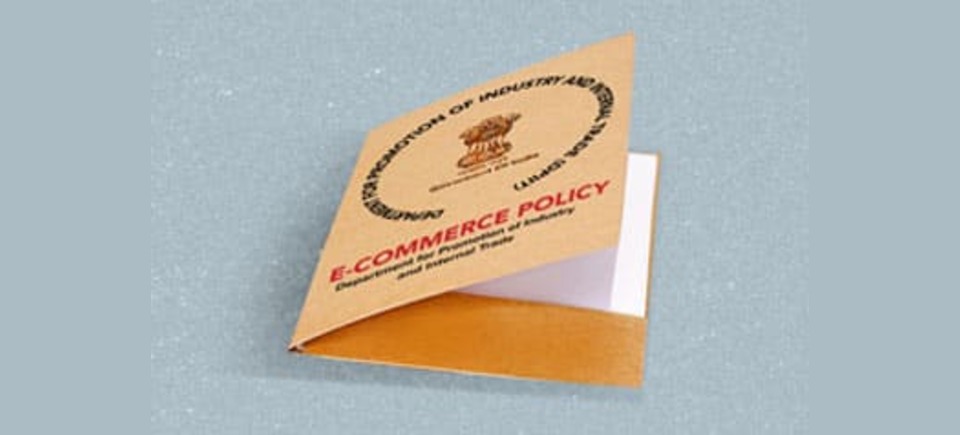
Hi, Digbijay here. We here at ETtech have been closely tracking all the important developments around the much-talked and debated draft proposals for e-commerce in India.
Today, we are reporting on all the recommendations from top industry groupings like US-India Strategic Partnership Forum (USISPF), Internet and Mobile Association of India (IAMAI), IndiaTech and Rashtriya Swayamsevak Sangh (RSS) affiliate Swadeshi Jagran Manch (SJM) which were submitted on Wednesday.
What’s worrying the industry? They say the recommendations in the draft policy are not under the purview of the Department of Consumer Affairs. Changes suggested like inclusion of “related parties” and logistics service providers within the definition of an e-commerce entity, ban of flash sales and mandatory listing of local alternatives while selling imported goods or services will hurt the sector, they say.
Also Read: New India e-commerce rules and their impact, explained
Please delete: While many recommendations are asking for the draft rules to be diluted, USISPF has asked for some of the most-talked-about clauses to be completely deleted.
- Flash sales
- Local alternatives while selling imported goods or services
- Inclusion of related parties and service providers for order fulfilment as e-commerce entity
Who said what?
USISPF’s submissions: “The proposed amendments deal with issues which have no nexus with aspects of consumer protection, and most of the suggested changes do not seem to further consumer interest being the core objective of the Consumer Protection Acts (CPA) and its related proposed amendments.”
Susan Ritchie of USISPF told ET: “The proposed rules create an artificial distinction between physical and digital sales channels that are only designed to inhibit the growth of digital sales rather than to protect consumers. As proposed, the draft guidelines exceed the provisions of the underlying legislation, the Consumer Protection Act, 2019 and should be aligned to implement the law as written,” she said.
RSS affiliate SJM’s submissions: SJM has also sought a better definition of what would be construed as ‘price manipulation’ in the context of flash sales. SJM, which has been critical of etailers and counts offline traders among its members, is seeking tighter monitoring of e-commerce platforms and its practices like alleged biased treatment of select sellers by a marketplace.
IndiaTech to ET: IndiaTech, has been closely working with many online platforms offering services, instead of just selling goods. The group’s CEO Rameesh Kailasam told us this: “The rules transgress from consumer welfare into various domains such as FDI, trade, competition, personal data protection, data sharing, related party, aggregator guidelines, insurance, all of which technically do not fall under the ambit of consumer protection and have been adequately addressed by other laws, regulators and ministries.”
What’s next? The Department of Consumer Affairs has held the view that its proposals are in line with some of the international markets like the US, Europe among others. In fact, at a meeting with e-commerce firms earlier this month, officials from the department told these platforms that the proposals weren’t as stringent as the ones globally. Clearly, e-commerce companies don’t think as much. Now that all the feedback is with the government, we’ll have to wait for the final contours to be drawn up in what’s arguably the most significant event for the nascent industry.
More information
https://m.economictimes.com/tech/newsletters/morning-dispatch/e-commerce-draft-policy-recommended-changes/amp_articleshow/84622756.cms

The contributions include an unspecified donation to the PM-CARES Fund which was termed as a part of “the government of India’s national effort to fight COVID-19 and help the fellow citizens affected by this health crisis”
Global buyout major KKR on Wednesday said it has contributed Rs 30.5 crore for COVID relief in the country. The firm established a ‘KKR Relief Fund’ last year and over the past 15 months offered assistance on a variety of medical and humanitarian programmes, as per an official statement.
The contributions include an unspecified donation to the PM-CARES Fund which was termed as a part of “the government of India’s national effort to fight COVID-19 and help the fellow citizens affected by this health crisis”. It also included funding for oxygen concentrators arranged by the US-India Strategic Partnership Forum, contributions to the non-profit ACT Grants India along with investee companies, long-term development assistance to International Justice Mission and Teach for India, it said.
“Our ties go well beyond our investments — India is home to our employees and their families. The donations made by KKR and other global corporations have supported India to get through the worst of the pandemic,” its chief executive for the country Gaurav Trehan said.
He added that there is much more to do before the country can recover and the firm wants to be part of a long-term solution. KKR has invested over $5.7 billion in the country since its first bet in 2006.
More information
https://www.businesstoday.in/amp/latest/corporate/story/kkr-contributes-rs-305-crore-for-covid-19-relief-in-india-302012-2021-07-22

‘It will create hurdles to ease of doing business in India’
The US India Strategic Partnership Forum (USISPF), which has Deloitte’s Global CEO Puneet Renjen, Adobe’s CEO Shantanu Narayan and former Cisco chief John Chambers on its board, has expressed concerns over the proposed amendments to the e-commerce rules, stating that it will create hurdles to the “ease of doing business” in India.
“A disabling regulatory framework could significantly impede the growth of the sector. This is the context that should be considered while bringing in any changes to the rules governing this rapidly evolving sector,” the USISPF stated in its 11-page submission to the Ministry of Consumer Affairs.
The not-for-profit body urged the authorities for a “serious consideration” of the growth potential of the e-commerce industry, as well as its contribution to the Indian economy during the pandemic. It also pointed out that the e-commerce industry has been a critical aspect to generate foreign investment in the sector. This, according to the institution, is a “direct result of a light-touch regulation”.
‘Rules are confusing’
On the proposal to broaden the definition of e-commerce, it said that the rules are extremely vast, confusing and lead to additional compliances. “This is problematic and fails to take into consideration that not all marketplaces are alike and may not share similar relationships with buyers and sellers, negating the need for or effectiveness of prescriptive measures,” said the USISPF.
On the issue of mandated registration of all e-commerce entities, the industry body pointed out that it is a hurdle to the “ease of doing business”. Thus, it recommended that the registration requirement should be deleted, since the existing rules already require the e-commerce platform to provide comprehensive disclosures.
“Several new prohibitions on e-commerce entities give rise to the concern that the Proposed Amendments create a discriminatory regulatory environment, where obligations are imposed on digital platforms that do not apply to their brick-and-mortar counterparts,” it said.
There are several examples: first, marketplaces now have to index products and sellers by country of origin, build search functionalities, employ experts to assess all products in the inventory of their sellers (not even their own inventory). To impose a similar obligation on a mall owner, for example, might appear highly incongruous, said the USISPF.
More information
https://www.thehindubusinessline.com/economy/us-india-strategic-partnership-forum-red-flags-proposed-e-commerce-policy/article35450548.ece/amp/
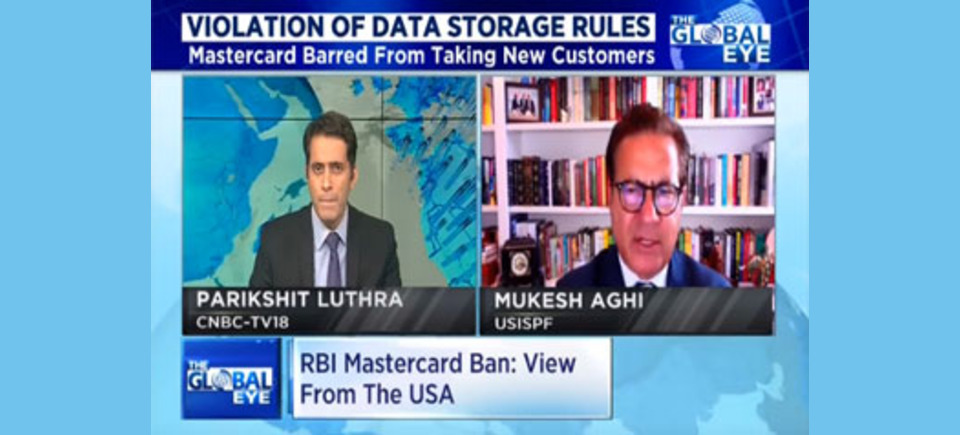
The Reserve Bank of India (RBI) has imposed a ban on Mastercard Asia Pacific from issuing any new debit or credit cards.
According to the central bank, the action follows a violation of the RBI’s norms on the storage of payment systems data. The ban will come into effect starting from July 22 with the RBI clarifying that this action will not impact existing Mastercard customers.
The move comes less than three months after the RBI barred American Express and Diners Club International from issuing new cards due to similar violations. Also in focus are the government’s draft e-commerce rules, where the Centre has decided to extend the deadline for public comments on the proposed rules to August 5.
For context, the rules seek to ban fraudulent flash sales as well as bar-related companies from selling their products directly on the platforms. They also make it mandatory for e-commerce companies to appoint grievance and compliance officers.
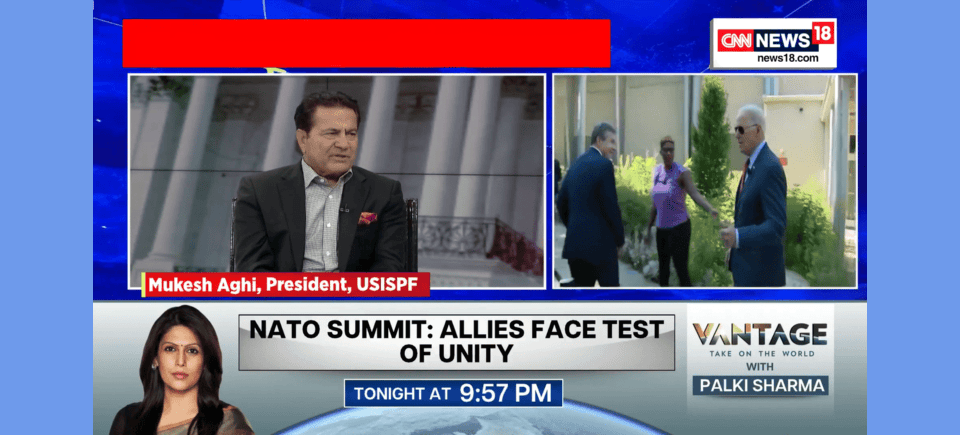
To discuss this, CNBC-TV18’s Parikshit Luthra spoke to Mukesh Aghi, president of USISPF.
More information
https://www.cnbctv18.com/videos/business/ban-on-mastercard-and-new-draft-e-commerce-rules-send-wrong-message-to-investors-usispf-10015321.htm

The severity of the Covid-19 crisis in India has had a profound effect on millions of people, and it has led to an outpouring of global aid and support
The severity of the COVID-19 crisis in India has had a profound effect on millions of people, and it has led to an outpouring of global aid and support.
With more than 15,000 colleagues in the region, here is how American Express is supporting their colleagues, their families, and communities as they grapple with this challenge.
Their actions to provide direct COVID-related support and resources for their colleagues including:
Running vaccination camps for colleagues and their dependents in Gurugram, New Delhi, Bengaluru, Mumbai, Chennai, Hyderabad, Kolkata and Pune. Around 4,256 of the company’s colleagues, contractors and their dependents took advantage of these events. The company is continuing to work with leading hospitals to expand the coverage of vaccination camps to other cities as well.
Securing and deploying a number of oxygen concentrators that are being provided, free-of-charge to colleagues and their dependents who have been prescribed the equipment to deal with health issues associated with COVID-19.
Providing at-home testing and collection of COVID-19 RT-PCR tests for all colleagues and their families.
Establishing a 24*7 COVID-19 hotline dedicated to Amex colleagues and their dependents to help them find doctors, hospitals, isolation facilities, ambulances, and other medical assistance.
American Express has also made a number of significant improvements to their health and benefits plans to assist their colleagues. All these benefits can be availed by families in India of American Express colleagues with Indian origin residing anywhere in the world.
The company has increased financial assistance by allowing them to claim loans from their retirement accounts and extending a 45-day salary advance to most full-time colleagues to help them through this period.
American Express improved its insurance plans to cover all COVID-19 testing costs, home quarantine, ICMR recognized hotel isolation cost, hospital care cost, ambulance charges and mental health support. The company has also expanded medical coverage to include parents and partners of LGBTQ+ colleagues.
To support the bereaved families of American Express India colleagues, the company has increased their ex gratia benefit to two-years’ base salary or Rs15 lakhs, whichever is greater. This benefit is also being extended retroactively from January 2020 when the pandemic began, regardless of the cause of death.
Beyond the company’s continued support of colleagues in the region, American Express is also supporting local relief efforts to help boost the health infrastructure of India. The company has assisted in funding portable hospitals, patient home management and quarantine facilities for COVID patients, and oxygen plants in the most affected areas.
Manoj Adlakha, SVP and CEO, American Express Banking Corp. India, said, “The situation in India is improving, but we are by no means in the clear. Our company is continuously evaluating new ideas and resources to help us look after ourselves and each other. We will continue to seek the feedback of our colleagues, partners and communities to ensure we are helping as best we can.”
So far, American Express has pledged US$2.9 million to support various organizations such as Dastkar, the American India Foundation, the NASSCOM Foundation, Goonj, Save the Children, and the Society of Nutrition, Education and Health Action (SNEHA) to help with COVID relief efforts in the underserved communities. This includes a donation of US$350K to USISPF for disbursing 1000 Oxygen concentrators and setting up a 100-bed portable hospital in partnership with the Government of India to address critical healthcare infrastructure needs in the most affected areas.
The company has also made it possible for their colleagues outside of India to contribute to these efforts through a global giving campaign dedicated to COVID relief in India. American Express will double the impact of this initiative by matching eligible donations.
This story is provided by BusinessWire India. ANI will not be responsible in any way for the content of this article.

NEW DELHI: A key cross-national industry body has pitched for an economic partnership deal between India, the United States, Japan and Australia –
Source: The Economic Times
Source Link: https://economictimes.indiatimes.com/news/economy/foreign-trade/india-must-try-for-quadrilateral-fta-after-closing-us-trade-deal-suggests-usispf/articleshow/77161365.cms

US Ambassador to India Kenneth Juster has flagged concerns about India’s policy environment and ‘micro-management’ of the economy.
Source: CNBC-TV-18
Source Link: https://www.cnbctv18.com/economy/india-needs-open-markets-economic-growth-cant-be-micro-managed-says-us-ambassador-to-india-6417111.htm
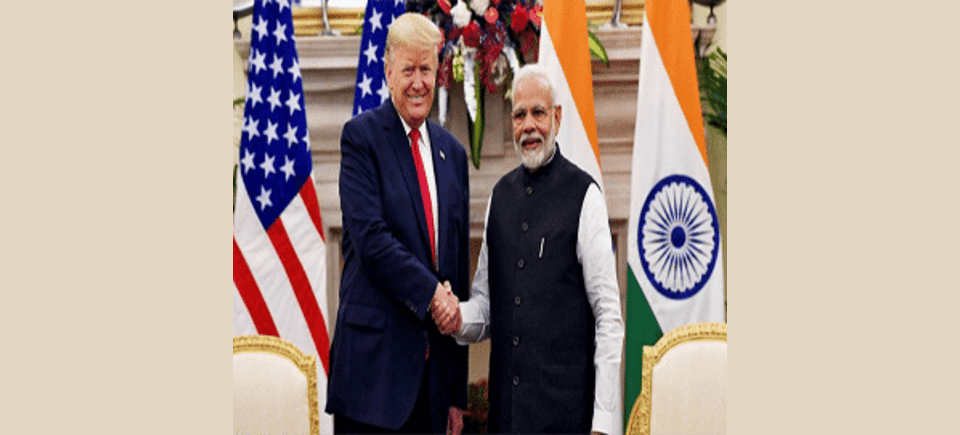
Exclusive Reuters report says India, one of the largest consumers of dairy products, has proposed a quota-based system for US dairy imports.
Source: The Print
Source Link: https://theprint.in/world/india-wants-concession-on-drug-exports-to-us-offers-to-slash-farm-goods-prices-report-says/465168/