
News Month: June
JUNE 21, 2023
Today, the U.S. Department of Defense (DoD) and the Indian Ministry of Defense (MoD) launched the IndiaU.S. Defense Acceleration Ecosystem (INDUS-X) to expand the strategic technology partnership and defense
industrial cooperation between our governments, businesses, and academic institutions. This initiative builds on a commitment by the U.S. and Indian National Security Advisors in January 2023 to launch an “Innovation
Bridge” to connect U.S. and Indian defense start-ups as part of the U.S.-India initiative on Critical and Emerging Technology (iCET). India’s Innovations for Defense Excellence (iDEX) and the Office of the Secretary of Defense (OSD) are leading INDUS-X activities for MoD and DoD, respectively.
With support from our governments, closer cooperation between our private sectors and research institutions will catalyze innovation within our defense industrial bases. Through INDUS-X, we will strengthen ties between our defense industrial ecosystems to make them more innovative, accessible, and resilient.
At the two-day catalyst event, hosted by the U.S.-India Business Council at the U.S. Chamber of Commerce, defense innovation stakeholders from across our governments, academic and research organizations, investors,
defense firms, technology incubators, industry associations, and other start-up enablers came together to develop ambitious initiatives to drive INDUS-X forward.
The below collaboration agenda outlines prospective actions for INDUS-X stakeholders to advance defense innovation between the United States and India. The agenda provides timelines and metrics to measure progress
in implementing collaboration initiatives envisioned under INDUS-X. INDUS-X stakeholders intend to advance this collaboration agenda through the following efforts:
Read More: FACT SHEET INDIA-U.S. DEFENSE ACCELERATION ECOSYSTEM (INDUS-X)
Exploring the trajectory of the relationship in four key sectors: defense, global order, business and technology, and climate change.
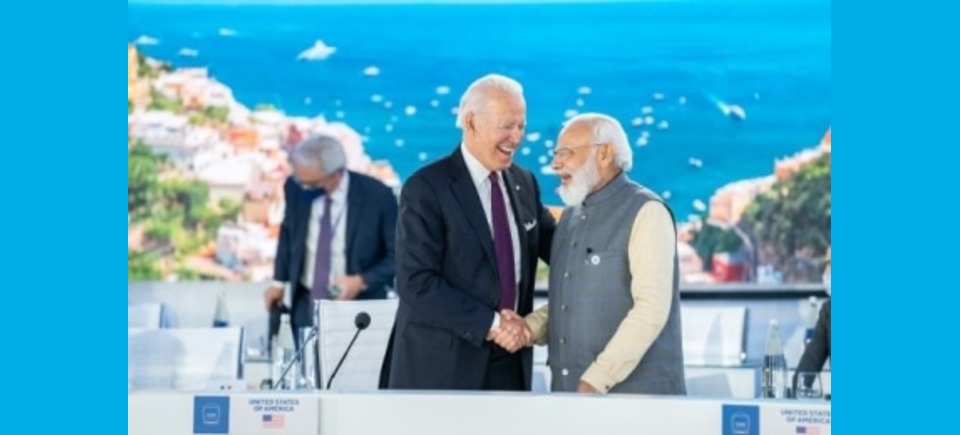
As Indian Prime Minister Narendra Modi prepares for his highly anticipated visit to Washington, the global stage is set for an important chapter in the India-U.S. relationship. As the United States deepens its Indo-Pacific engagement and India solidifies its regional prowess, the partnership between these democratic powerhouses has the potential to reshape the geopolitical chessboard. Against a backdrop of transformative changes, this pivotal moment prompts a question: What lies ahead for these two influential nations?
In this conversation-style piece, we bring together a group of accomplished experts, each illuminating a different facet of the complex tapestry that is India-U.S. relations. From shared concerns over global security to mutual interests in emerging technologies and sustainable development, our expert commentators dissect the intricate threads that bind these nations together – unraveling fresh prospects and critical challenges that await.
Elevating the Defense Partnership
–C. Raja Mohan
For nearly two decades and across many administrations, India and the United States have steadily expanded their bilateral strategic partnership. While much progress has been made in the last few years, Modi’s visit to Washington is expected to give the relationship “escape velocity,” in the words of a U.S. National Security Council official and Indo-Pacific coordinator. In boosting their bilateral cooperation amid a convergence of the two countries’ interests in Asia, the visit will focus on consolidating recent efforts to deepen ties in defense as well as the high-technology domain.
The last few weeks have seen intense consultations between the two sides and a series of high-profile visits to finalize the outcomes of the talks between Modi and U.S. President Joe Biden on June 22. U.S. Defense Secretary Lloyd Austin and National Security Advisor Jake Sullivan visited New Delhi earlier in June. India’s National Security Advisor Ajit Doval and Foreign Secretary Vinay Kwatra were in Washington in January and June of this year, respectively.
A framework for cooperation in advanced technologies, a road map for defense industrial cooperation, and an agreement for expanding strategic trade are now in place. Modi and Biden have been pressing their respective bureaucracies to overcome the many regulatory obstacles to more productive collaboration in these areas. Agreements to facilitate the manufacture of jet engines for Indian fighter aircraft by General Electric and to promote cooperation in critical and emerging technologies are expected to figure prominently among the deliverables from Modi’s state visit to Washington.
India, which could not access U.S. weapons during the Cold War, has bought $20 billion worth of arms over the last two decades. The armed forces in India and the United States engage in extensive bilateral military exercises and minilateral ones with the four partners in the Quad Forum – Australia, India, Japan, and the United States. The ambition is to look beyond arms purchases and facilitate the production of weapons in India through collaboration between defense firms in the two countries.
The incentive for the United States is helping India reduce its historical dependence on Russia for its military supplies. For New Delhi, it is about fulfilling Modi’s goal to turn India from the world’s largest importer of weapons into a major producer of weapons. Such collaboration will also help India bridge the massive gap in military capabilities with China with strong support from the United States. Both New Delhi and Washington have a strong interest in stabilizing the Asian balance of power and coping with the geopolitical churn triggered by China’s rise and Beijing’s assertiveness in Asia.
Navigating the Global Order
–Manjari Chatterjee Miller
The India-U.S. partnership has been transformed from a tense relationship into one of expanding cooperation across sectors. Although many, particularly in the United States, had hoped for a close partnership for years, few would have predicted the extent of the transformation in the relationship. India and the United States now collaborate on security challenges, defense, intelligence consultations, military exercises, health, disaster preparedness, emerging technologies, and even education. Both countries have concerns about China’s rise, contributing to a shared sense of urgency about the global order if China were to become the next superpower.
However, important challenges to the relationship remain. The United States worries about India’s commitment to the norms of the current global order and its perceived reluctance to rock the geopolitical boat. India’s reliance on Russian military imports and oil (Russia has displaced Iraq as India’s top oil supplier), and its reluctance to unambiguously condemn Russia in the Ukraine war, remain thorns. India’s position in the event of an escalation or even conflict in the Taiwan Strait is also ambiguous. The idea of mutual defense, a key plank of many of the United States’ bilateral partnerships, is unthinkable for the Indian government.
The state of Indian democracy and reports of the Indian government violating the civil liberties of minorities and journalists are another cause for U.S. concern. While the Biden administration is unlikely to make any public criticism – as made evident in Modi’s upcoming state visit – members of Congress may not have such inhibitions. Modi is set to address a joint meeting of Congress on June 22.
From India’s perspective, the Indian government was anxious, if not publicly critical, about the U.S. withdrawal from Afghanistan and what seemed to be a pivot away from important issues, such as Pakistan-sponsored cross-border terrorism. India also worries about the divisions in U.S. politics and what next year’s presidential election could portend for the United States’ performance on the world stage and its commitment to its partners. U.S. immigration policy also poses a problem. Legal pathways of immigration for Indian citizens, a highly skilled source of labor for the United States, have run into myriad issues, including absurdly long wait times for visas. The India-U.S. trade relationship is also narrowly focused and hampered by Indian protectionism.
Overall, India sees itself as having a large stake in the success of the India-U.S. relationship – a drastic change from its past attitude – and the United States sees India as one of its most valuable partners today. This trajectory is unlikely to change in the near future.
Elevating Business and Technology Horizons
–Mukesh Aghi
Modi’s upcoming visit to Washington holds historical significance, as it marks the first state visit by an Indian prime minister to the United States in over a decade. The India-U.S. strategic partnership, which I believe is the most defining relationship of the 21st century, encompasses a wide range of shared concerns and priorities. These include deepening trade and commercial ties, strengthening defense and technology relations, joint clean energy efforts, and collaboration on health care in the wake of the COVID-19 pandemic.
In addition to these priorities, there is a growing focus on rebuilding and restoring disrupted supply chains in the aftermath of the pandemic. Many CEOs are now adopting a “China plus one” strategy, seeking to diversify their supply chains. This presents an opportunity for New Delhi to bolster its manufacturing economy through initiatives such as Make in India and the Production Linked Incentives (PLI) schemes. Recent instances of successful India-U.S. commercial cooperation include Air India’s purchase of over 200 Boeing aircraft, which carries significant implications for the commercial partnership and the American manufacturing sector.
Furthermore, Apple’s decision to establish its first retail store in India not only enhances the country’s attractiveness to other tech companies but also showcases its capability to produce cutting-edge technology and strengthen its manufacturing potential. This move is a crucial indication that companies are diversifying their supply chains away from China. Given the geopolitical dynamics surrounding semiconductors, New Delhi can also signal its readiness to become a hub for chip manufacturing and case manufacturing.
Modi’s government has made commendable efforts to improve the business environment and simplify tax laws in India, addressing previous constraints on American investors. Initiatives like the Goods and Services Tax (GST) and labor law reforms have helped foster a more investor-friendly climate. Earlier this year, the Washington-New Delhi strategic partnership was strengthened by the Initiative on Critical and Emerging Technology (iCET), which encompasses areas such as quantum computing, artificial intelligence, defense, innovation, space, advanced telecom, and semiconductors. An anticipated announcement during the visit includes a potential jet engine deal that would not only foster commercial success but also boost India’s defense capabilities.
The India-U.S. partnership has the potential to transform the lives of citizens and tackle critical challenges in climate, supply chains, healthcare, and technology in the 21st century. Modi’s upcoming state visit underscores the significance of this partnership.
Advancing Climate Action and Sustainability
–Farwa Aamer and Meera Gopal
In recent times, the imperative to combat climate change and foster sustainable development has thrust climate and energy issues to the forefront of the India-U.S. bilateral relationship. The convergence of interests, shared commitment to climate action, and complementarity in expertise and resources provide a solid foundation for robust collaboration between the two countries.
Initiatives like the India-U.S. Partnership to Advance Clean Energy (PACE), launched in 2009, exemplify successful cooperation in research, technology transfer, and project implementation, fostering the growth of renewable energy deployment in India. Moreover, the 2021 Leaders Summit on Climate witnessed the launch of the India-U.S. Climate and Clean Energy Agenda 2030 Partnership, reaffirming the two nations’ dedication to the Paris Agreement and their long-standing willingness to work jointly to achieve their ambitious climate and clean energy targets. In the lead-up to the state visit, the promise of India-U.S. joint action has been publicly reiterated by both countries at various levels of engagements.
This partnership presents multiple opportunities, including reducing methane emissions, advancing the green hydrogen agenda, supporting India’s planned emissions trading system, and collaborating on decarbonization solutions as needed. There are ample prospects to jointly advance capacity for strengthening climate resilience, including increased research and development, data availability, and tools to help national, state, and local officials in climate adaptation planning.
Modi is likely to maintain the focus on promoting the Mission Lifestyle for Environment (LiFE) and securing financing for consumption reduction policies. Additionally, as the current president of the G-20, India has a unique opportunity to highlight its crucial role as the “voice” of the Global South for the West.
However, challenges persist, such as the necessity for international financing to achieve net-zero targets as well as the concerns surrounding an agreement on a Just Energy Transition Partnership (JETP) deal. The United States can assist by facilitating access to funds for India’s ambitious goals and working toward an equitable national energy transition plan that considers the socioeconomic impact of the coal phase-out.
Modi’s state visit has the potential to strengthen joint climate strategies ahead of COP28 – which includes the first-ever Global Stocktake under the United Nations Framework Convention on Climate Change – in December 2023. By deepening the partnership on clean energy and climate action, both nations can achieve their global climate goals while fostering economic growth, job creation, and energy security. This collaboration will serve as a powerful model for innovation and sustainable development, setting the stage for the wider Global South to follow suit.
More information
https://thediplomat.com/2023/06/modi-comes-to-washington-prospects-and-challenges-for-india-us-relations/
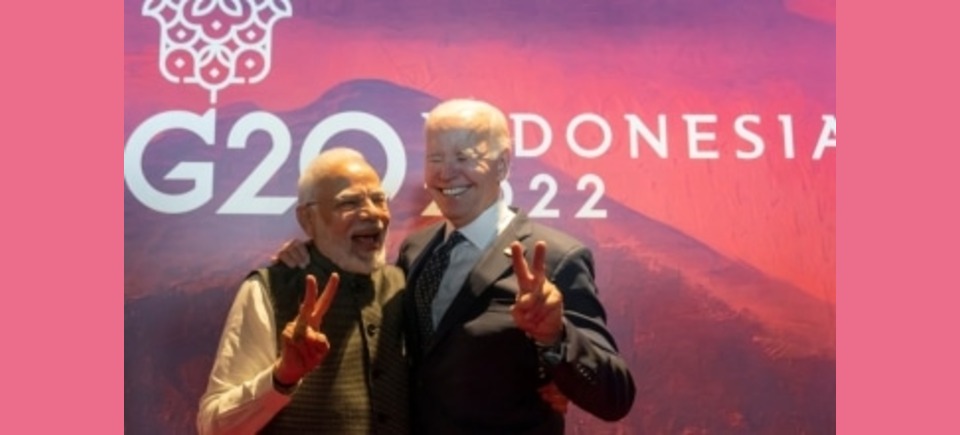
Defense deals and tech ties underpin Modi’s visit to Washington.
“My dream is that in 2020, the two closest nations in the world will be India and the United States,” then-Sen. Joe Biden said on a visit to New Delhi in 2006. They may not be quite there yet, but Biden is doing everything to ensure they end up much closer—especially economically and militarily—after Indian Prime Minister Narendra Modi visits next week.
Washington is rolling out the red carpet for Modi, hosting him for a state dinner, the Biden administration’s third such visit after welcoming French President Emmanuel Macron and South Korean President Yoon Suk-yeol within the past year. Modi will also address a joint session of Congress, his second time doing so as Indian prime minister.
It’s not just pomp and symbolism, however. The United States wants to bring India deeper into its manufacturing and defense orbit, with the added benefit of helping wean New Delhi’s military off Russia and U.S. supply chains off China. Although both sides have been tight-lipped on planned announcements, a number of expected agreements on semiconductor chips and fighter jet engines have been in the works for months, bolstered by visits to New Delhi by Secretary of Defense Lloyd Austin and National Security Advisor Jake Sullivan in the weeks leading up to Modi’s trip. This week, the two sides reportedly sealed a deal for India to buy more than two dozen American drones.
“While I will not spill the beans, I can tell you that the ceremonial and substantive parts of the visit will fully complement each other and will be unparalleled,” Taranjit Singh Sandhu, India’s ambassador to Washington, said at a recent event.
The India-U.S. relationship hasn’t always been smooth sailing, and potential frictions remain, but the two countries have increasingly zeroed in on an arena where they can achieve symbiosis. “If you ask me what I would bet on the most, what is that one force multiplier for this relationship, it is tech,” Sandhu said. “It is the master key to unlock the real potential in the relationship.”
Officials from both sides have spent months laying the groundwork—and acronyms. An initiative on critical and emerging technology (iCET), launched in late January by Sullivan and his Indian counterpart, Ajit Doval, commits to cooperation in areas such as artificial intelligence, quantum computing, space exploration, semiconductors, and defense technology. There has been more movement on the last two in particular: U.S. Secretary of Commerce Gina Raimondo and Indian Commerce Minister Piyush Goyal inked a bilateral semiconductor supply chain partnership in New Delhi in March, while Austin’s visit to New Delhi earlier this month yielded INDUS-X, or the India-U.S. Defense Acceleration Ecosystem, described by the Pentagon as a “new initiative to advance cutting-edge technology cooperation” between the two militaries.
The most significant developments are likely to take place on the defense front, particularly if recent discussions on jointly producing jet engines, long-range artillery, and military vehicles come to fruition next week, product of a yearslong rapprochement on sharing defense technology with India. “This is not just manufacturing in India, this is genuine tech transfer,” said Rudra Chaudhuri, director of New Delhi-based think tank Carnegie India. “That’s a big deal.”
In some ways, it is an opportunity for a marriage of convenience. About half of India’s military equipment is Russian-made, and although New Delhi has spent years trying to diversify that supply, Russia’s protracted war in Ukraine has increased the urgency of finding new bedfellows. Washington sees an opening.
“The one relationship which the U.S. has traditionally been wary of in closer defense ties with India has been the India-Russia partnership,” said Aparna Pande, director of the India Initiative at the Hudson Institute. “This is one chance where if India can be weaned away because of a lack of supply parts, problematic equipment, or Russia getting closer to China, [you can] maybe convince India to purchase more from the United States and U.S. partners and allies.”
China is another major source of mutual concern pushing Washington and New Delhi closer together. India’s relationship with China deteriorated earlier and far more dramatically, with military clashes on their shared border leading to an Indian purge of Chinese technology (including, notably, a TikTok ban) nearly three years ago. Chinese naval expansion into the Indian Ocean has also spooked India and reinforced the importance of the so-called Quad group of countries. The United States and its allies, meanwhile, are urgently trying to reorient and “friendshore” global tech supply chains to reduce dependence on China, which has spent years establishing itself as the world’s factory floor.
India presents a ready replacement in many ways, much of it stemming from its new status as the world’s most populous country. That means a large (and youthful) labor force, millions of whom are skilled engineers, and relatively low manufacturing costs that the Modi government is further bolstering with tax incentives under its signature “Make in India” program. Like China, India’s sheer size also presents a huge potential domestic market for U.S. companies, an advantage over other alternatives such as Vietnam and Mexico. If for decades dollars and cents determined the landscape of global technology production, geopolitics have become supreme.
More information
https://foreignpolicy.com/2023/06/15/india-united-states-tech-ties-biden-modi-visit-washington/
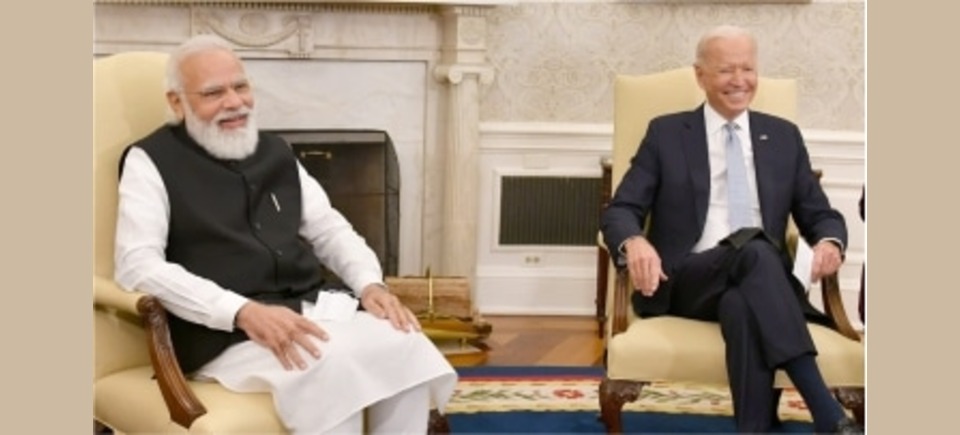
New York, Jun 13 (PTI) India and the US are realising that an equitable bilateral partnership is a win-win for both countries and their people, USISPF President and CEO Mukesh Aghi said. He also underlined that India is providing de-risking for US companies from China to manufacture in the country and is a growing market for American goods.
Ahead of Prime Minister Narendra Modi’s State Visit to the US next week, the US-India Strategic Partnership Forum (USISPF) chief recalled that during his earlier address to a joint session of the Congress in 2016, the Indian leader had stressed for the two countries to overcome the hesitation of history.
“What we are seeing on both sides, we are basically burying the past — the 1998 nuclear sanction and other aspects. Both countries are realising that an equitable partnership is a win-win both for the people of India and the people of United States,” Aghi told PTI in an exclusive interview.
More information
https://www.ptinews.com/news/business/india-us-realising-equitable-bilateral-partnership-a-win-win-for-both-usispf-chief/588087.html
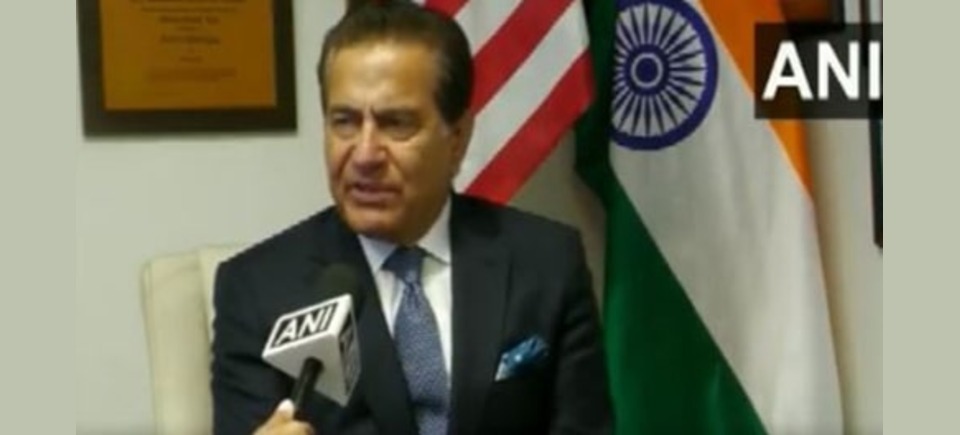
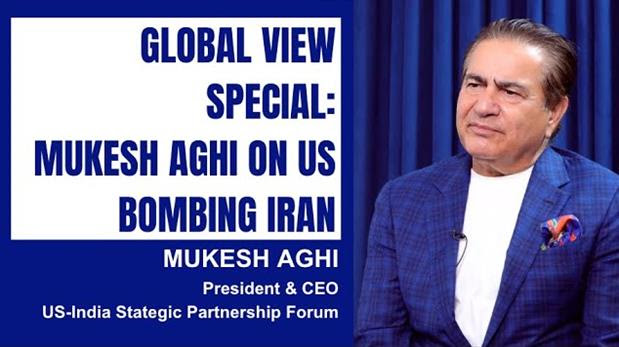
Ahead of Prime Minister Narendra Modi’s state visit to the USA, President & CEO of the US-India Strategic Partnership Forum Mukesh Aghi talked about how India has to deal with China and how technology can help India to have an upper hand in the diplomatic relationship.
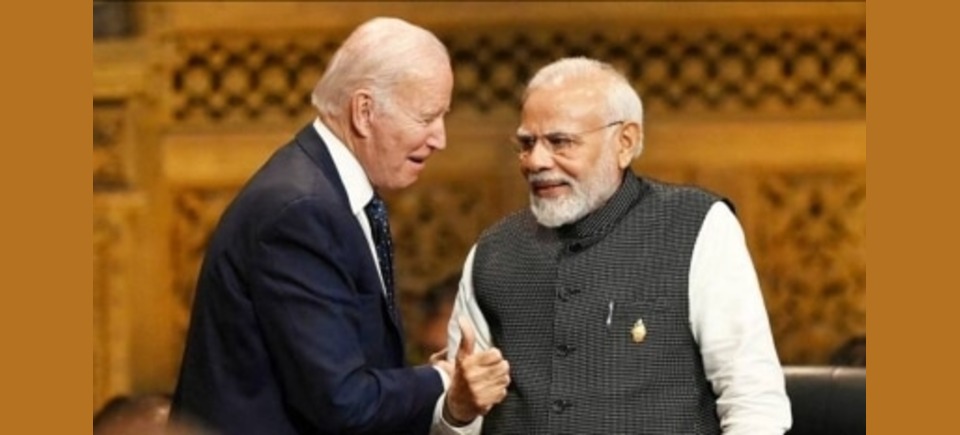
India and the US are realizing that an equitable bilateral partnership is a win-win for both countries and their people, the US-India Strategic Partnership Forum (USISPF) President and CEO Mukesh Aghi said.
He also underlined that India is providing de-risking for US companies from China to manufacture in the country and is a growing market for American goods.
Ahead of Prime Minister Narendra Modi’s State Visit to the US next week, the US-India Strategic Partnership Forum (USISPF) chief recalled that during his earlier address to a joint session of the Congress in 2016, the Indian leader had stressed for the two countries to overcome the hesitation of history.
“What we are seeing on both sides, we are basically burying the past — the 1998 nuclear sanction and other aspects. Both countries are realising that an equitable partnership is a win-win both for the people of India and the people of the United States,” Aghi told PTI in an exclusive interview.
“But more than that, these are two democracies, which look at the international order and (are) trying to maintain that order itself. From a geopolitical perspective, economic perspective and from a technology perspective and people-to-people perspective, it is a partnership which is win-win for both sides,” he said.
Aghi described the current times as “exciting” for Indo-US relations, saying after 75 years of independence, India is on a development path.
“It is a win-win partnership where US companies are also one of the biggest investors in India,” he said, adding that American companies are now setting up research and development centres and moving into innovation centres in India
“What we’re seeing is the partnership is elevating. There is more and more trust happening. Yes, there’s maturity, we will have a disagreement,” he said, citing the example of India’s oil purchases from Russia.
“But both (sides) have accepted those issues and moved on looking at the bigger challenges and opportunities. The relationship is growing to bigger heights and you’ll see more success coming in as we move forward,” Aghi added.
Modi will be welcomed as a State Guest in Washington DC on June 22 by President Joe Biden and First Lady Jill Biden. He will address a joint session of the US Congress the same day — the first Indian Prime Minister to be accorded the honour twice. Modi first addressed a joint meeting of the US Congress in June 2016.
The President and the First Lady will host Modi at a State Dinner on June 22.
Modi will address corporate leaders at a special event hosted by USISPF on June 23 at the Kennedy Center in Washington DC that is expected to be attended by over 1,200 business leaders and the focus will be on India’s importance from an investment perspective, he said.
On the challenges and opportunities for the two countries, Aghi said, on the geopolitical aspect, India’s neighbour China “has taken a very aggressive and assertive posture towards India. It does not treat India as an equal partner”.
“India needs at least 20 years of economic growth moving forward and that means it needs (an) alignment to deal with the aggressive neighbour itself and that’s where the US comes in.
“From a US perspective, India’s one country which has stood up to China, eyeball-to-eyeball on its border, and has not blinked. It sends a strong message that India can stand up to Chinese aggression,” he said.
“What India is providing is a de-risking for US companies from China to manufacture in India and at the same time a growing market, which is going to procure American goods,” he said.
He noted that USISPF operates on two broad principles that the economic prosperity of India is good for the US and US companies. Secondly, a militarily-strong India is good for regional stability.
“That’s where Make in India becomes a very critical role in the defence sector and that’s where you’ll see the deliverables coming in from the US side,” Aghi added.
He referred to the expected announcement of the GE engine deal, India acquiring drones from the US and other aspects of defence procurement during Modi’s visit.
“Where the US used to be reluctant to provide some critical technologies to India, now they’re willing to transfer the technology, not just only sell, to India. To me that shows that the trust factor, the dependence factor has moved dramatically,” he said.
Terming trade as an opportunity between the two nations, Aghi stressed that India and the US should start thinking toward a goal of having a trillion-dollar trade between the two economies and added that it is “absolutely” doable.
“That’s where we both have to keep on working and you don’t need a trade deal. I think if you just open up the market and make the ease of doing business easier, you will see things moving much, much faster,” he said.
He noted that the challenge that the countries need to work on is immigration.
“You have 1.2 million Indians waiting for the green card. We need to find a solution so (that) they become local residents, pay local taxes and become part of the society,” Aghi said.
More information
https://www.financialexpress.com/business/defence-expecting-announcement-of-the-ge-engine-deal-during-pm-modis-visit-says-usispf-chief-3123870/
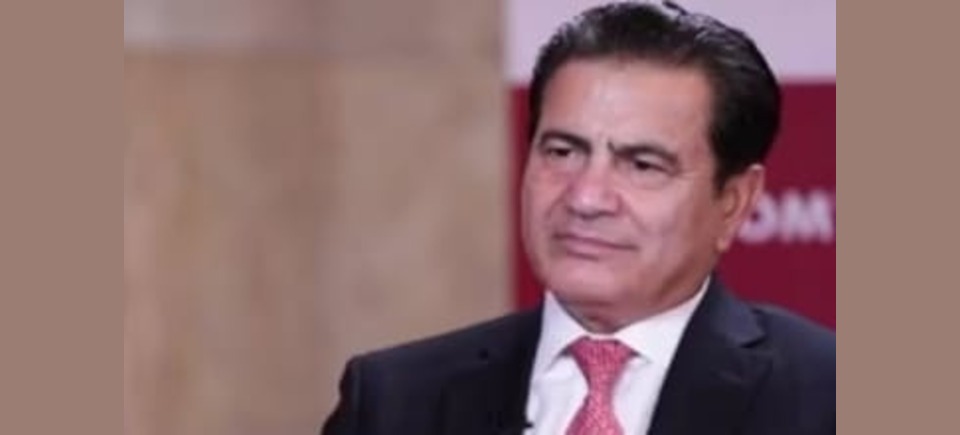
Mukesh Aghi says India is providing de-risking for US companies from China to manufacture in the country and is a growing market for American goods
India and the US are realising that an equitable bilateral partnership is a win-win for both countries and their people, US-India Strategic Partnership Forum (USISPF) President and CEO Mukesh Aghi said. He also underlined that India is providing de-risking for US companies from China to manufacture in the country and is a growing market for American goods.
Prior to Prime Minister Modi’s State Visit to the United States next week, the USISPF chief recalled that the Indian leader had stressed the need for the two countries to overcome the hesitancy of history during his earlier address to a joint session of Congress in 2016.
“What we are seeing on both sides, we are basically burying the past — the 1998 nuclear sanction and other aspects. Both countries are realising that an equitable partnership is a win-win both for the people of India and the people of the United States,” Aghi told PTI in an exclusive interview.
“But more than that, these are two democracies, which look at the international order and (are) trying to maintain that order itself. From a geopolitical perspective, economic perspective and from a technology perspective and people-to-people perspective, it is a partnership which is win-win for both sides,” he said.
Aghi described the current times as “exciting” for Indo-US relations, saying after 75 years of independence, India is on a development path.
“It is a win-win partnership where US companies are also one of the biggest investors in India,” he said, adding that American companies are now setting up research and development centres and moving into innovation centres in India.
“What we’re seeing is the partnership is elevating. There is more and more trust happening. Yes, there’s maturity, we will have disagreement,” he said, citing the example of India’s oil purchases from Russia.
“But both (sides) have accepted those issues and moved on looking at the bigger challenges and opportunities. The relationship is growing to bigger heights, and you’ll see more success coming in as we move forward,” Aghi added.
President Joe Biden and First Lady Jill Biden will welcome Modi as a State Guest in Washington DC on June 22. On the same day, he will address the joint session of the US Congress, becoming the first Indian prime minister to receive the honour twice. Modi first addressed a joint meeting of the US Congress in June 2016.
On June 23, Modi will address corporate leaders at USISPF’s annual conference at the Kennedy Center in Washington DC. Over 1,200 business leaders are expected to attend, and the discussion will focus on India’s investment potential.
On the challenges and opportunities for the two countries, Aghi said, on the geopolitical aspect, India’s neighbour China “has taken a very aggressive and assertive posture towards India. It does not treat India as an equal partner”.
“India needs at least 20 years of economic growth moving forward and that means it needs (an) alignment to deal with the aggressive neighbour itself and that’s where the US comes in.
“From a US perspective, India’s one country which has stood up to China, eyeball-to-eyeball on its border, and has not blinked. It sends a strong message that India can stand up to Chinese aggression,” he said.
India’s economy, which has a population of 1.4 billion and is growing at about 7 percent, is worth more than USD 3.75 trillion to US companies.
Aghi cited the example of Apple, saying that three years ago it did not manufacture anything in India. Next year, Apple is going to manufacture 20 million iPhone 14s in India and move into the iPad and Macbook space as well.
“What India is providing is a de-risking for US companies from China to manufacture in India and at the same time a growing market, which is going to procure American goods,” he said.
He noted that USISPF operates on two broad principles that economic prosperity of India is good for the US and US companies. Secondly, a militarily-strong India is good for regional stability.
“So, that means India has to become self-sufficient”, especially after the “debacle” of what is happening between Russia and Ukraine, he said.
“That’s where Make in India becomes a very critical role in the defence sector and that’s where you’ll see the deliverables coming in from the US side,” Aghi added.
He referred to the expected announcement of the GE engine deal, India acquiring drones from the US and other aspects of defence procurement during Modi’s visit.
“Where the US used to be reluctant of providing some critical technologies to India, now they’re willing to transfer the technology, not just only sell, to India. To me that shows that the trust factor, the dependence factor has moved dramatically,” he said.
“…we do expect something on GE engines where a deal will happen, where India can make GE jet engines in India. If this happens, India will be the fifth country in the world to make hot engines for planes” he added.
Terming trade as an opportunity between the two nations, Aghi stressed that India and the US should start thinking toward a goal of having a trillion-dollar trade between the two economies and added that it is “absolutely” doable.
“That’s where we both have to keep on working, and you don’t need a trade deal. I think if you just open up the market and make the ease of doing business easier, you will see things moving much, much faster,” he said.
He noted that the challenge that the countries need to work on is immigration.
“You have 1.2 million Indians waiting for the green card. We need to find a solution so (that) they become local residents, pay local taxes and become part of the society,” Aghi said.
He noted that Modi is the only global leader who has got along “very well” with three US presidents — Barack Obama, Donald Trump and Biden.
“That shows his character, that shows his leadership style,” Aghi said.
With Modi being invited to address a joint session of the US Congress for the second time, Aghi said addressing the US Congress is a “very, very important” event from a democracy perspective and from an international order perspective.
He said when Modi addressed the US Congress in 2016, it sent a message “but now it sends a very strong message” as, on one hand, “you have a Democratic president inviting him for a State Dinner and you have a Republican Speaker of the House inviting him to speak at the Congress. So, you have bipartisan support” for Modi.
Modi “will go down in history”, being able to position himself very strongly with the US Congress and the US administration, Aghi said.
More information
https://www.moneycontrol.com/news/business/india-us-realising-equitable-bilateral-partnership-a-win-win-for-both-usispf-chief-10790021.html
Washington [US], June 13 (ANI): Ahead of Prime Minister Narendra Modi’s visit to the US, Mukesh Aghi, President and Chief Executive Officer of the US-India Strategic Partnership Forum, on Monday (local time) said that India and the US are getting over the suspiciousness of each other. While speaking to ANI, Mukesh Aghi said that they are witnessing a much more “concrete, deeper and broader relationship” coming up between India and US.
Aghi said that India is taking an independent position at international forums. However, he noted that India also supports the US position. He also recalled PM Modi’s address to the joint session of the Congress.
In response to a question regarding the change in India-US ties over the years, he said, “Well, when Prime Minister spoke for the first time to a joint session of the Congress, he said we need to overcome the hesitation of history. And I think what we are seeing is both sides are coming, getting over the suspiciousness of each other.”
“We had in India 1998 sanctions and India couldn’t bring in a lot of those technologies. Now we’re seeing a lot of those technologies moving to India. We are seeing India stepping up in the international forum, taking an independent position, but it also supports the US position also. So, I think we are seeing a much more concrete, deeper and broader relationship coming up,” he added.
Mukesh Aghi said that India is looking for a transfer of technology and they do expect something on General Electric engines where a deal will happen. He said that the US is looking to create more jobs and they expect some orders on defence equipment from India.
Speaking to ANI regarding Prime Minister Narendra Modi’s visit to the US, Mukesh Aghi said, “Well, I think you can break this down with three broad categories. One is geopolitics. The second is on the economic side. And the third is on technology. So when you look at the concrete deliverables, obviously US is looking to create more jobs in the US. So we do expect some orders on defence equipment coming from the India side. So, it kind of helps US companies from a job creation perspective.”
He further said, “From a job creation perspective, India is looking for transfer of technology. So we do expect something on GE engines where a deal will happen, where India can make GE jet engines in India. So, if that happens, then India will be the fifth country in the world making hot engines for planes.”
Mukesh Aghi said that US and India are aligned to deal with China. Speaking to ANI, he said, “Then on the geopolitics side, I think it’s about messaging. The US-India are aligned to deal with the aggressive, assertive China. And I think that’s where you see as strong messaging coming in, both by President Biden and Prime Minister Modi right now.”
He said that India needs to have technology to deal with China. He said that they are witnessing the Biden administration agreeing to transfer some technology to India so that they can manufacture and it becomes self-reliant in the defence sector.
Responding about China being a common thread that is binding Republicans and Democrats, he said, “Well, you have to understand from an India perspective, it shares a 3000-kilometre-long border with China, which China doesn’t agree with the border itself. India has to deal with the aggressive China, basically a dominant China. We’ve had soldiers killed on both sides of the border itself.”
He further said, “So, India needs to have technology. It needs to have enough resources to deal with that assertive posture of China. India’s supply from Russia is drying out. So, it needs other sources and is focused on building most of those stuff in India. So, what we are seeing is the Biden administration agreeing to transfer some complex technology to India so you can manufacture, and India becomes a self-reliant defence area. So, yes, there is an alignment on the positioning posture of China and how to deal with China.”
Speaking about the Kennedy Center event set to be held on June 23, Mukesh Aghi said, “Well, one of the pillars of the relationship is economy. It is about de-risking US companies from China. It is about getting to a newer, larger market, which is India. So, what we’re seeing is most of the US companies are looking at how do you de-risk your supply chain and have a China plus one strategy and India plays a pivotal role in that area.”
“India also with the 1.4 billion people, is a large market. It’s going to grow as the spending power goes up in India. So I think those companies are looking at having India as a potential market. And a classic example is Apple. Apple three years ago didn’t produce anything in India, and the next day, it’s going to produce 20 million iPhone 14. But, it is also its fastest growing market in the world itself. So, there are market opportunity, their trade opportunity, their economic investment opportunity, and that’s a win-win for both countries.”
Mukesh Aghi said that Indian-Americans are the “most affluent minority group” from US President Joe Biden’s perspective. He said that Indian-Americans are the “most educated” and they participate in the civic society quite efficiently. Around 7000 Indian-American community will be welcoming PM Modi at the South Lawn.
Responding to a question regarding the importance given to Indian-Americans, he said, “Well, you have to look at from President Biden’s perspective, Indian Americans are the most affluent minority group. They are the most educated and they participate in civic society quite efficiently itself and from a Biden campaign perspective, if you can get contribution coming into a political campaign, it’s a winning factor. If you can get them voting in the swing state, it has an impact on the electoral college itself. So from that perspective, I think it is a strong motive from Biden to get almost 5 million Indian Americans on its cap side.”
He further said, “When you look at from Prime Minister Modi’s perspective, you have to understand there are 35 billion Indians who live outside India and if they look at their GDP, it’s almost 50 per cent of India’s GDP. So, they are a vital source of investment, technology and influence. So, I think Prime Minister Modi caters to that successfully. And what we have seen is every time he goes to a country, that country’s investment into India spikes up dramatically. So, it is a win-win for both President and the Prime Minister to cater to Indian Americans.”
Indian Americans are eagerly preparing to extend a warm welcome to PM Modi during his state visit to the US from June 21-24. Thousands of expatriate Indians will gather in Washington during the visit of PM Modi, who will arrive in the US at the invitation of US President Joe Biden and First Lady Jill Biden.
While a group of Indian Americans are planning to go to Andrews Air Force Base when the Prime Minister’s Air India One lands on June 21 afternoon from New York and over 600 community members are planning to gather at Freedom Plaza in front of the Willard Intercontinental in Washington located near the White House where the PM will be staying during his visit.
More information
https://www.aninews.in/news/world/asia/we-see-much-more-concrete-relationship-us-india-strategic-partnership-forum-ceo20230613055432/
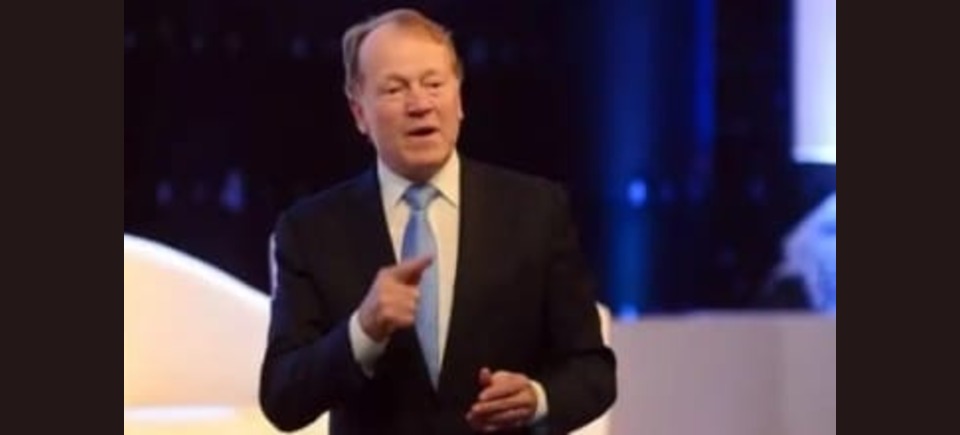
India and US ‘model’ strategic partnersNew York, Jun 11 (PTI) Prime Minister Narendra Modi’s state visit to the US is a “major milestone” for the bilateral ties, the chairman of a leading India-US advocacy group has said, underling that New Delhi and Washington will be the “model” for how two strategic partners can work together across sectors.
Prime Minister Modi is visiting the US from June 21-24 at the invitation of US President Biden and First Lady Jill Biden. “I think it’s a major milestone for the future. I’ve always been the biggest bull on India and the future of India and what economically can be accomplished by India’s leadership on the global stage,” US-India Strategic Partnership Forum (USISPF) Chairman John Chambers told PTI in an exclusive interview.
Chambers, the Chairman Emeritus at Cisco and founder of JC2 Ventures, underlined the potential of the US and India to be the “most strategic partnership” in the world.
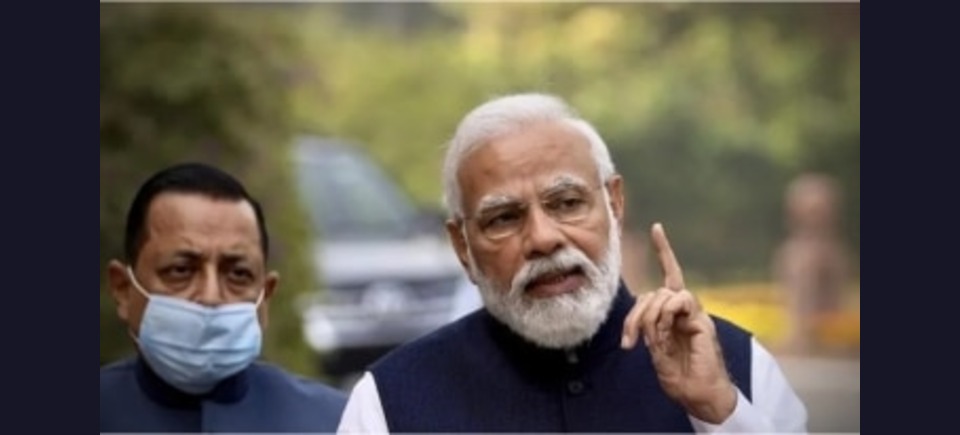
Prime Minister Narendra Modi’s state visit to the US is a ‘major milestone’ for the bilateral ties, the chairman of a leading India-US advocacy group has said, underling that New Delhi and Washington will be the ‘model” for how two strategic partners can work together across sectors.
Prime Minister Modi is visiting the US from June 21-24 at the invitation of US President Biden and First Lady Jill Biden.
‘I think it’s a major milestone for the future. I’ve always been the biggest bull on India and the future of India and what economically can be accomplished by India’s leadership on the global stage,’ US-India Strategic Partnership Forum (USISPF) Chairman John Chambers told PTI in an exclusive interview.
Chambers, the Chairman Emeritus at Cisco and founder of JC2 Ventures, underlined the potential of the US and India to be the “most strategic partnership’ in the world.
This partnership will positively impact not only businesses between the two countries but jobs as well in each of the 28 states and union territories of India and 50 states in the US, he said.
Modi will be welcomed as a State Guest in Washington DC on June 22 and will address a joint session of the US Congress the same day, the first Indian prime minister to be accorded this honour twice.
He first addressed the joint meeting of the US Congress in June 2016. The US President and the First Lady will host Prime Minister Modi at a State dinner on June 22.
Chambers said ‘when you have the two biggest democracies who share a common vision of what technology can do for the future of our countries, for the future of standard of living, job creation and defence, it’s rare that that comes together at a point in time which is what we have now.’ Chambers added that there will be challenges in the relationship as well.
‘Nothing this complex, with this type of results, comes without challenges,” he said.
“But if I were betting on one country in Asia, it’s India. If I were betting on two, I’d bet on India twice. I think we will also be the model for how two strategic partners, not allies, partners, can work together on everything from economics to job creation to technology exchange to defence etc. So it’s a magical moment,’ he said.
Chambers said that in Modi, he has seen a ‘leader that is like almost no other that I’ve seen in 40 years.’ Chambers described Modi as a ‘charismatic leader who is able to outline a vision and to get people both excited about it but he has the ability to execute on it. That is rare in today’s world.’ He emphasised that the Indian leader gets along with both Democrats and Republican leaders in the US.
‘I think he is a uniting force in this world. And I think the most important partnership that will exist for the next two-three decades will be what the US and India can do across” a spectrum of areas.
‘What you really see is our two countries’are joined at the hip at every level,’ Chambers said.
He noted the several interactions and exchanges between top leaders from both countries ahead of the state visit including between External Affairs Minister S Jaishankar and Secretary of State Antony Blinken, Finance Minister Nirmala Sitharaman and US Treasury Secretary Janet Yellen, Commerce Minister Piyush Goyal and United States Trade Representative Katherine Tai well as National Security Advisors from the two countries Ajit Doval and Jake Sullivan.
‘So what you see is a very broad building of relationships in many areas and each of them in and of themselves being important, but when you put them together into an architecture that it becomes game-changing. And so I think it’s important to realise this is a long-term play,’ he said.
Chambers described digitalisation in India as a ‘powerful’ vision. ‘What you see now is no longer an India that is a slow follower. You see an India that is an innovator, a mover and shaker that can really drive through it.’ Chambers also noted the cooperation between India and the US in multilateral fora such as the Quad that includes Australia and Japan and I2U2 – India, Israel, UAE and the US.
‘Now, where we’re going is a chance to redefine what is possible. So my view on this visit is you take it one more step,’ he said adding that “this is an ongoing process.’ Chambers said he ‘can’t wait to watch’ Modi’s address to the US Congress and said expectations are obviously high from the visit.
He added that going by how the foundation has been built, ‘I think it’s going to be a tremendous visit and tremendous results, not necessarily in the next week, but tremendous results over the next years. That really is what it’s all about.’
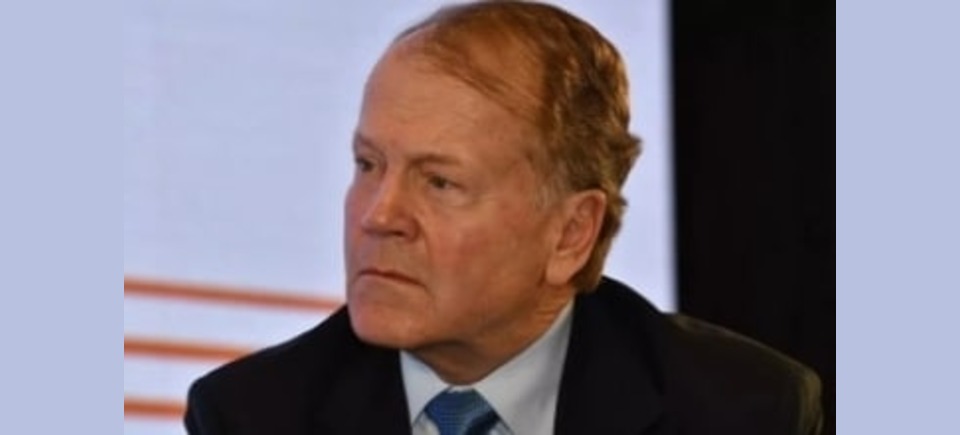
India-US partnership will positively impact not only businesses between the two countries but jobs as well in each of the 28 States and Union Territories of India and 50 States in the US: John Chambers.
Prime Minister Narendra Modi’s state visit to the US is a “major milestone” for the bilateral ties, the chairman of a leading India-US advocacy group has said, underling that New Delhi and Washington will be the “model” for how two strategic partners can work together across sectors.
Prime Minister Modi is visiting the US from June 21-24 at the invitation of US President Biden and First Lady Jill Biden.
“I think it’s a major milestone for the future. I’ve always been the biggest bull on India and the future of India and what economically can be accomplished by India’s leadership on the global stage,” US-India Strategic Partnership Forum (USISPF) Chairman John Chambers told PTI in an exclusive interview.
Chambers, the Chairman Emeritus at Cisco and founder of JC2 Ventures, underlined the potential of the US and India to be the “most strategic partnership” in the world.
This partnership will positively impact not only businesses between the two countries but jobs as well in each of the 28 States and Union Territories of India and 50 States in the US, he said.
Modi will be welcomed as a State Guest in Washington DC on June 22 and will address a joint session of the US Congress the same day, the first Indian prime minister to be accorded this honour twice.
He first addressed the joint meeting of the US Congress in June 2016. The US President and the First Lady will host Prime Minister Modi at a State dinner on June 22.
Chambers said “when you have the two biggest democracies who share a common vision of what technology can do for the future of our countries, for the future of standard of living, job creation and defence, it’s rare that that comes together at a point in time which is what we have now.” Chambers added that there will be challenges in the relationship as well.
“Nothing this complex, with this type of results, comes without challenges,” he said.
“But if I were betting on one country in Asia, it’s India. If I were betting on two, I’d bet on India twice. I think we will also be the model for how two strategic partners, not allies, partners, can work together on everything from economics to job creation to technology exchange to defence etc. So it’s a magical moment,” he said.
Chambers said that in Modi, he has seen a “leader that is like almost no other that I’ve seen in 40 years.” Chambers described Modi as a “charismatic leader who is able to outline a vision and to get people both excited about it but he has the ability to execute on it. That is rare in today’s world.” He emphasised that the Indian leader gets along with both Democrats and Republican leaders in the US.
“I think he is a uniting force in this world. And I think the most important partnership that will exist for the next two-three decades will be what the US and India can do across” a spectrum of areas.
“What you really see is our two countries…are joined at the hip at every level,” Chambers said.
He noted the several interactions and exchanges between top leaders from both countries ahead of the state visit including between External Affairs Minister S Jaishankar and Secretary of State Antony Blinken, Finance Minister Nirmala Sitharaman and US Treasury Secretary Janet Yellen, Commerce Minister Piyush Goyal and United States Trade Representative Katherine Tai well as National Security Advisors from the two countries Ajit Doval and Jake Sullivan.
“So what you see is a very broad building of relationships in many areas and each of them in and of themselves being important, but when you put them together into an architecture that it becomes game-changing. And so I think it’s important to realise this is a long-term play,” he said.
Chambers described digitalisation in India as a “powerful” vision. “What you see now is no longer an India that is a slow follower. You see an India that is an innovator, a mover and shaker that can really drive through it.” Chambers also noted the cooperation between India and the US in multilateral fora such as the Quad that includes Australia and Japan and I2U2 – India, Israel, UAE and the US.
“Now, where we’re going is a chance to redefine what is possible. So my view on this visit is you take it one more step,” he said adding that “this is an ongoing process.” Chambers said he “can’t wait to watch” Modi’s address to the US Congress and said expectations are obviously high from the visit.
He added that going by how the foundation has been built, “I think it’s going to be a tremendous visit and tremendous results, not necessarily in the next week, but tremendous results over the next years. That really is what it’s all about.”
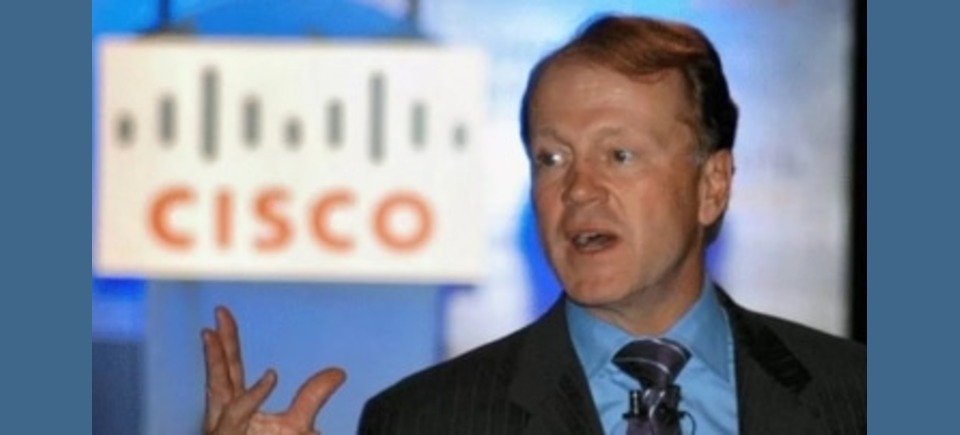
Prime Minister Narendra Modi’s state visit to the US is a “major milestone” for the bilateral ties, the chairman of a leading India-US advocacy group has said, underling that New Delhi and Washington will be the “model” for how two strategic partners can work together across sectors.
Prime Minister Modi is visiting the US from June 21-24 at the invitation of US President Biden and First Lady Jill Biden.
“I think it’s a major milestone for the future. I’ve always been the biggest bull on India and the future of India and what economically can be accomplished by India’s leadership on the global stage,” US-India Strategic Partnership Forum (USISPF) Chairman John Chambers told PTI in an exclusive interview.
Chambers, the Chairman Emeritus at Cisco and founder of JC2 Ventures, underlined the potential of the US and India to be the “most strategic partnership” in the world.
This partnership will positively impact not only businesses between the two countries but jobs as well in each of the 28 states and union territories of India and 50 states in the US, he said.
Modi will be welcomed as a State Guest in Washington DC on June 22 and will address a joint session of the US Congress the same day, the first Indian prime minister to be accorded this honour twice.
He first addressed the joint meeting of the US Congress in June 2016. The US President and the First Lady will host Prime Minister Modi at a State dinner on June 22.
Chambers said “when you have the two biggest democracies who share a common vision of what technology can do for the future of our countries, for the future of standard of living, job creation and defence, it’s rare that that comes together at a point in time which is what we have now.”
Chambers added that there will be challenges in the relationship as well.
“Nothing this complex, with this type of results, comes without challenges,” he said.
“But if I were betting on one country in Asia, it’s India. If I were betting on two, I’d bet on India twice. I think we will also be the model for how two strategic partners, not allies, partners, can work together on everything from economics to job creation to technology exchange to defence etc. So it’s a magical moment,” he said.
Chambers said that in Modi, he has seen a “leader that is like almost no other that I’ve seen in 40 years.”
Chambers described Modi as a “charismatic leader who is able to outline a vision and to get people both excited about it but he has the ability to execute on it. That is rare in today’s world.” He emphasised that the Indian leader gets along with both Democrats and Republican leaders in the US.
“I think he is a uniting force in this world. And I think the most important partnership that will exist for the next two-three decades will be what the US and India can do across” a spectrum of areas.
“What you really see is our two countries…are joined at the hip at every level,” Chambers said.
He noted the several interactions and exchanges between top leaders from both countries ahead of the state visit including between External Affairs Minister S Jaishankar and Secretary of State Antony Blinken, Finance Minister Nirmala Sitharaman and US Treasury Secretary Janet Yellen, Commerce Minister Piyush Goyal and United States Trade Representative Katherine Tai well as National Security Advisors from the two countries Ajit Doval and Jake Sullivan.
“So what you see is a very broad building of relationships in many areas and each of them in and of themselves being important, but when you put them together into an architecture that it becomes game-changing. And so I think it’s important to realise this is a long-term play,” he said.
Chambers described digitalisation in India as a “powerful” vision. “What you see now is no longer an India that is a slow follower. You see an India that is an innovator, a mover and shaker that can really drive through it.”
Chambers also noted the cooperation between India and the US in multilateral fora such as the Quad that includes Australia and Japan and I2U2 – India, Israel, UAE and the US.
“Now, where we’re going is a chance to redefine what is possible. So my view on this visit is you take it one more step,” he said adding that “this is an ongoing process.”
Chambers said he “can’t wait to watch” Modi’s address to the US Congress and said expectations are obviously high from the visit.
He added that going by how the foundation has been built, “I think it’s going to be a tremendous visit and tremendous results, not necessarily in the next week, but tremendous results over the next years. That really is what it’s all about.”
PM Modi’s state visit to the US is a major milestone for the bilateral ties, the chairman of a leading India-US advocacy group has said
Prime Minister Narendra Modi’s state visit to the US is a major milestone for the bilateral ties, the chairman of a leading India-US advocacy group has said, underling that New Delhi and Washington will be the model” for how two strategic partners can work together across sectors.
Prime Minister Modi is visiting the US from June 21-24 at the invitation of US President Biden and First Lady Jill Biden.
I think it’s a major milestone for the future. I’ve always been the biggest bull on India and the future of India and what economically can be accomplished by India’s leadership on the global stage, US-India Strategic Partnership Forum (USISPF) Chairman John Chambers told PTI in an exclusive interview.
Chambers, the Chairman Emeritus at Cisco and founder of JC2 Ventures, underlined the potential of the US and India to be the “most strategic partnership in the world.
This partnership will positively impact not only businesses between the two countries but jobs as well in each of the 28 states and union territories of India and 50 states in the US, he said.
Modi will be welcomed as a State Guest in Washington DC on June 22 and will address a joint session of the US Congress the same day, the first Indian prime minister to be accorded this honour twice.
He first addressed the joint meeting of the US Congress in June 2016. The US President and the First Lady will host Prime Minister Modi at a State dinner on June 22.
Chambers said when you have the two biggest democracies who share a common vision of what technology can do for the future of our countries, for the future of standard of living, job creation and defence, it’s rare that that comes together at a point in time which is what we have now.
Chambers added that there will be challenges in the relationship as well.
Nothing this complex, with this type of results, comes without challenges,” he said.
“But if I were betting on one country in Asia, it’s India. If I were betting on two, I’d bet on India twice. I think we will also be the model for how two strategic partners, not allies, partners, can work together on everything from economics to job creation to technology exchange to defence etc. So it’s a magical moment, he said.
Chambers said that in Modi, he has seen a leader that is like almost no other that I’ve seen in 40 years.
Chambers described Modi as a charismatic leader who is able to outline a vision and to get people both excited about it but he has the ability to execute on it. That is rare in today’s world. He emphasised that the Indian leader gets along with both Democrats and Republican leaders in the US.
I think he is a uniting force in this world. And I think the most important partnership that will exist for the next two-three decades will be what the US and India can do across” a spectrum of areas.
What you really see is our two countriesare joined at the hip at every level, Chambers said.
He noted the several interactions and exchanges between top leaders from both countries ahead of the state visit including between External Affairs Minister S Jaishankar and Secretary of State Antony Blinken, Finance Minister Nirmala Sitharaman and US Treasury Secretary Janet Yellen, Commerce Minister Piyush Goyal and United States Trade Representative Katherine Tai well as National Security Advisors from the two countries Ajit Doval and Jake Sullivan.
So what you see is a very broad building of relationships in many areas and each of them in and of themselves being important, but when you put them together into an architecture that it becomes game-changing. And so I think it’s important to realise this is a long-term play, he said.
Chambers described digitalisation in India as a powerful vision. What you see now is no longer an India that is a slow follower. You see an India that is an innovator, a mover and shaker that can really drive through it.
Chambers also noted the cooperation between India and the US in multilateral fora such as the Quad that includes Australia and Japan and I2U2 – India, Israel, UAE and the US.
Now, where we’re going is a chance to redefine what is possible. So my view on this visit is you take it one more step, he said adding that “this is an ongoing process.
Chambers said he can’t wait to watch Modi’s address to the US Congress and said expectations are obviously high from the visit.
He added that going by how the foundation has been built, I think it’s going to be a tremendous visit and tremendous results, not necessarily in the next week, but tremendous results over the next years. That really is what it’s all about.
More information
https://www.business-standard.com/amp/world-news/india-us-model-for-strategic-partners-to-work-together-usispf-chairman-123061100097_1.html
(Eds: Disclaimer: The following press release comes to you under an arrangement with Business Wire India. PTI takes no editorial responsibility for the same.)
New Delhi, Delhi, India & Washington, D.C., United States – Business Wire India
The US-India Strategic Partnership Forum (USISPF) announced the dates for its 2022 Annual Leadership Summit, “Celebrating 75 Years of U.S.-India Partnership”. The program will convene in a hybrid format the week of July 18, 2022.
This year, USISPF will recognize Chip Kaye, the CEO of Warburg Pincus, and Sumant Sinha, the Founder, Chairman and CEO of ReNew Power with the Global Leadership Award 2022 for their exceptional leadership in global financial investments and renewable energy projects in India.
Congratulating the awardees, John Chambers, Chairman of the USISPF Board, said, “This year, we honor two USISPF Board Members for their contributions to strengthening business ties between the U.S. and India. Chip and Sumant have been tireless advocates for a more vital U.S.-India economic partnership and we are grateful for their leadership on our Board.”
Mukesh Aghi, President and CEO of USISPF said, “It was Chip who led Warburg Pincus’s investment in Bharti Airtel over two decades back that paved the way through for global private equity firms to start looking at India, and Sumant has emerged as a leader in the new and renewable energy industry. ReNew has already done a lot of work for a sustainable future. Sumant built Renew as an entrepreneur, instilled world-class governance, and providing leading U.S. investors in the first opportunity to invest in Indian renewables and educating global stakeholders in the India opportunity along the way. We are honored to present these two leaders with the 2022 USISPF Global Leadership Awards.”
Chip Kaye has led Warburg Pincus for the past two decades, including during the firm’s expansion into Asia. Under Chip Kaye’s leadership, Warburg Pincus opened their first Asia office in 1994, paving the way for other global private equity firms to enter the region.
Accepting this award, he said, “I share my gratitude for this meaningful recognition with my Warburg Pincus India colleagues who, for more than 25 years, have played a growth catalyst role by partnering with innovative companies in the region. We appreciate our long-standing relationships with Indian entrepreneurs and look forward to continuing to partner with talented management teams to build valuable, sustainable companies.”
Sumant Sinha founded ReNew Power in 2011 and has grown it to become India’s largest renewable energy company. ReNew now generates almost 2% of India’s total electricity annually, and in doing so helps mitigate half a per cent of India’s carbon emissions in a year.
Acknowledging the award, Sumant said, “I am deeply honored and humbled to accept the USISPF 2022 Leadership Award. This recognition is made more meaningful as it comes at a time when businesses in both the U.S. and India are increasing collaboration across sectors; with a focus on innovation, the clean energy transition, fighting climate change, sustainability, and green supply chains. Both countries share similar democratic values and foster a culture of collaboration, inclusion, diversity, innovation and of not accepting the status quo. I am proud that, as chairman of ReNew Power, I have had the opportunity and privilege to contribute to deepening business and economic ties between both nations.”
This year, USISPF for the first time will also give the Distinguished Services Award for contributions to strengthening defense ties between the U.S. and India. The honorees will be General James Mattis, U.S. Marine Corps (Ret.), Former U.S. Secretary of Defense, Davies Family Distinguished Fellow, Hoover Institution, and General Manoj Mukund Naravane, Former Chief of Army Staff, Indian Army. During his time as Secretary of Defense, General Mattis took India to new heights as a strategic partner with the United States and emphasized a commitment to shared values of a safe and secure, prosperous, and free Indo-Pacific. During his time as Chief of Staff of the Indian Army, General Naravane helped to modernize the Indian army, along with improving defense partnerships and growing interoperability between the U.S. and India. USISPF is honored to celebrate these two individuals for their significant contributions to the U.S.-India defense relationship.
The awards ceremony will be part of a hybrid event taking place in Washington D.C. on July 21. The ceremony will be followed by a panel discussion with the honorees.
About the U.S.-India Strategic Partnership Forum (USISPF)
The US-India Strategic Partnership Forum (USISPF) is committed to creating the most powerful partnership between the United States and India. As the only independent not-for-profit institution dedicated to strengthening the U.S.-India partnership in Washington, D.C. and in New Delhi, USISPF is the trusted partner for businesses, non-profit organizations, the diaspora, and the governments of India and the United States.
More information
https://www.theweek.in/wire-updates/business/2022/06/21/pwr21-u.s.-india-strategic-partnership-forum–usispf.html
Washington, D.C., United States & New Delhi, Delhi, India:
The US-India Strategic Partnership Forum (USISPF) announced the dates for its 2022 Annual Leadership Summit, “Celebrating 75 Years of U.S.-India Partnership”. The program will convene in a hybrid format the week of July 18, 2022.
This year, USISPF will recognize Chip Kaye, the CEO of Warburg Pincus, and Sumant Sinha, the Founder, Chairman and CEO of ReNew Power with the Global Leadership Award 2022 for their exceptional leadership in global financial investments and renewable energy projects in India.
Congratulating the awardees, John Chambers, Chairman of the USISPF Board, said, “This year, we honor two USISPF Board Members for their contributions to strengthening business ties between the U.S. and India. Chip and Sumant have been tireless advocates for a more vital U.S.-India economic partnership and we are grateful for their leadership on our Board.”
Mukesh Aghi, President and CEO of USISPF said, “It was Chip who led Warburg Pincus’s investment in Bharti Airtel over two decades back that paved the way through for global private equity firms to start looking at India, and Sumant has emerged as a leader in the new and renewable energy industry. ReNew has already done a lot of work for a sustainable future. Sumant built Renew as an entrepreneur, instilled world-class governance, and providing leading U.S. investors in the first opportunity to invest in Indian renewables and educating global stakeholders in the India opportunity along the way. We are honored to present these two leaders with the 2022 USISPF Global Leadership Awards.”
Chip Kaye has led Warburg Pincus for the past two decades, including during the firm’s expansion into Asia. Under Chip Kaye’s leadership, Warburg Pincus opened their first Asia office in 1994, paving the way for other global private equity firms to enter the region.
Accepting this award, he said, “I share my gratitude for this meaningful recognition with my Warburg Pincus India colleagues who, for more than 25 years, have played a growth catalyst role by partnering with innovative companies in the region. We appreciate our long-standing relationships with Indian entrepreneurs and look forward to continuing to partner with talented management teams to build valuable, sustainable companies.”
Sumant Sinha founded ReNew Power in 2011 and has grown it to become India’s largest renewable energy company. ReNew now generates almost 2% of India’s total electricity annually, and in doing so helps mitigate half a per cent of India’s carbon emissions in a year.
Acknowledging the award, Sumant said, “I am deeply honored and humbled to accept the USISPF 2022 Leadership Award. This recognition is made more meaningful as it comes at a time when businesses in both the U.S. and India are increasing collaboration across sectors; with a focus on innovation, the clean energy transition, fighting climate change, sustainability, and green supply chains. Both countries share similar democratic values and foster a culture of collaboration, inclusion, diversity, innovation and of not accepting the status quo. I am proud that, as chairman of ReNew Power, I have had the opportunity and privilege to contribute to deepening business and economic ties between both nations.”
This year, USISPF for the first time will also give the Distinguished Services Award for contributions to strengthening defense ties between the U.S. and India. The honorees will be General James Mattis, U.S. Marine Corps (Ret.), Former U.S. Secretary of Defense, Davies Family Distinguished Fellow, Hoover Institution, and General Manoj Mukund Naravane, Former Chief of Army Staff, Indian Army. During his time as Secretary of Defense, General Mattis took India to new heights as a strategic partner with the United States and emphasized a commitment to shared values of a safe and secure, prosperous, and free Indo-Pacific. During his time as Chief of Staff of the Indian Army, General Naravane helped to modernize the Indian army, along with improving defense partnerships and growing interoperability between the U.S. and India. USISPF is honored to celebrate these two individuals for their significant contributions to the U.S.-India defense relationship.
The awards ceremony will be part of a hybrid event taking place in Washington D.C. on July 21. The ceremony will be followed by a panel discussion with the honorees.
About the U.S.-India Strategic Partnership Forum (USISPF)
The US-India Strategic Partnership Forum (USISPF) is committed to creating the most powerful partnership between the United States and India. As the only independent not-for-profit institution dedicated to strengthening the U.S.-India partnership in Washington, D.C. and in New Delhi, USISPF is the trusted partner for businesses, non-profit organizations, the diaspora, and the governments of India and the United States.
More information
https://www.businesswireindia.com/us-india-strategic-partnership-forum-to-honor-warburg-pincus-ceo-chip-kaye-and-renew-founder-and-ceo-sumant-sinha-with-2022-global-leadership-award-79423.html
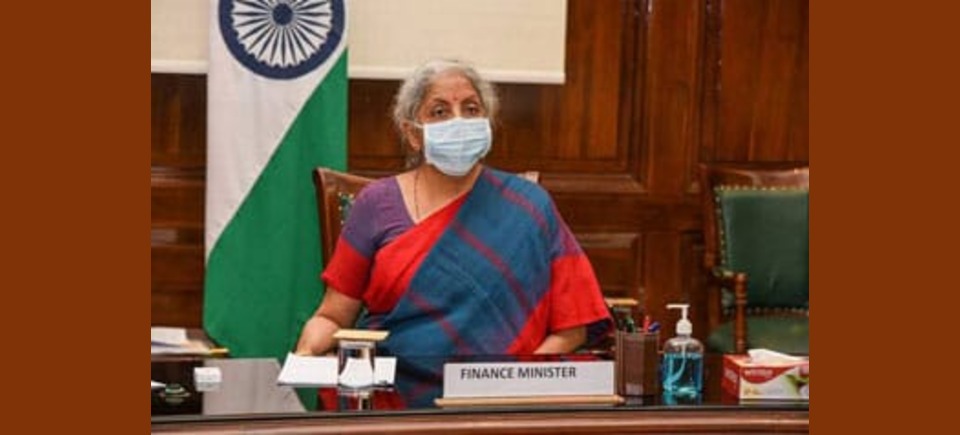
Finance Minister Nirmala Sitharaman said India is committed to forge a long term relationship with U.S. investors and proposes to meet them twice a year
COVID-19 and its aftermath has proven the Indian economy’s resilience, Union Finance and Corporate Affairs Minister Nirmala Sitharaman told U.S. investors in a meeting on June 24, adding that India’s fiscal situation is not only under control, but also expected to improve further.
Addressing a global investors’ meet hosted by the U.S.-India Strategic Partnership Forum (USISPF), Ms. Sitharaman said that the government has shown a strong record of ‘reform implementation in the last six years’ and showcased the ‘strong relief and reforms undertaken during the pandemic times’.
“Macro-economic stability, infrastructure-led economic growth opportunities, financial sector reforms and positioning as a strong player in global supply chains are just some of the ways India continues to rise as a global economic powerhouse,” she said, stressing that there was a significant decline in new COVID-19 infections and a decline in the second wave.
At the meeting attended by global investors such as Mastercard, Metlife, Prudential, Dell, Softbank and Warburg Pincus, the broad messaged conveyed by the Finance Minister included the vision to make India ‘self-reliant and modern’ through the Aatma Nirbhar Bharat programme and driven by 5 ‘I’s – Intent, Inclusion, Investment, Infrastructure and Innovation.
The Finance Minister said India is committed to forge a long term relationship with U.S. investors and proposes to meet them twice a year. “The continuous reforms make India a great place to do business and the highest ever GST collections shows the bright spot — more formalisation of economy and tax compliance,” Ms. Sitharaman told investors as per an official statement.
Emphasising India’s ‘continued macro-economic stability and resilience in economic recovery in the recent months’, the Finance Minister said India’s wide-ranging reforms continue to position the country as an attractive destination for foreign investors. There are ‘new opportunities emerging for foreign investors with recent FDI reforms, privatisation policy and PLI (production-linked incentive) scheme’, she pointed out.
“Innovation and R&D got a great potential. New opportunities emerging for foreign investors with recent FDI reforms privatisation policy and PLI scheme,” the Finance Ministry said in a statement, summarising her message at the USISPF meeting.
According to the Ministry, First Solar CEO Mark Widmar applauded ‘the effort done already towards the investment opportunities in India, especially with the combination of industrial policy and the trade barriers that have enabled this initiative’. He was also encouraged to see the vaccination and economic progress, the statement said.
Ms. Sitharaman underlined that India had 15 new unicorns in 2021, reflecting its growing startup ecosystem ‘to be amongst the best in the world’. Economic Affairs Secretary Ajay Seth told investors about the broad themes of the Union Budget and the far-reaching changes brought about.
More information
https://www.thehindu.com/business/Economy/usispf-covid-19-proves-indian-economys-resilience-fm-nirmala-sitharaman/article34958538.ece
The Union Minister for Finance & Corporate Affairs Smt. Nirmala Sitharaman today participated in the Global Investors Roundtable organised by the US-India Strategic Partnership Forum (USISPF) through video conferencing which witnessed participation from some of the largest foreign investors, including Mastercard, MetLife, Prudential, Air Products, Dell, SoftBank and Warburg Pincus amongst others.
The event provided investors with an opportunity to engage with the Union Finance Minister and senior officials of Indian Government to discuss potential investment opportunities and deliberate on the role of ongoing policy reforms that will enable greater Ease-of-Doing-Business in India.
Smt. Sitharaman discussed India’s opportunities for growth and investment pertaining to India’s wide-ranging reforms which continues to position the country as an attractive destination for foreign investors. The Finance Minister remarked that macro-economic stability, infrastructure-led economic growth opportunities, financial sector reforms, and positioning as a strong player in global supply chains are just some of the ways India continues to rise as a global economic powerhouse. The broad messages conveyed to the investors were:
- Significant drop in new COVID infections in the country
- Strong Relief and Reforms undertaken by Government during the pandemic times
- Continued macro-economic stability and resilience in economic recovery in the recent months
- Vision to make India Self-Reliant (Aatma Nirbhar Bharat)
- Steps taken for Infrastructure led economic growth
- Creating multi-sectoral opportunities for investorsf. Creating multi-sectoral opportunities for investors
- Strong track record of reform implementation in the last 6 years
- Other strengths/advantages of India as an investment destination
- Opportunities for investment in Climate, ESG and Sustainability focused investments.
In her concluding remarks, Smt. Sitharaman spoke about going ahead with an overall vision to build a self-reliant modern India driven by 5 “I’s” viz. Intent, Inclusion, Investment, Infrastructure and Innovation. The Finance Minister stated that the country is committed for long term relationship with US investors and proposes to meet twice yearly.
- The continuous reforms make India a great place to do business.
- Covid and its aftermath has shown Indian economy’s resilience.
- Highest ever GST collections shows the bright spot-More formalisation of economy and tax compliance
- Innovation and R&D got a great potential.
- New opportunities emerging for foreign investors with recent FDI reforms privatisation policy and PLI scheme.
- Fiscal situation is under control and expect to improve further.
- 15 new unicorns in first 5 years of 2021 itself reflecting growing startup ecosystem to be amongst the best in the world.
Economic affairs Secretary Shri Ajay Seth highlighted about the broad themes of Budget 2021 and how changes made are far reaching and set the tone of interactive discussion that followed.
Shri Ajay Banga, CEO, mastercard mentioned, “When United States and India, along with the best of the private sector, work together with a level playing field and fair competition to drive innovation and progress in India and for India, a great deal can be accomplished. “
Mr George Oliver, Chairman and CEO, Johnson Control, mentioned, “We are extremely excited about the growth opportunity in India and expand further in India, one of the fastest emerging global economies. India has made significant progress and is expected to double its energy demand by 2040 and we are keen to support this growth story.”
Mr Mark Widmar, CEO, First Solar, said, “Applaud the effort done already towards the investment opportunities in India, especially with the combination of Industrial policy and the trade barriers that have enabled this initiative. Also, encouraged to see the vaccination and economic progress”
About USISPF
The US-India Strategic Partnership Forum (USISPF) is a non-profit organization, with the primary objective of strengthening the India-US bilateral and strategic partnership through policy advocacy in the fields of economic growth, entrepreneurship, employment-creation, and innovation.
America’s top infectious disease specialist Dr Anthony Fauci on Thursday said his country is eager to involve Indian investigators in global clinical trials to evaluate the safety and efficacy of COVID-19 therapeutics.
The National Institute of Allergy and Infectious Diseases has a long history of collaboration with its counterpart agencies in India, Dr Fauci said during a conversation organised by the US-India Strategic and Partnership Forum.
Under the long-standing Indo-US vaccine action programme, we will continue to work with India on research related to SARS-CoV-2 (Severe Acute Respiratory Syndrome Coronavirus 2) vaccines. We also are eager to involve Indian investigators in sites in global clinical trials to evaluate the safety and efficacy of various COVID-19 therapeutics, he said.
The partnerships between the NIH and India’s Department of Biotechnology as well as what the Indian Council of Medical Research have helped produce important scientific and public health discoveries in the past.
I am confident they will continue to do so in the future. India’s contributions to global scientific knowledge are well known to all. With strong governmental support and a vibrant biopharma private sector, this knowledge already is yielding solutions to COVID-19 prevention and care, Dr Fauci said.
India’s Ambassador to the US Taranjit Singh Sandhu said as India ramps up vaccine production to cater to its needs and those of the world, it relies on the support of the United States in ensuring raw materials and component items are available in good supply.
Vaccinating the world is our best bet against another wave of the pandemic, and the ideal way to speed economic recovery, he said.
Observing that India-US health collaboration is not new, he said under the longstanding Vaccine Action Programme between both nations, they developed a vaccine against rotavirus, which causes severe diarrhea in children.
Indian companies have also manufactured, highly cost-effective HIV drugs for use in African countries, building on cooperation between US organisations and the private sector, he said.
Looking ahead, we need to invest in preparing for the future. Future global resilience will depend on how well prepared we are in dealing with future pandemics. We need to work to further expand our bilateral programmes in areas such as epidemiology, digital health and patients’ safety to tackle communicable, and non-communicable diseases and improve infectious disease modelling, prediction and forecasting.
Similarly, the sharing of clinical expertise, standards, and experiences of hospitals, in the management of infectious diseases, especially COVID-19, would add to the knowledge base, Sandhu said.
I think it’s important to understand when the US went through a crisis last year, it was India which kept up to support the US from critical medicine. And India is going through his own challenges us stepped up. So, it is a reciprocal partnership, USISPF president Mukesh Aghi said.
Sandhu said last year, as the pandemic hit, India ensured the integrity of health supply chains, providing essential medicines to the US.
This year, when the US supported India during the second wave, President Biden recalled India’s help. Companies such as Gilead and Merck present here today have been critical in supplying essential medicines to India which has helped us fight the pandemic and saved innumerable lives, he said.
after a sudden halt in clearing shipments and consignments across ports, the industry chambers have called for urgent…
Source: CNBC-TV18
Source Link: https://www.cnbctv18.com/economy/industry-laments-stranded-import-shipments-at-ports-says-supply-chain-severely-disrupted-6211821.htm
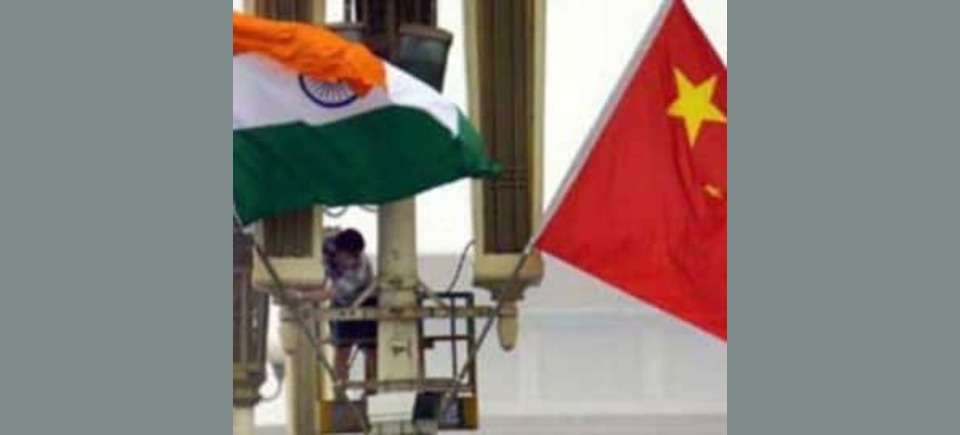
In an exclusive interview to India Today while speaking from Washington DC, US-India Strategic Partnership Forum…
Source: India Today
Source Link: https://www.indiatoday.in/india/video/china-will-never-treat-india-with-respect-usispf-president-mukesh-aghi-1692826-2020-06-26
The US-India Strategic Partnership Forum has written to the DPIIT raising concerns over reports that consignments are being held up at Indian …
Source: CNBC-TV18
Source Link: https://www.cnbctv18.com/videos/economy/indian-govt-needs-to-provide-a-clear-timeline-on-when-consignments-from-china-will-be-cleared-says-usispf-6199231.htm

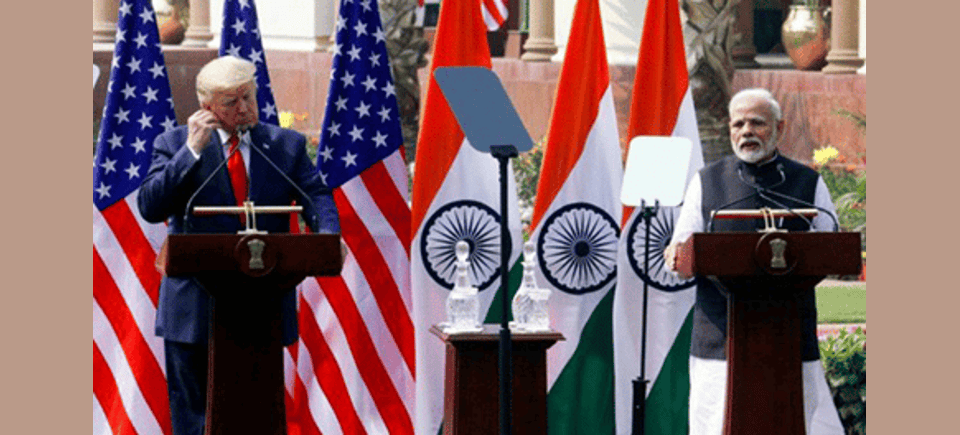
India needs policy ‘predictability’ to be an alternative to China: US-India trade body Mukesh Aghi, president & CEO of US-India Strategic Partnership Forum, says India should…
Source: ThePrint
Source Link: https://theprint.in/diplomacy/india-needs-policy-predictability-to-be-an-alternative-to-china-for-us-firms-trade-body/441985/