
News Month: May
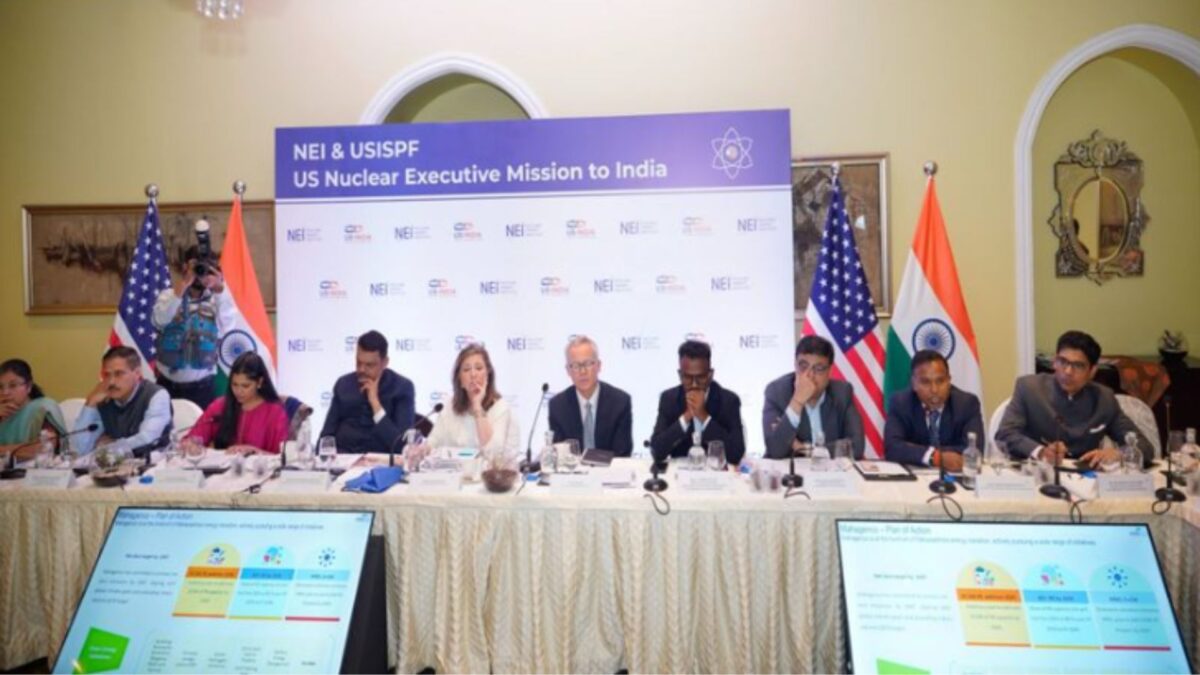
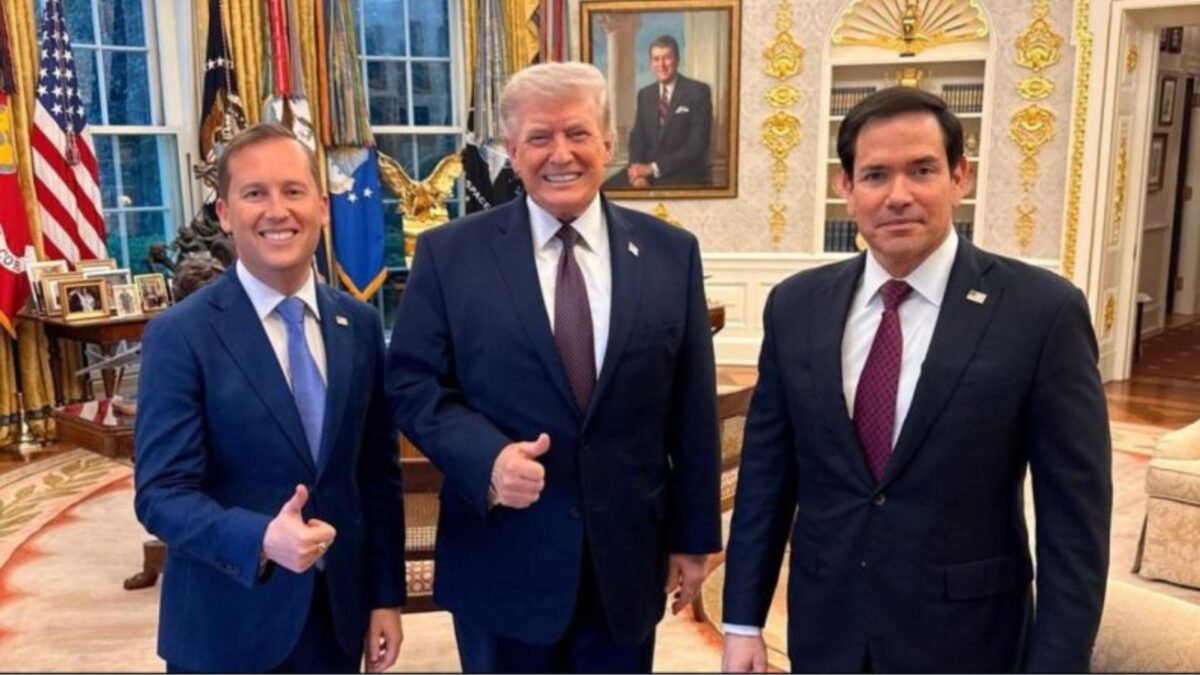
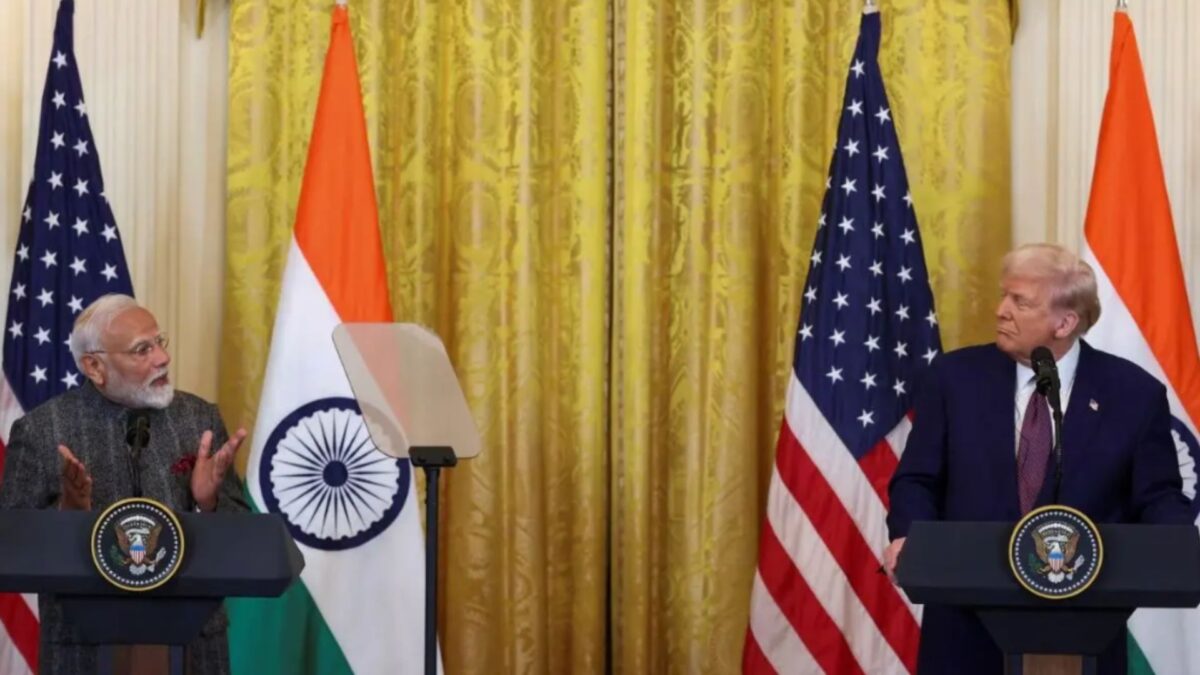
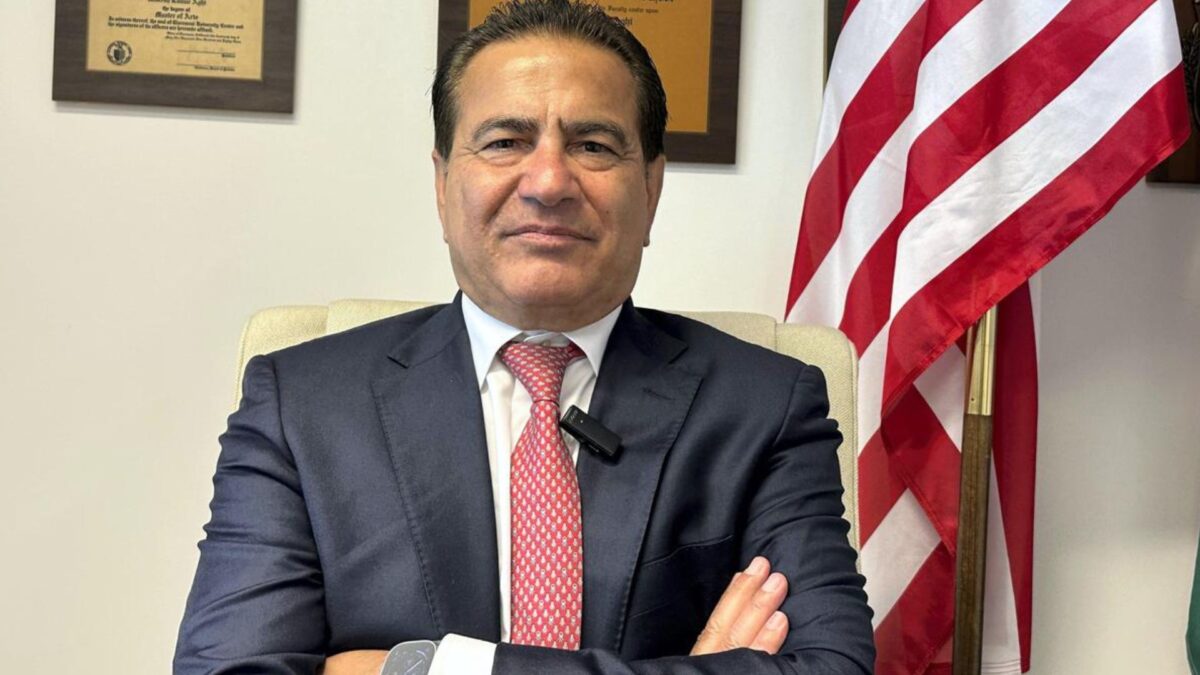
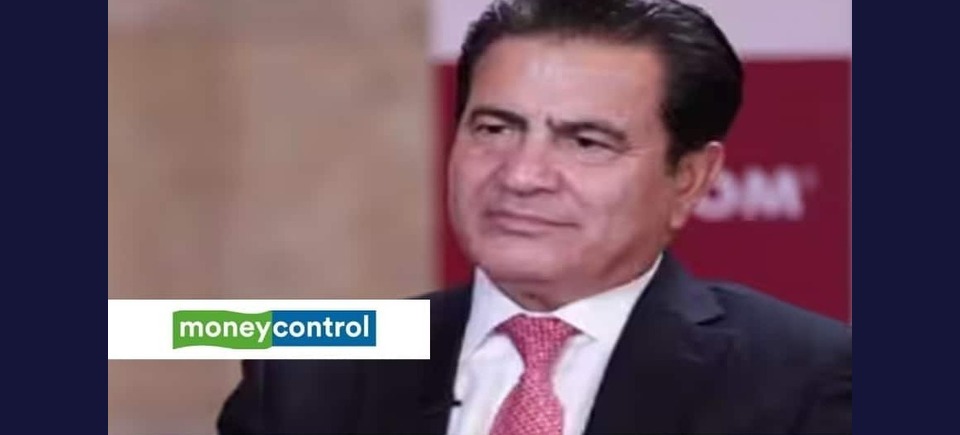
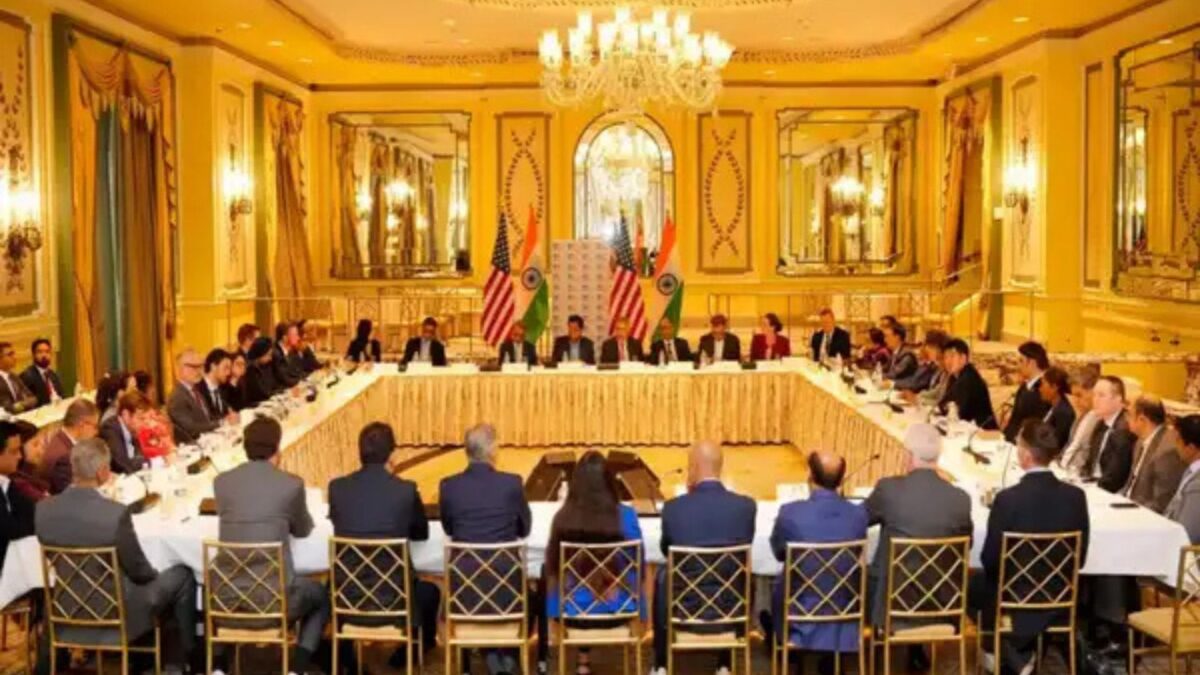
Investors expect Prime Minister Narendra Modi to come back to power and they also have confidence in the reform and business-oriented government, US-India Strategic Partnership Forum (USISPF) president and chief executive officer Mukesh Aghi has said.
“Everybody also feels that this time, the elections are more predictable. And that predictable results sends investors coming to India more and more because they feel that the current government is very reform-oriented, is very business-oriented,” the head of the top US-based India-centric business and strategic group told Moneycontrol.
As many as 96 seats are being voting for in the fourth phase of the Lok Sabha elections on May 13. The final and the seventh round of voting will be held on June 1 and votes counted on June 4.
There never has been a dispute over power transition in India once results are declared. “So, you will see the momentum (in investments) picking up regardless of whoever comes in, but at this moment, everybody thinks that Prime Minister Modi will come back,” Aghi said.
Indian elections have become a point of interest not only in the US but also in the rest of the world due to the high voter turnout of 65-70 percent compared to the US’ 50 percent, Aghi said. The high volume of voters is also impressive.
“I think everybody looks at India’s election as a role model and so they feel that India is a good place to invest,” Aghi said.
From one election to the other, Aghi said regardless of whether President Joe Biden secures another term or his predecessor, Donald Trump, returns, the impact on the US-India relationship would be marginal.
“Regardless of who comes in, the relationship between the two countries will steadily be positive and move in the right direction,” he said.
Immigration Reforms
Speaking on immigration reforms, Aghi said the US Congress has to improve processes, so that the world’s largest economy can attract more quality talent. He added the US embassy and the state department are deploying more resources, so that the wait time for visa appointments can be reduced to 30 days from over 200 days.
His remarks come amid concerns over growing waiting time for visa and its adverse impact on talent acquisition. The US embassy issued a record one million visas by March-end in the last 12 months, signalling a positive development in visa processing.
“They’re trying to put in more resources that keep on improving… so these guys are really working hard,” Aghi said.
He also highlighted that the reforms are vital for the US in addressing the shortage of nearly a million software engineers and fulfilling the demand for talent in high-tech sectors.
To attract top-tier talent, Aghi underscored the significance of streamlining visa processes, particularly for Indian IT professionals reliant on H1B visas.
The H-1B visa is a non-immigrant visa issued to recruit overseas workers that allows US companies to hire professionals for jobs that require technical expertise.
IT chiefs on board
Aghi said the recent inclusion of senior executives of IT service companies on the USISPF board is aimed at synergy between American and Indian firms.
Infosys Chief Executive Officer Salil Parekh and his Cognizant counterpart, S Ravi Kumar, joined the USISPF board this year.
“The reason we brought in two large services companies is because both are large exporters of services and human talent to the rest of the world,” Aghi said. “You’ll see more board members coming in from that perspective
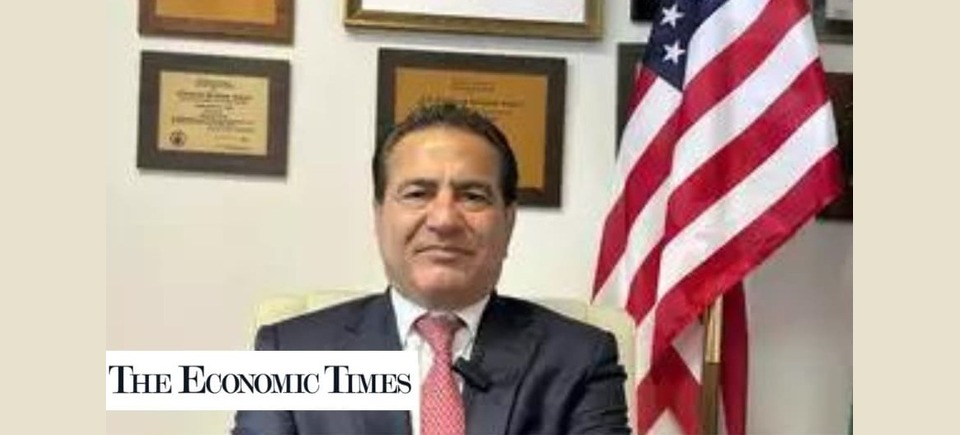

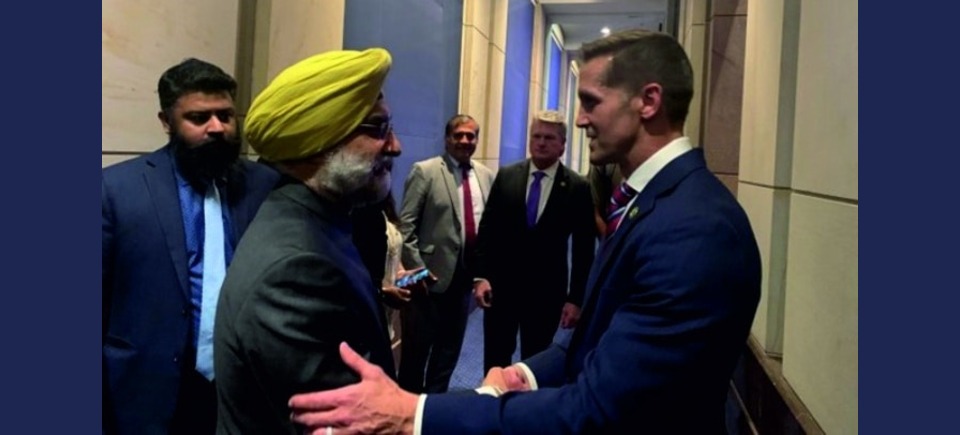
WASHINGTON, DC – With the aim of raising policy issues that affect the community, and engaging in discussions with more than 75 Congressional representatives and their staff, Indian American delegates of the Foundation of India and Indian Diaspora Studies (FIIDS) on April 27, gathered here on Capitol Hill.
“On our advocacy day, we focused on three critical issues: immigration, US-India relations, and religious phobia,” said Khanderao Kand, Founding Director of FIIDS. He said the group “strongly advocated” for the abolition of country-wise limits on employment-based permanent residency; accelerating the Initiative of Critical and Emerging Technology, to counter China, and the expansion of QUAD to include regional countries, addressing security concerns about Taiwan, and the Indo-Pacific region. On “religious phobia faced by faiths of Indian origin,” he said measures had been proposed including a congressional resolution on the matter.
House representatives and their staff were actively engaged, asked questions, and shared comments, a press release said. It singled out Congressman Josh Harder for discussing the significance of an Indo-US alliance and delegates lauding Congressman Raja Krishnamoorthi, for his work on immigration matters.
The day concluded with a celebration reception, which brought together house members, their staff, diplomats, think tank experts, officials, and delegates. This event was supported by the American Jewish Community, Congressman Andy Barr, and Dr. Suvas Desai.
Among the speakers was Nancy Izzo Jackson, Deputy Assistant Secretary in the Bureau of South and Central Asian Affairs who emphasized the consequential nature of the US-India relationship, including QUAD and various projects, such as food security and climate change through green technology advancements.
Jason Isaacson, Chief Policy & Political Affairs Officer of AJC, India’s ambassador to the US Taranjit Singh Sandhu, Nadav Zysblat, Minister-Counselor (Political) from the Embassy of Israel, Dr. Rahul Gupta, Director of the National Drug Control Policy, Mukesh Aghi, CEO and President of the US India Strategic Partnership Forum, were among those who spoke on various aspects of India-US relations Elected officials who spoke were Reps Raja Krishnamoorthi, Carolyn Maloney, Glenn Grothman, Dan Mauser, Mike Collins, Dr. Rich McCormick, David Schweikert, Shri Thanedar and Ro Khanna.
More information
https://indiawest.com/fiids-holds-advocacy-day-on-capitol-hill/
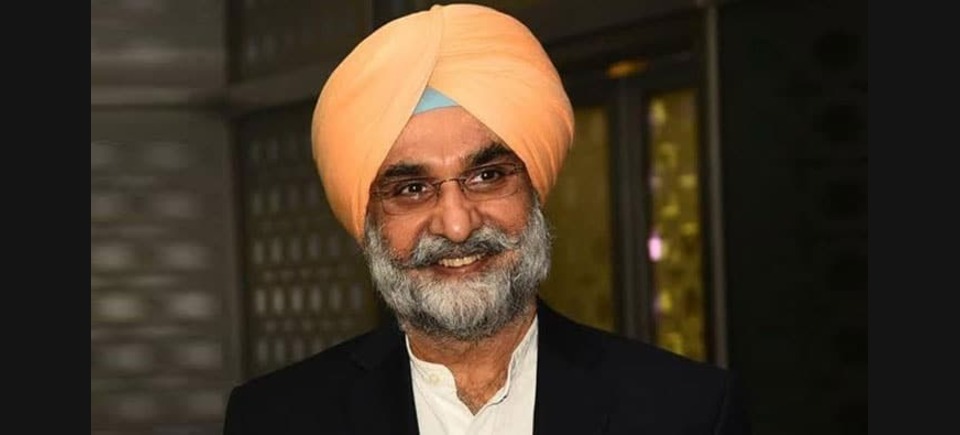
Washington, May 11 Prime Minister Narendra Modi’s visit to the US next month is “historic” and will underscore that the partnership between the two nations is people-centric, people-driven, and is good for the world at large, India’s top diplomat here has said.
President Biden will host Prime Minister Modi for an Official State Visit to the United States, which will include a state dinner, on June 22, the White House announced on Wednesday.
“The upcoming visit will affirm the deep and close partnership between the US and India and the warm bonds of family and friendship that link Americans and Indians together,” White House Press Secretary Karine Jean-Pierre said in a statement while announcing the visit.
India’s Ambassador to the US Taranjit Singh Sandhu told PTI that Modi’s forthcoming official state visit to the US, at the invitation of President Biden, is “historic”.
“Prime Minister and President Biden have together imparted significantly new vigour and momentum to our bilateral ties. The visit will be an opportunity for the two leaders to spend time together, take stock of the progress achieved and provide guidance on the future limitless possibilities,” he said.
“The visit will also underscore that India-US partnership is people-centric and people-driven, and that it is not just for the two countries, but for the world at large,” Sandhu said.
White House Press Secretary Jean-Pierre said on Wednesday the visit will strengthen the two countries’ shared commitment to a free, open, prosperous, and secure Indo-Pacific and shared resolve to elevate the strategic technology partnership, including in defence, clean energy, and space.
The US, India and several other world powers have been talking about the need to ensure a free, open and thriving Indo-Pacific in the backdrop of China’s rising military manoeuvring in the resource-rich region.
China claims nearly all of the disputed South China Sea, though Taiwan, the Philippines, Brunei, Malaysia and Vietnam all claim parts of it. Beijing has built artificial islands and military installations in the South China Sea. China also has territorial disputes with Japan in the East China Sea.
China and its diplomats have been attacking the Indo-Pacific concept from the beginning claiming that it is aimed at containing Beijing.
“The leaders will discuss ways to further expand our educational exchanges and people-to-people ties, as well as our work together to confront common challenges from climate change to workforce development and health security,” Jean-Pierre said.
The White House’s announcement on Biden’s invitation to Modi has been widely welcomed.
“I am delighted that the White House has invited the Prime Minister for a state visit which will help strengthen the strategic partnership between our nations,” Indian American Congressman Ro Khanna told PTI.
Khanna is the Co-Chair of the Congressional India Caucus, the largest country-specific caucus in the House of Representatives.
Mukesh Aghi, president of US India Strategic and Partnership Forum, said Modi’s visit in June will be a wonderful opportunity to elevate the bilateral partnership to the next level.
“President Biden and Prime Minister Modi will be meeting in a few weeks’ time at the Quad Leader’s Summit in Australia and later this year at the G20 in India. Both leaders have used minilaterals such as the Quad, I2U2, and the G20 summits to work on common goals,” Aghi said.
“However, the state visit will provide a valuable and timely opportunity for both Washington and New Delhi to strengthen the edifice of this strategic partnership and work on enhancing commercial ties, building resilient supply chains, and creating new synergies in the critical and emerging technology domain,” he said.
Atul Keshap, president of US India Business Council, said the invitation is a big diplomatic gesture from the United States.
“India was last honoured with a State Visit in 2009. That PM Modi is being honoured with only the third State Visit of the Biden Administration shows the respect and affection the American people have for a rising India,” he said.
It is entirely good and proper that the world’s two greatest democracies further cement their strategic, economic, and technology convergence in these turbulent geostrategic times,” he said.
“The state visit will remind the world that India and America still have so much more potential to capture in our bilateral relations, reflecting the energy and talent of our demographics and our systems, which serve to empower our free peoples,” Keshap said.
Aparna Pande, from the Hudson Institute think-tank, said India is key to the security, diplomatic, and commercial architecture that the United States is building across the Indo Pacific.
“For the Modi government also, a stronger strategic partnership with the United States is critical to boosting India’s leverage in the global arena,” Pande said.
More information
https://theprint.in/world/pm-modis-us-visit-historic-good-for-world-ambassador-sandhu/1567763/
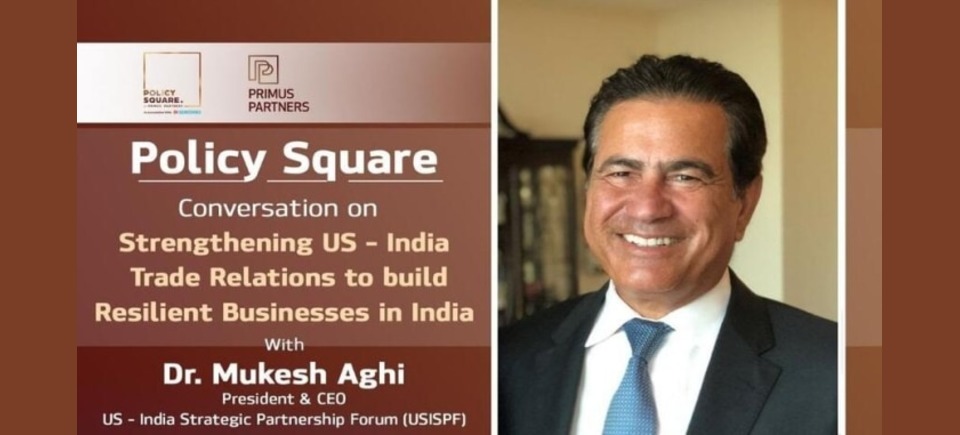
The current trend of US companies setting up Innovation Centres in India is very encouraging, says Aghi.
In its latest episode of Policy Square in association with BW Businessworld, Davinder Sandhu, Chairperson of Primus Partners, sat down in conversation with Mukesh Aghi to talk about the economic and strategic partnership between the United States and India, with a particular emphasis on the technology sector.
This year, the US emerged as India’s largest trading partner, marking a significant shift in dynamics. How do you envision this trend progressing, and what are your perspectives on it?
I believe that the US-India relationship is the most important relationship of the 21st century. This has been stated by President Obama, President Trump and President Biden. You have to look at this relationship from multiple angles. First is the geopolitical angle. We are living in an age where the current order is being challenged by China. While we all live by the guidelines or the order, China would like to dictate its own. India has border disputes with China, which is going to push India dramatically. From that perspective, India needs friends to deal with the issue and the US becomes a friend.
The second aspect is the opportunity for India. China was the manufacturing hub for the globe, but with the COVID issue and China’s assertive approach to changing the world order, every boardroom in the US and Europe is asking the question, “How do we de-risk our supply chain?” India becomes a natural place for them to explore. In fact, today we have Tim Cook in New Delhi. Apple is going to produce roughly 20 million iPhone 14s in 2024 – almost 7 per cent of their global production – and that number keeps going up.
So, I think from a geopolitical perspective, an economic perspective, and a people-to-people perspective, we have around five million Indian Americans in the US, with double the average income of an American itself. Biden has positioned 150 of those Indian Americans in his administration, and he has nominated Ajay Banga as President of the World Bank. In every aspect, the relationship is getting more and more cemented and [becoming] stronger.
There is a clear interest in utilising supply chains, given India’s significant technical capacity, efficient company management, and robust legal framework. With the recent establishment of a technology partnership between the two countries, what steps are necessary for American companies to maintain this momentum?
If we look at it from an American company’s perspective, they are looking for competitive and efficient production of their goods so that they can sell around the world. The reason they went to China was definitely due to cost and scalability, and they are also looking at India from that perspective. It’s important to sit down with some of these companies and have a dialogue about what they need, just like they did with Apple and set up a PLI scheme so they can be globally competitive and make the same margins. It’s important to make policy broader and let these companies adjust to that environment.
The second aspect is that the ease of doing business has to get better. India needs to benchmark itself not just within states, but with countries like Singapore and Finland that have a world-class environment for doing business. The third factor is infrastructure. While from a tax and wages perspective, India is the same as or better than China, when it comes to the logistics supply chain, the cost of moving goods is 20 per cent higher. India needs to keep improving its infrastructure, including ports, airports, railways, and highways, to make these companies more efficient in the global supply chain.
The third factor is giving these companies a level playing field. If India wants to be an export nation and a global economy of USD five or USD 10 trillion, it needs to bring in global competition. Things have improved in the last 10 years or five years, but for India to be a global leader in every aspect, it needs to compete globally.
I believe that India possesses a talented group of youngsters brimming with innovative ideas, which has propelled the country into being one of the leading startup nations globally, while the United States has always been at the forefront of innovation, particularly in the pharma and IT industries. India offers a pool of young talent, and the US possesses a well-developed investment system. Therefore, how can the two collaborate to push forward innovation and startups?
The startups in India are becoming global, but they need a bridge to become even more global. There are issues related to investment, access to markets and taxation. For instance, there is now an angel tax, which can harm startups. Why can’t startups go for IPOs and raise capital in Nasdaq and other markets outside of India? When we look at these issues more closely, it becomes apparent that it is essential to find ways to get cheap capital from the US into India. The private equity firms currently have roughly two trillion dollars in capital, which is not being utilized, and India could be the place to leverage that capital. Additionally, once a good startup idea is found, we need to provide access to Fortune 500 companies. These are the issues we’re trying to address. We have taken a dozen companies from India, and their valuations have shot up into the billions of dollars. It’s a win-win situation. So, for every startup we have taken to the US, for every person they hire with an average salary in the US of USD 175,000, they add eight people in India also. It’s cost-effective, and both countries benefit. Therefore, startup support is a critical area that we should explore and support.
Ecommerce has been one of the main components of startups, as it facilitates access to markets and ideas. There has been extensive dialogue around e-commerce regulations, and India acknowledges that ecommerce and logistics were instrumental in keeping it afloat during the pandemic. Therefore, with this realization, could you please provide insights into the stance of US e-commerce giants and what India could do to improve the regulatory environment to facilitate their operations?
Well, with a population of 1.4 billion people, the retail segment in India is fragmented and the infrastructure is limited, and the cost of real estate is extremely high. Therefore, it is important to leverage e-commerce to provide world-class services to consumers. The companies operating in this space are advocating for a level playing field, transparency in policy-making, and predictability. They are concerned that their future investments may be impacted if laws change abruptly. While India is willing to work on these issues, they are also focused on protecting small-time SMEs and maintaining their jobs. The key is to find a balance that integrates them into the supply chain, creating a win-win situation for all parties involved.
On my way here, I was wondering if I was ChatGPT, what would I ask you? So, coming to the important conversation around artificial intelligence, I think both countries have been very good in technology, information services and software. How do you think we can both collaborate better in getting the best out of AI for people in our respective countries?
That is a discussion I had the last couple of days with the leadership in Delhi because you have an opportunity that can become a threat, if not handled right. Therefore, it is critical for both countries to start having conversations from a policymaker’s perspective and establish common guidelines and barriers, to ensure that we do not move in the wrong direction with AI. India has tremendous resources to build AI, while the US has fantastic algorithms on the AI side. If we merge those algorithms with the data of 1.4 billion people, we can come up with fantastic solutions that will be a win-win. However, it is important for policymakers on both sides to sit down and discuss how they can establish certain fences around AI so that it does not become a threat to society.
As [you were] previously the President of IBM in India and still maintain connections in the industry, I would like to ask for your views on the conversations around data protection and data onshoring in India. While there is a new data protection bill, stakeholders are still discussing what more needs to be done. What is the American industry’s view on data protection and what do you believe needs to be done to encourage greater cooperation and conversation while also respecting the sensitivities involved?
Stagnant data holds no value; dynamic data drive solutions. We cannot fragment data as we live in a global world. Once we begin to fragment it, we lose the value of the data itself. Therefore, it is essential that we maintain dynamic data while also protecting the interests of the country and its citizens. As we transition to the next phase, each individual’s data becomes their own asset, and they should be able to decide how to share their data, whether for market, research, or any testing purposes. Additionally, we must consider data from a national security perspective. However, this does not mean that every piece of data is a national security issue. The bill looks at countries where data can be shared, and it is important to keep this in mind as we move forward with the bill. The government is currently undergoing extensive consultation, and the old bill has been discarded, which I believed was redundant. The new bill is more encouraging, and there will be more fine-tuning as we progress.
India has clearly produced a great global public good in terms of citizen intervention and building up a tech stack of citizen and public data. I think there is tremendous potential to scale this up for the benefit of both countries, both in terms of human and sub-commercial advantage. Look at what the pandemic [or] UIDAI has done. It’s a system that has brought together a huge number of possibilities. So how can the US and Indian industries come together to leverage this global public good that India has created over the last five or seven years, and take it forward to the whole world?
One thing I have to commend the government for is creating its own vaccine during the COVID crisis, which was affordable at around INR 150, while in the US, we were paying USD 18 even though it was provided by the government. However, what’s even more important is the ability to administer over two billion shots across territories and geographies that were previously inaccessible. To me, this demonstrates the government’s effectiveness and efficiency, sending a message that India can be a pharmacy to the world, providing scalable and affordable healthcare solutions not only to its citizens but also to the rest of the world. India spends less than two per cent of its GDP on healthcare, while the US spends 18 per cent, yet India is often more efficient than the US in many cases. Therefore, this is an area where both countries can work together.
I find the current trend of US companies coming into India to set up innovation centres and develop solutions for the rest of the world very encouraging. Pfizer, Merck, Qualcomm, and Samsung are leveraging Indian talent to drive value proposition, not just from an IP perspective, but also solutions. With over 326 space startups in India, the country is becoming a hotbed of innovation, with frugal engineering that is effective, scalable, and global. Therefore, I see a win-win value proposition between the two countries, and we should leverage this to our advantage.
Regarding the UPI stack, I think it’s a phenomenal story for India. I was in a pharmacy in Khan Market, and someone purchased medicine for Indian rupee seven by simply scanning the QR code, and the transaction was efficient, effective, and secure. If we can take this technology to the rest of the world, which we have already done in Singapore, it will be a game-changer.
More information
https://www.businessworld.in/article/USISPF-President-Mukesh-Aghi-On-Future-Of-Indo-American-Partnership/10-05-2023-475952/
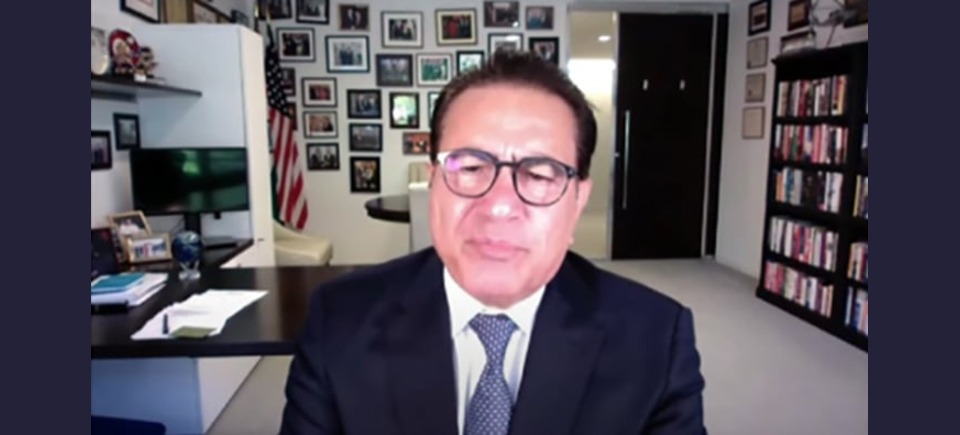
Analysing the growing involvement of Indians in the US political arena, Dr Mukesh Aghi in an exclusive interview to Connected to India said, “Indians are the most affluent minority group in the US and they feel the need to contribute to the country which they have migrated to. One aspect of this is political participation.”
Dr Aghi is the president and Chief Executive Officer of the US-India Strategic Partnership Forum, a bilateral and non-partisan trade association created to develop and sustain political and economic Indo-US ties. He works extensively with business and government leaders in the US and India to promote bilateral trade and diplomatic relations.
“Indians seemed to be leaning towards the Republican Party in recent times, with 30 per cent of eligible Indian-Americans voting for the GOP in the last election; up from 20 per cent in the previous polls,” added Dr Aghi.
You can watch our exclusive interview with Dr Aghi here where he talks about the growing India-US bilateral trade, complementary relations between the two largest democracies and political activation among Indian Americans.
More information
https://www.connectedtoindia.com/indians-in-us-feel-the-need-to-contribute-to-the-country-theyve-migrated-to-mukesh-aghi-10918.html

India must adopt an “aggressive approach” to attract multinational corporations to set up and expand their bases in the country, a top Indian-American business advocacy group has said, observing the ongoing Russia-Ukraine war is leading to a tectonic shift in global trade.
“I think India has to play a much more aggressive approach to these corporations. Having a direct dialogue with these corporations and tells them: ‘what do you need’, ‘what can be done for you to come invest in India?’” Mukesh Aghi, president, US-India Strategic and Partnership Forum (USISPF) told PTI in an interview.
Every corporation has a unique requirement, he said.
“Yes, you can’t change the law. But you can define a broad-based policy, which makes it attractive for a lot of these companies to come into India. That’s where India has to reach out to these companies, understand the requirements and then put in place a set of policies which become uniform,” he said.
Aghi said there have been some efforts but those are more of a transactional effort rather than a uniform or a cohesive approach on this.
Aghi said at some point of time India will need to think about its relationship with Russia.
He pointed out when US President Joe Biden was meeting Prime Minister Narendra Modi in Tokyo as part of the Quad summit this week, the Russian and Chinese governments were flying long-range bombers over the Sea of Japan.
“The message was very clear from Russia, that its partner, and his allegiance lies with China and the Indo-Pacific region, rather than India. And to me, it was very stark, that while the Prime Minister of India is there, you have Russian bombers threatening or taking a threatening posture along with the Chinese. To me that’s a very clear message that India has to start thinking about its position with Russia,” he said.
In response to the over two-month-long Russia-Ukraine war, India has called for respect of territorial integrity of nations and the United Nations Charter.
However, New Delhi has not condemned Russia directly.
“The question really becomes: at what stage India will come out and condemn it. I think India as an emerging power has to start taking some positions, which may upset other nations, but that’s the nature of the beast when you are becoming a leading power,” Aghi said.
One thing that has come out clearly from the Ukraine war is that Russian equipment has not performed well, he said.
“Russian Defense Forces and the equipment have been destroyed substantially. Russia’s economic embargo means chips and semiconductors are not moving into Russia. So, Russia will have difficulty providing spare parts not only for his own armed forces, but for countries like India, he said.
“So India has to seriously start thinking what are the alternatives. At the end of the day, India’s biggest challenge is China, not Russia. And we’ve had in the last two years, physical invasion and killing by Chinese and Indian soldiers. That’s where the bigger enemy lies. India has to look at its supply side; this defense strategy from that perspective – as Russia gets weaker both from a supply chain perspective and also as a military problem? Aghi said.
According to Aghi, the Russian invasion of Ukraine has changed in some way the global order, especially the balance of power. We are seeing tectonic shifts taking place, he said.
“Corporate America got weaponised by having to pull out of Russia overnight, and that was not a diktat from the US government. It was a consumer sentiment which drove that decision making. There’s a tremendous amount of empathy for Ukraine and that influences boardroom thinking about being or not to be within Russia and the majority of the companies have pulled out of Russia, he said.
Now the question you have is among the boardroom discussion taking place is what happens if China invades Taiwan then what happens to our investments in China? More important is what is our backup strategy? Yes, you can bring back a lot of stuff manufacturing to the United States, but a lot of them won’t come in because of lack of resources, lack of manpower, he said.
And that’s where India becomes a critical player, both from a market perspective and also from a manufacturing perspective. I think that’s where you need to leverage all of India’s attractive market for these companies to come in and start having a China response strategy as things move forward, Aghi said.
More information
https://www.business-standard.com/article/current-affairs/india-needs-to-adopt-aggressive-approach-to-attract-businesses-usispf-122052700060_1.html
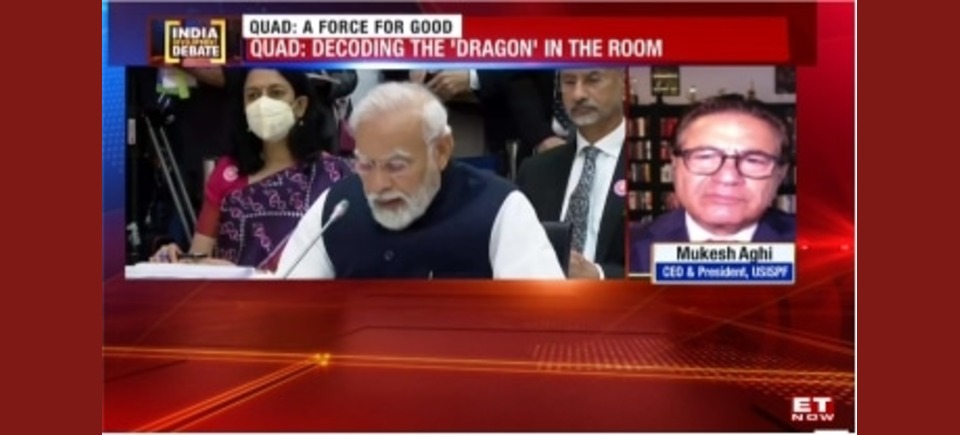
From peace and stability to global health security, read the joint statement by the leaders of India, Australia, Japan and the US at the Quad Summit 2022. The Quad leaders emphasised the need to address climate change and make robust arrangements for cybersecurity while harnessing critical and emerging technologies to ensure prosperity. Another key focus area was the peaceful resolution of disputes and the freedom of navigation in the East and South China Seas. In what may be considered an act of aggression, Chinese H-6K bombers and Russian Tu-95MS bombers conducted joint sorties above the Sea of Japan even while the Quad leaders were in Tokyo. We break down the key takeaways from the crucial summit and decode the ‘dragon’ in the room on the India Development Debate with Ambassador Leela K Ponappa, former career diplomat & former Dy NSA, Nalin Surie, former High Commissioner To UK and Mukesh Aghi, CEO & President, USISPF.
More information
https://www.timesnownews.com/videos/et-now/shows/quad-decoding-the-dragon-in-the-room-india-development-debate-et-now-video-91773382
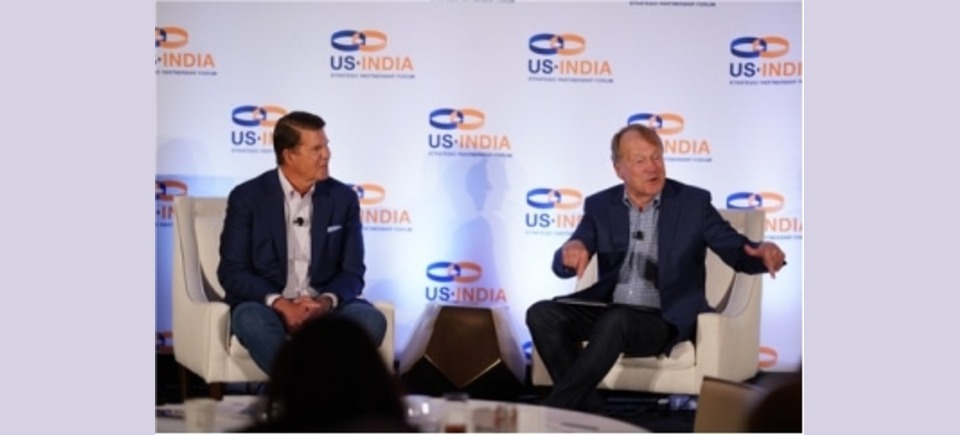
Keith Krach (left) and John Chambers discuss the critical role trusted technology plays in advancing freedom at the US-India Strategic Partnership Forum West Coast Summit.
MENLO PARK, Calif.–(BUSINESS WIRE)–Keith Krach, Chairman of the Krach Institute for Tech Diplomacy at Purdue, and John Chambers, Chairman Emeritus of Cisco, discussed the critical role trusted technology plays in advancing freedom at the US-India Strategic Partnership Forum (USISPF) West Coast Summit. As the only independent institution dedicated to strengthening the U.S.-India partnership in Washington, DC, MENLO PARK, Calif.–(BUSINESS WIRE)–Keith Krach, Chairman of the Krach Institute for Tech Diplomacy at Purdue, and John Chambers, Chairman Emeritus of Cisco, discussed the critical role trusted technology plays in advancing freedom at the US-India Strategic Partnership Forum (USISPF) West Coast Summit. As the only independent institution dedicated to strengthening the U.S.-India partnership in Washington, DC, and New Delhi, USISPF is the trusted partner for businesses, non-profit organizations, diaspora, and the governments of India and the United States.
“I have worked for Keith Krach at Ariba and now with John Chambers at USISPF,” said the organization’s President and CEO Mukesh Aghi. “They are both true champions of a strong U.S.-India relationship and have done much in their careers to strengthen ties between our two nations.”
“As I think about the influences that have been most important to me over the years, my friend and mentor John Chambers stands out,” observed Keith Krach. “His visionary leadership of one of the world’s most important companies, Cisco, has changed the technology industry, and, in his role as the USISPF Chairman, John’s focus on promoting entrepreneurship, gender equality, and new business creation will continue to improve the lives of people in the U.S., India, and around the world.”
“Keith is one of this generation’s premier multi-sector transformational leaders, as he has proven repeatedly in business, philanthropy, tech, education, and government,” said John Chambers before the USISPF gathering of government and business leaders. “The common thread through all these transformational achievements is Keith’s emphasis on trust. As the Under Secretary of State, Keith was able to accomplish things that have not been done before by deploying his underlying “Trust Principle” doctrine and creating Tech Statecraft, for which he has been recognized with a 2022 Nobel Peace Prize nomination.”
Krach explained that the “Trust Principle” is based on democratic values, such as respect for the rule of law, sovereignty of nations, human rights, labor practices, press freedom, and the environment, as a peaceful alternative to authoritarian regimes’ “Power Principle” doctrine, rooted in brute force, coercion, and intimidation.
Krach described how, as the world was struggling through the worst pandemic in a century, his hybrid public servant-private sector executive team at the State Department put the “Trust Principle” to the test by taking on the Chinese Communist Party’s masterplan to control 5G. The concept resonated globally, as indicated by the success of the Clean Network, which attracted 60 countries, representing two-thirds of the world’s GDP, and more than 200 telecommunications companies rallying around the “Trust Principle.” It also put the Chinese government on notice that its “Power Principle” would no longer go unchallenged.
During their dialogue, Chambers also pointed to Krach as a champion of the U.S. high tech industry, citing his team’s lead role in the onshoring of Taiwan Semiconductor Manufacturing Company (TSMC), which has led to $300 billion investment in the U.S.-based chip manufacturing, and the design of the $250 billion bipartisan U.S. Innovation and Competition Act (USICA), which will fund research in top national security technologies in order to secure America’s high tech leadership for the next generation.
Shifting to the lessons of the war in Ukraine, Chambers brought up Krach’s Fortune article, Present your China contingency plan at the next board meeting, which highlighted the fact that many of the most respected board members in corporate America are demanding a China contingency plan from their CEOs. “What if Xi pulls a Putin?” Krach asked the USISPF attendees. “With Xi’s recent crackdown on private industry and the real probability of an attack on Taiwan, boards increasingly understand doing business with, in, or for China represents tremendous risk. Board members have a fiduciary duty to the shareholders to mitigate significant risks.”
The USISPF discussion concluded with the focus on deepening partnerships between the United States and India as an important aspect of the Krach Institute for Tech Diplomacy. “Democracy is under attack like never before and our two nations’ are the world’s largest democracies. Preserving freedom and peace through trust must be at the heart of our relationship” Krach said, “As one of America’s closest friends, a technological superpower, and a member of the Quad and the Clean Network Alliance of Democracies, India is not only a bulwark against techno-authoritarianism, but also crucial to advancing our shared democratic values through trusted technology.”
About the Krach Institute for Tech Diplomacy at Purdue:
The nonpartisan Krach Institute for Tech Diplomacy at Purdue is the world’s preeminent institution focused on Tech Statecraft, a new model of diplomacy that bridges the high-tech sector with the foreign policy and national security sectors to ensure trusted technology is used to advance freedom. The Krach Institute for Tech Diplomacy is a 501(c)(3) that leverages Purdue’s strength in innovation, deep expertise in technology, and global prowess in educating transformational leaders. It focuses on rallying our allies, leveraging the innovation of the private sector, and amplifying democratic values based on trust.
More information
https://www.businesswire.com/news/home/20220512006044/en/Keith-Krach-and-John-Chambers-Advance-US-India-Ties-Through-Trusted-Technology

One of the aspects of the partnership between India and The U.S besides health, education, and trade is an investment: @MukeshAghi, (President, US India Strategic and Partnership forum-USISPF) on S Jaishankar visit to the U.S. Watch #News360 with @SiddiquiMaha
More information
https://twitter.com/CNNnews18/status/1397177492679577600

EPISODE 8:
MUKESH AGHI, PRESIDENT AND CEO OF THE US-INDIA STRATEGIC PARTNERSHIP FORUM (USISPF)
India is the most strategic partner in the world to the U.S. – and our friends in India urgently need our help fighting the ongoing COVID-19 pandemic. As experts have said, this pandemic is truly not over for anyone until it is over for everyone. In this episode of “Chambers Talks: A Podcast Series with John Chambers,” Mukesh Aghi, President and CEO of USISPF, shares what large companies around the world are doing to ensure supplies are delivered to India on a daily basis, as well as what you can do to give back. Listen for more, and consider donating anything you can at: https://usindiaalliance.org/
More information
https://www.jc2ventures.com/chambers-talks/2021/5/24/episode-8

the usispforum recently kicked off its startup-connect program the goal is to increase job creation in india us meghavishwanath discusses about the future of indian startups…
Source: Twitter
Source Link: https://publish.twitter.com/?query=https%3A%2F%2Ftwitter.com%2FCNBCTV18News%2Fstatus%2F1270356363646926848&widget=Tweet

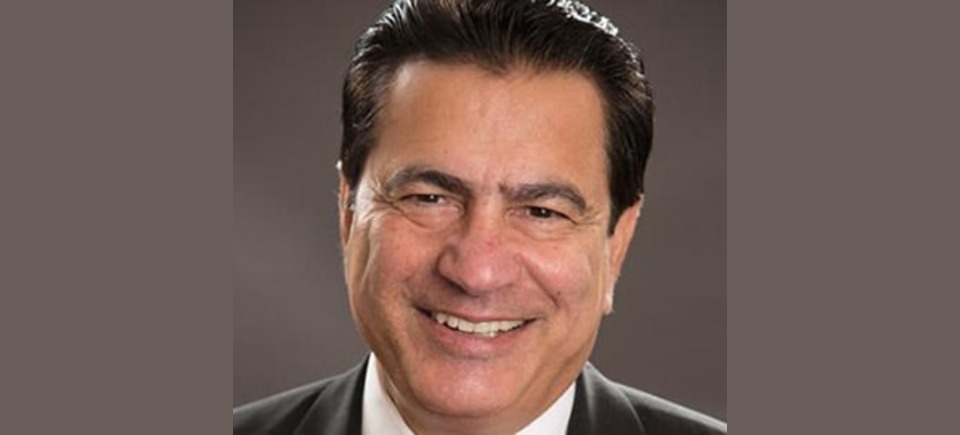
Need permanent changes, policy predictability and flexibility: Mukesh Aghi Various State governments in India are taking drastic steps in a bid to attract investments moving out…
Source: Business Standard
Source Link: https://www.business-standard.com/article/economy-policy/need-permanent-changes-policy-predictability-and-flexibility-mukesh-aghi-120051700718_1.html
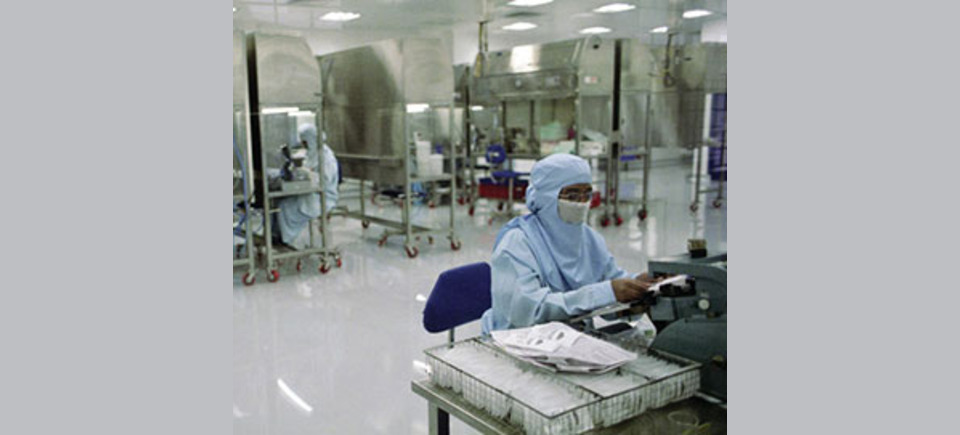
India-looks to lure more than 1000 us companies out of china (Bloomberg) — India is seeking to lure U.S. businesses, including medical devices giant Abbott Laboratories…
Source: Bloomberg
Source Link: https://www.bloombergquint.com/economy-finance/india-looks-to-lure-more-than-1-000-u-s-companies-out-of-china